How can you tell whether a scratch can be fixed at home?
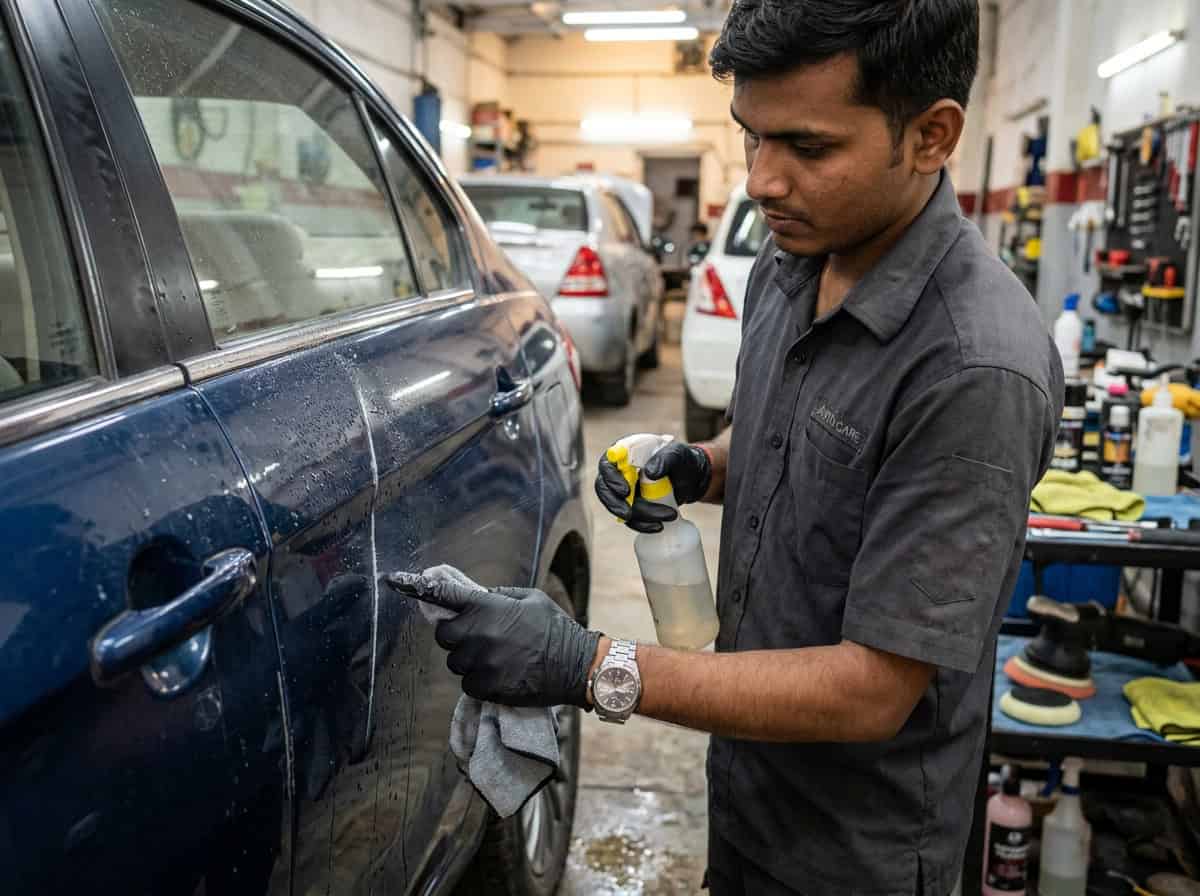
Modern factory paint systems often measure around 100–180 microns in total thickness, according to DeFelsko, and only part of that is clear coat. The practical answer is simple: if the scratch is light, does not expose primer or metal, and barely catches your fingernail, it can often be improved at home. Start with a clean panel. Never inspect scratches on a dusty surface. Dust hides the true depth and turns your next wipe into more scratching. Wash the area, dry it gently, and inspect it under sunlight or a bright LED torch. Then do the fingernail test. Lightly drag a clean fingernail across the mark. If your nail does not catch, the scratch is usually shallow. If it catches slightly, you may still improve it with compound, polish, or scratch remover. If it catches hard, or if you can see white, grey, or metal underneath, the damage is deeper and likely needs touch-up paint or repainting. There’s also a simple water test. Spray water on the scratch. If the mark seems to disappear when wet and then returns when dry, it usually means the scratch is in or near the clear coat. That’s a strong sign that correction may help. According to DeFelsko, paint correction decisions should be based on preservation as much as appearance because polishing removes measurable film build. So before you chase perfection, identify the scratch properly. In Indian conditions, a lot of “scratches” are actually combinations of dry-wipe marring, transfer marks from another object, hard-water etching, and grime. That matters. If you diagnose too fast, you may treat a stain like a scratch and overwork the panel for no reason. At-home repair usually works best for:- clear-coat swirls and light wash marks
- shallow scratches from fingernails near door handles
- paint transfer from another object
- light scuffs from bags, shoes, or minor contact
- isolated surface marks on otherwise healthy paint
What tools do you need to remove car scratches at home?
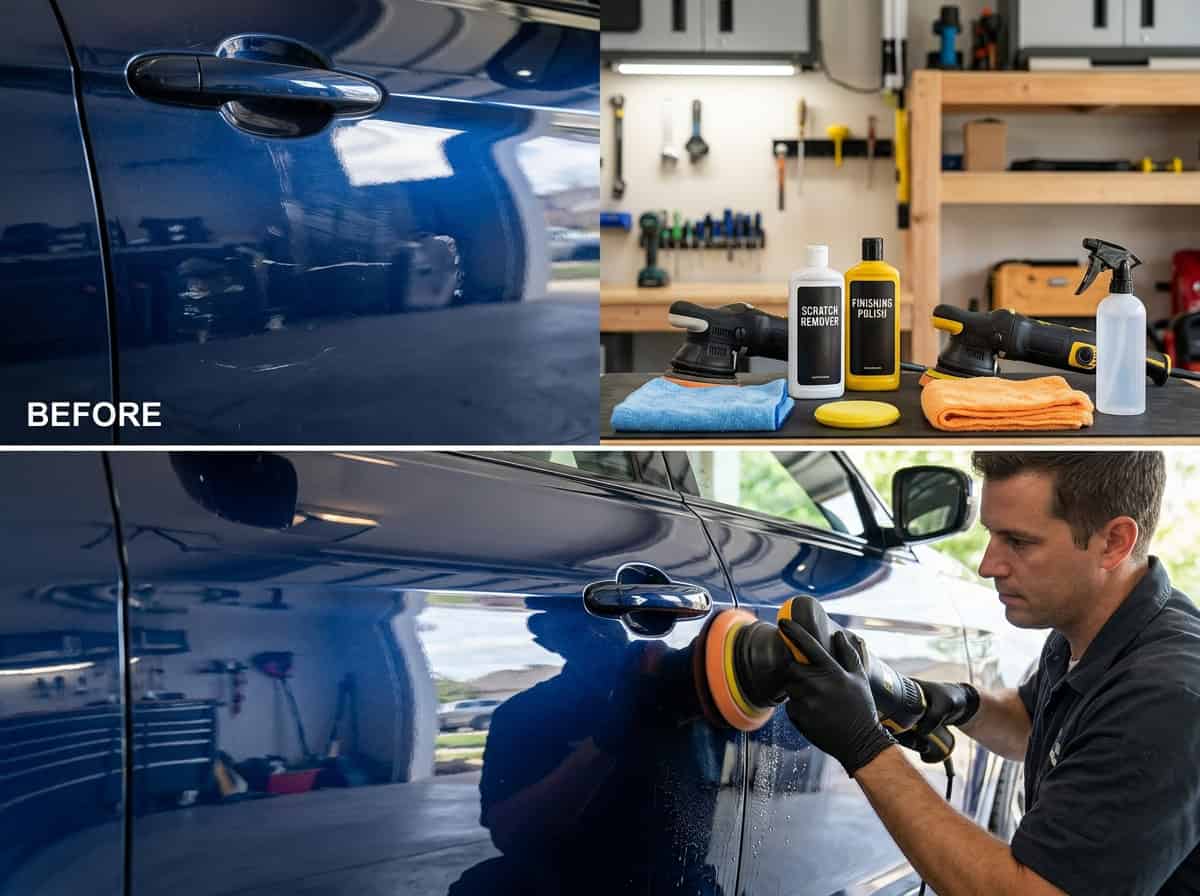
The safest DIY scratch repair starts with good prep, not a miracle bottle. For most light scratches, you only need proper wash supplies, microfiber cloths, a clay bar or clay mitt, scratch remover or polish, and a foam applicator or dual-action machine. Here’s a practical Indian-home setup that works well:- pH-neutral car shampoo
- two buckets with clean water
- microfiber wash mitt
- drying towel
- clay bar or clay mitt with lubricant
- masking tape for edges and trims
- light scratch remover or rubbing polish
- polishing compound for slightly deeper defects
- foam or microfiber applicator pads
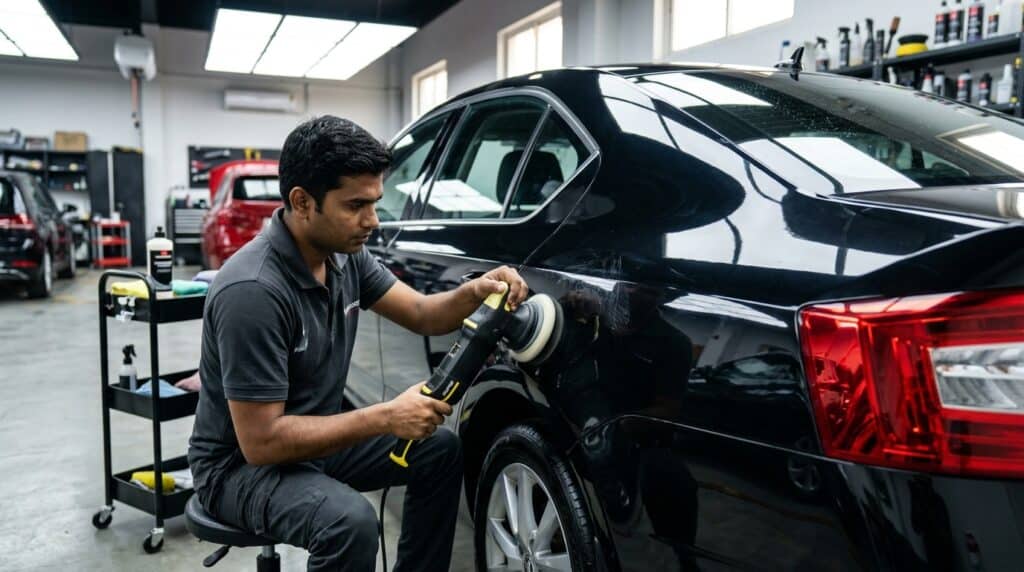
- optional dual-action polishing machine
- wax or sealant for protection after correction
What is the safest step-by-step method to remove light car scratches at home?
Paint-safe correction always begins with clean, cool panels because abrasive work on a dirty surface adds more defects. In short, light scratches should be treated in layers, not attacked in one shot.Step 1: Wash the area properly
Use a pH-neutral shampoo and a soft wash mitt. Rinse first to remove loose dust. Then wash the panel gently. Dry with a clean microfiber towel. If the area is still gritty, stop and clean again.Step 2: Remove bonded contamination
If the panel feels rough, use a clay bar or clay mitt with plenty of lubricant. This removes bonded contaminants that can interfere with polishing. Many scratches look worse because contamination surrounds the mark.Step 3: Mask nearby trim and sharp edges
Tape protects rubber and plastic trim from white residue. It also helps beginners stay away from thin edges, body lines, and badges.Step 4: Start with the least aggressive product
Put a small amount of scratch remover or light polish on a foam applicator. Work a small area, about one hand span at a time. Use straight, controlled passes or tight overlapping motions. Don’t grind into one spot.Step 5: Wipe and inspect
Buff off residue with a clean microfiber cloth. Check the result under direct light. Has the scratch improved by 50–80%? Great. Repeat once more if needed.Step 6: Increase aggression only if necessary
If the scratch remains obvious, move to a slightly stronger product or a polishing compound. But test first. Never jump to heavy correction across the whole panel.Step 7: Refine the finish
If the stronger step leaves haze, follow with a lighter polish. This restores clarity and shine.Step 8: Protect the panel
Finish with wax or sealant. Freshly corrected paint needs protection, especially in India’s heat, dust, UV exposure, and hard-water environment. The biggest DIY win usually comes from the first careful pass, not the tenth. Once a scratch is reduced enough that it stops screaming at you from six feet away, you’ve often hit the sweet spot. Chasing the last 5% is where beginners burn time and clear coat. According to DeFelsko, using measurement-aware correction helps detailers balance defect removal with long-term paint health. Even without a gauge at home, that mindset matters.When should you use scratch remover, compound, touch-up paint, or professional repair?
Not all scratches belong in the same category. Since total automotive paint thickness may be only 100–180 microns, according to DeFelsko, treatment should match damage depth, not frustration level. The direct answer is this: use polish or scratch remover for light marks, compound for moderate clear-coat damage, touch-up paint for deeper colour-coat damage, and professional repair when primer or metal is exposed.Use scratch remover or rubbing polish when:
- the scratch is light and shallow
- your fingernail barely notices it
- the water test makes it disappear
- the paint colour is still even
- the surrounding area only has mild swirl marks
Use polishing compound when:
- the mark is more obvious in sunlight
- light polish barely changes it
- the panel has oxidation or heavier marring too
- you are ready to refine the finish afterward
Use touch-up paint when:
- the scratch has cut into the colour coat
- you can see a lighter line beneath the surface
- the mark stays visible after polishing
- protection matters more than a perfect cosmetic finish
Go to a professional when:
- primer or metal is exposed
- the scratch is long and deep
- the panel has multiple defects
- the car is new, premium, or dark-coloured and you want a near-perfect result
- the area has already been repainted or repaired before
What mistakes make car scratches worse during DIY repair?
DIY correction goes wrong when people confuse pressure with skill. So yes, most scratch-removal mistakes happen before the product even starts working. The first mistake is working on a dirty panel. Rubbing dust into paint is basically controlled vandalism. The second is using kitchen cloths, old banians, or cheap towels. These create fresh marring while you “repair” the original issue. The third mistake is choosing the strongest product first. Stronger cut is not smarter correction. Then comes overworking one tiny area for too long. That creates hot spots, haze, or patchiness. Another common problem in India is trying to fix scratches in direct sun. The product dries too fast, wiping becomes harder, and the finish turns uneven. Work in shade on cool paint whenever possible. Don’t forget expectations. If the scratch is deep, no amount of rubbing will erase missing paint. And if it’s actually paint transfer from another object, you may need a gentler cleaning and polishing process instead of a harsher compound. A lot of owners damage paint because they panic the same day the scratch happens. Ironically, slowing down gives better results. Wash first. Inspect. Test. Then act. Calm hands save clear coat. Avoid these mistakes:- rubbing a dirty panel
- using rough cloths or circular dry wiping
- applying too much product
- working in direct heat
- skipping a test spot
- not protecting the paint afterward
- trying to polish through deep scratches
How do you stop scratches from coming back after you fix them?
Prevention matters because correction is finite. The simple answer is that the best way to prevent new scratches is to upgrade your washing, drying, wiping, and protection habits. Start by ditching dry dusting. It is one of the fastest ways to create micro-marring on Indian cars. Use proper car shampoo, clean wash media, and the two-bucket method where possible. Dry with a plush microfiber towel or forced air. Add paint protection after scratch removal. A wax or sealant won’t make the car scratch-proof, but it reduces friction and makes cleaning safer. It also helps grime release more easily during the next wash. Pay attention to small habits too. Don’t place bags on the boot lid. Don’t lean against dusty panels. Don’t use the same cloth for wheels and paint. Keep separate microfiber towels for paint, glass, and interiors. A practical, quotable takeaway: scratch prevention is boring, which is why it works. Gentle washing, proper towels, and regular protection are less exciting than scratch-remover videos, but they save your paint far better over time.Frequently Asked Questions
Can toothpaste remove scratches from a car?
Toothpaste may slightly reduce extremely light marks because it has mild abrasives, but it is not a proper automotive correction product.Can I remove deep car scratches at home?
You can improve the look of some deeper scratches, but you usually cannot fully remove them if paint is missing. DeFelsko notes total automotive paint systems commonly sit around 100–180 microns, so there is limited material available for correction before you need touch-up paint or professional repair.Is it better to remove scratches by hand or machine?
For small, light scratches, hand correction is often safer and more than enough. A machine becomes useful for larger areas or moderate defects, but it also increases the pace of material removal.How much does DIY car scratch removal cost in India?
For light scratches, a basic DIY setup in India can start from a modest budget if you already own shampoo and microfiber towels. The bigger saving is avoiding unnecessary repaint work for defects that live only in the clear coat. Since many scratches are superficial, the right process matters more than expensive products.Should I wax the car after removing scratches?
Yes, absolutely. Freshly corrected paint should be protected after scratch removal because the surface has been cleaned and refined. A wax or sealant helps reduce friction during future washes and adds a sacrificial layer above the corrected paint, which is important when polishing removes measurable material from the top layer.Yoast SEO Fields
Focus Keyphrase: how to remove car scratches at home SEO Title: How to Remove Car Scratches at Home – Motor Headz (50 chars) Slug: how-to-remove-car-scratches-at-home Meta Description: Learn how to remove car scratches at home safely. Clear coat is often only 30–50 microns thick, so the right DIY method matters. (137 chars) Cornerstone: false Schema Page Type: Article Social Title: Car Scratch at Home? Here’s the Safe Way to Fix It Social Description: Not every scratch needs a body shop. This step-by-step guide shows Indian car owners how to inspect, reduce, and protect paint safely at home. Social Image: use featured image Secondary Keywords: diy car scratch removal, clear coat scratch repair, remove car scratches at home, car paint scratch fix India, scratch remover for carConclusion
You don’t need to fear every scratch, but you do need to respect the paint. If the damage is light, a calm DIY process can save money and restore the panel beautifully. If the scratch is deep, the smarter move is touch-up paint or professional help. That’s not failure. That’s good judgement. Key takeaways:- inspect first and clean the panel properly
- start with the least aggressive method
- compound only when lighter correction fails
- deep scratches need touch-up paint, not hope
- protect the paint after correction so the problem doesn’t come back
▸ PUT IT INTO PRACTICE
Gear up at the Motor Headz garage
Coatings, polishes, foam wash & microfiber — made in India, free shipping from ₹300.