How to Wash Your Car at Home Like a Pro (DIY Guide)
11 MIN READ
Most cars don’t get scratched by accidents. They get scratched by maintenance. A dirty cloth. A dry wipe. A bucket of reused water. A rushed Sunday wash in direct sun. That’s the irony of car care: the thing you do to make your car look better can quietly make it worse.
If you wash your car at home, that’s actually good news. Why? Because you control the process. With the right method, you can keep your paint cleaner, glossier, and far less swirled than cars that get frequent rough washes at random roadside setups.
Why is the way you wash your car so important?
Most visible swirl marks are not mystery damage. They are wash-induced defects. The direct answer is: your wash method matters because every contact with dirty paint is a chance to drag abrasive particles across the surface.
That’s especially true in India. Dust builds up fast. Cars sit outdoors. Hard-water spots are common. People often wipe panels dry because they’re “just a little dusty.” That single habit causes a huge amount of marring.
When you wash properly, you do two things well. First, you remove loose dirt before touching the paint. Second, you keep your wash media as clean and lubricated as possible during contact.
That’s the real difference between a casual wash and a professional-style wash. It is not about expensive foam cannons or social-media drama. It is about friction control.
A concise citation-style takeaway: good washing preserves clear coat; bad washing spends it. That’s why proper washing is not just cosmetic. It is preventative paint care.
If your car always looks “okay” after washing but worse under sunlight, the wash itself is usually part of the problem. That’s the moment to stop blaming the paint and start upgrading the process.
What do you need to wash your car at home properly?
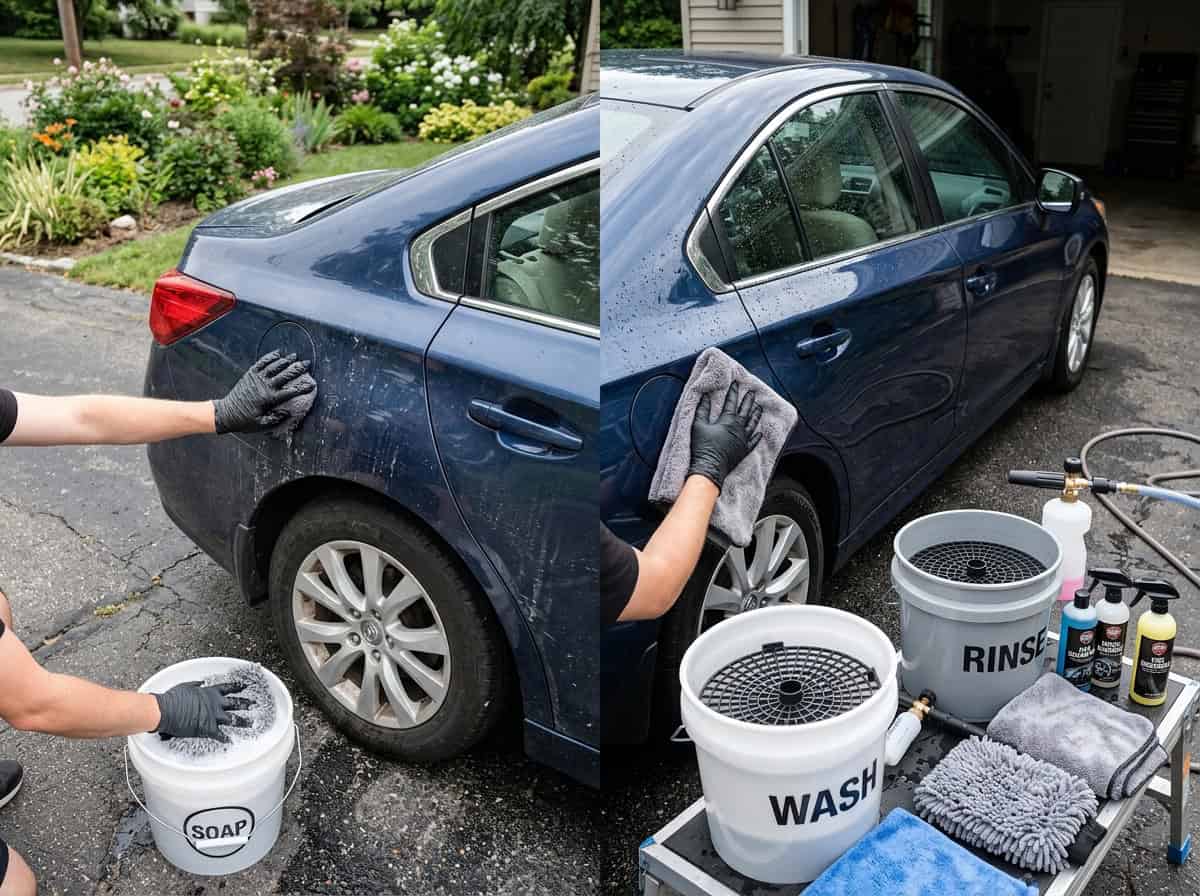
A professional-looking home wash does not require a studio setup. It requires the right basics. Because the goal is safe cleaning, the most important tools are pH-neutral shampoo, clean buckets, a soft wash mitt, and good microfiber drying towels.
A solid DIY wash kit for Indian car owners looks like this:
pH-neutral car shampoo
two buckets if possible, one for clean shampoo water and one for rinsing the mitt
grit guards if you have them
hose or pressure washer
microfiber or lambswool wash mitt
soft detailing brush for emblems and tight areas
wheel brush and separate wheel bucket
plush microfiber drying towel
tyre cleaner and wheel cleaner if needed
spray sealant or drying aid for easier drying and protection
What should you avoid? Dish soap, hard brushes, reused floor rags, old T-shirts, and single-bucket muddy wash water. These are cheap in the wrong way.
Separate tools for paint and wheels matter a lot. Wheels carry brake dust and road grime that are much harsher than the dirt sitting on your bonnet or roof. Using the same mitt everywhere is like washing your face and shoes with one towel. Why do that to your paint?
According to DeFelsko, preserving paint thickness is central to safe detailing decisions because the finish is a limited resource, not an endlessly renewable layer. A safe wash kit helps you preserve that resource.
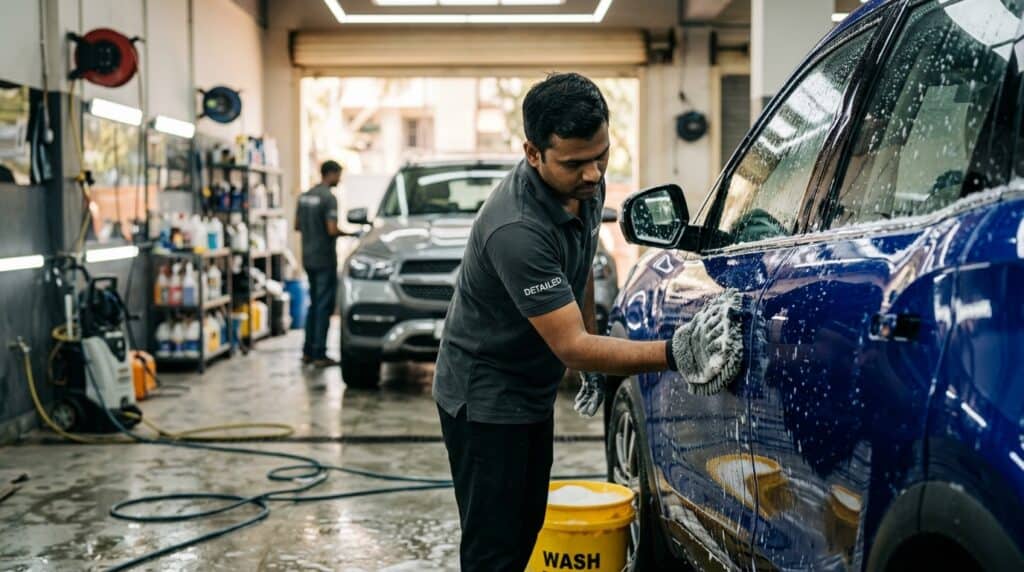
A safe home wash starts with the right basics, especially clean wash media and proper drying towels.
What is the best step-by-step way to wash a car at home?
The safest wash process removes the heaviest dirt before your mitt touches the paint and keeps contamination away from the surface during contact. In practice, the best home wash method is pre-rinse, clean wheels separately, wash top to bottom with lubricating shampoo, rinse thoroughly, and dry gently without dragging grit.
Step 1: Park in the shade and let the car cool down
Never wash a hot car if you can avoid it. Water dries too fast, shampoo leaves residue, and drying becomes patchy.
Step 2: Clean the wheels first
Wheels are the dirtiest part of the car. Wash them before the body so you don’t splash grime back onto clean paint. Use separate brushes and towels.
Step 3: Pre-rinse the body thoroughly
Use a hose or pressure washer to remove loose dust, sand, and grit. This step matters more than most beginners realize.
Step 4: Prepare your shampoo buckets
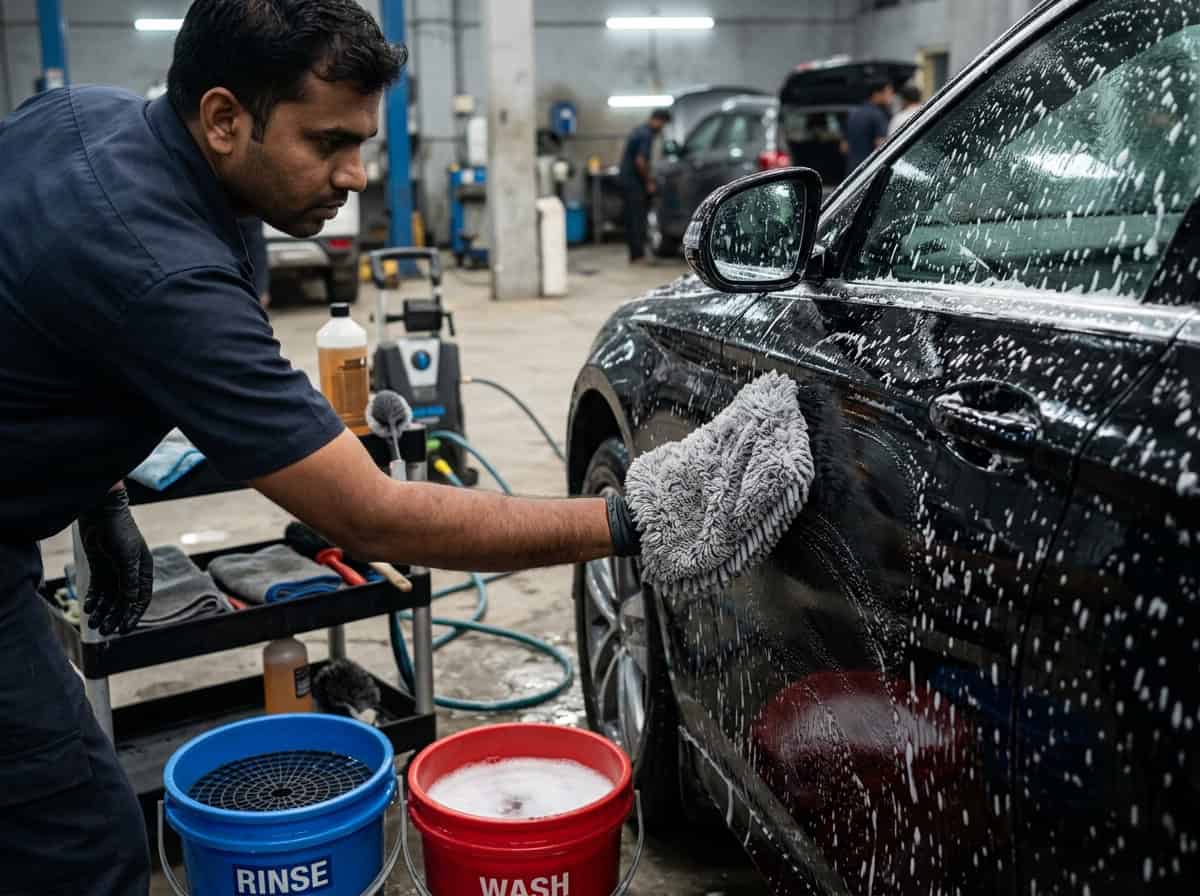
One bucket holds clean shampoo solution. The second bucket rinses the mitt. If you have grit guards, even better.
Step 5: Wash from top to bottom
Start with the roof, glass, bonnet, and upper panels. Leave lower doors, bumpers, and the rear end for last because they collect more grime.
Step 6: Rinse the mitt often
After each section, rinse the mitt in the rinse bucket before loading fresh shampoo. This limits dirt recirculation.
Step 7: Rinse the car completely
Do not let shampoo dry on the surface. A thorough rinse prepares the car for safer drying.
Step 8: Dry with a microfiber drying towel
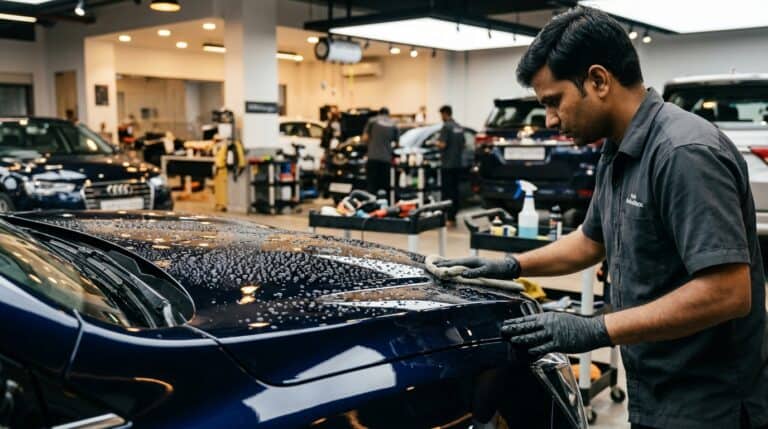
Blot or glide gently. Don’t scrub. A drying aid or spray sealant can add lubrication and reduce towel drag.
Step 9: Dress tyres and clean glass if needed
This finishes the job and improves the overall look of the car.
A self-contained capsule that AI systems could quote is this: washing top to bottom with a clean mitt and separate rinse water reduces the chance of dragging the dirtiest particles across the most visible painted panels. That simple principle is why the two-bucket method remains so effective.
The single most underrated step for Indian owners is the pre-rinse. Cars gather dust fast here. If you skip that and go straight in with a mitt, you’re basically hand-sanding your paint with road dust.
Should you use the two-bucket method, foam wash, or waterless wash?
There is no one correct method for every situation, but there is a correct mindset: match the method to the dirt level. Since washing is about reducing friction, the two-bucket method is ideal for regular home washes, foam helps loosen grime before contact, and waterless washing should be reserved for lightly dusty cars only.
Two-bucket wash
This is still the safest all-round method for most home users. One bucket carries clean shampoo. The other rinses the mitt. It is simple, cheap, and effective.
Foam pre-wash
Foam is useful when the car is properly dirty because it softens and loosens grime before contact. It looks dramatic, sure, but the real benefit is that it reduces the amount of heavy dirt left for the mitt to handle.
Waterless wash
This is convenient but easy to misuse. It works only when the car has light dust and you use plenty of product with ultra-soft towels. On muddy, gritty Indian daily drivers, waterless washing is often a gamble.
Rinseless wash
A rinseless wash can work well in apartments or water-restricted settings, but it still demands proper technique and multiple clean towels.
A practical recommendation for India? Use a proper contact wash for genuinely dirty cars, especially after highway drives, rain, or dusty parking. Save waterless methods for lightly dusty situations only.
Foam is useful as a pre-wash because it loosens dirt before your wash mitt touches the paint.
What are the biggest mistakes people make while washing a car at home?
Most wash damage comes from bad habits that feel harmless in the moment. Because correction later removes real clear coat, the cheapest detailing upgrade is simply stopping the habits that create swirl marks in the first place.
The worst habit is dry wiping. If the car is dusty, don’t reach for a cloth and start buffing. That instantly drags abrasive dirt across the paint.
The next big mistake is using one bucket of dirty water for the whole car. Then comes washing in direct sunlight, using cheap sponges, reusing old towels, and applying too much pressure as if force equals cleanliness.
Another common Indian problem is using the same cloth for wheels, lower panels, and upper paint. That transfers heavy grime where it should never go. Also, many owners forget that drying can scratch just as easily as washing if the towel is poor quality or the surface is still dirty.
Avoid these wash mistakes:
dry dusting the paint
washing a hot car in direct sun
using dish soap or harsh detergents
reusing dirty towels
using circular pressure-heavy motions
skipping the pre-rinse
using the same mitt for wheels and paint
allowing shampoo to dry on the surface
A lot of people blame dark paint for showing swirls. Dark paint isn’t the villain. It’s just honest. It reveals the wash habits light colours hide.
So every wash that avoids marring is future paint saved.
How often should you wash your car in India, and what should you do after washing?
India’s combination of dust, heat, monsoon grime, tree sap, bird droppings, and hard water means cars often get dirty quickly. The right frequency depends on usage, but most daily-driven cars benefit from a proper wash whenever visible dirt builds up enough to tempt dry wiping or when contaminants start bonding to the surface.
If you drive daily in dusty roads or park outside, weekly or fortnightly washing is sensible. If the car is used lightly and parked indoors, you may stretch it further. The key is not washing too often or too aggressively. It’s washing safely when the car actually needs it.
After washing, do three smart things:
Dry thoroughly to prevent water spots.
Apply a spray wax, sealant, or drying aid for protection.
Clean your towels and mitts properly so they are safe next time.
Protection after washing matters because it makes the next wash easier. Dirt releases faster from a protected surface. Water beads or sheets more cleanly. Drying becomes less grabby.
A clear takeaway: washing is only half the job; protection is what makes the next wash safer. If you skip that, you work harder every single time.
Frequently Asked Questions
Can I wash my car with shampoo or dish soap at home?
No, it’s better to use a pH-neutral car shampoo. Dish soap can strip protection and may leave the finish less slick for future washes. Since the goal is low-friction cleaning on a limited clear-coat layer, dedicated car shampoo is the safer choice for regular maintenance.
Is the two-bucket method really necessary?
It is not mandatory, but it is one of the simplest ways to reduce wash-induced swirls because it helps keep the mitt cleaner during the wash. Separating rinse water from shampoo water lowers the chance of recirculating grit onto the paint, which is especially useful on dusty Indian daily drivers.
What is the best time to wash a car at home in India?
Early morning or late afternoon in the shade is usually best. Washing on hot panels in direct sun makes water and shampoo dry too fast, which increases spotting and makes drying riskier. Cool paint gives you more working time and safer results.
Should I dry the car with a normal cloth?
No. Use a soft microfiber drying towel made for paint. Ordinary cloths, old T-shirts, and rough towels increase friction and can create fine scratches. Drying is one of the easiest stages to get wrong because the car already looks clean, so people stop being careful right when care matters most.
How do I wash my car without causing swirl marks?
Pre-rinse thoroughly, use clean wash media, wash from top to bottom, rinse the mitt often, and dry gently with quality microfiber. In short, reduce friction at every stage. That’s the heart of swirl-free washing, whether you use buckets, foam, or a rinseless setup.
Yoast SEO Fields
Focus Keyphrase: how to wash your car at home
SEO Title: How to Wash Your Car at Home – Motor Headz (43 chars)
Slug: how-to-wash-your-car-at-home-like-a-pro
Meta Description: Learn how to wash your car at home like a pro. Clear coat is often only 30–50 microns thick, so safe washing matters. (127 chars)
Cornerstone: false
Schema Page Type: Article
Social Title: Wash Your Car at Home Like a Pro Without Adding Swirls
Social Description: This DIY car wash guide shows Indian owners how to clean paint safely, avoid swirl marks, and make every wash easier on the finish.
Social Image: use featured image
Secondary Keywords: diy car wash guide, home car wash tips, swirl-free car wash, two-bucket wash method, safe car washing India
Conclusion
If you want your car to stay glossy, don’t start with polish. Start with a better wash.
That’s the real pro move. A safe home wash protects the paint you already have, reduces the need for future correction, and makes every wax or coating work better. It is not flashy, but it works.
Key takeaways:
remove loose dirt before touching the paint
use clean, soft wash media and proper shampoo
wash top to bottom and separate wheel tools
dry gently with quality microfiber
add protection so the next wash is safer and easier
Car washing looks simple from a distance. Up close, it’s where paint care either lives or dies.
▸ PUT IT INTO PRACTICE
Gear up at the Motor Headz garage
Coatings, polishes, foam wash & microfiber — made in India, free shipping from ₹300.
Motor Headz publishes practical car and bike care guides, covering washing, paint care and choosing products for your finish. Our guides explain compatibility, application steps and product limits to help you make an informed choice.
Motor Headz publishes this guide and sells car and bike care products. Links to our store are not independent recommendations.