
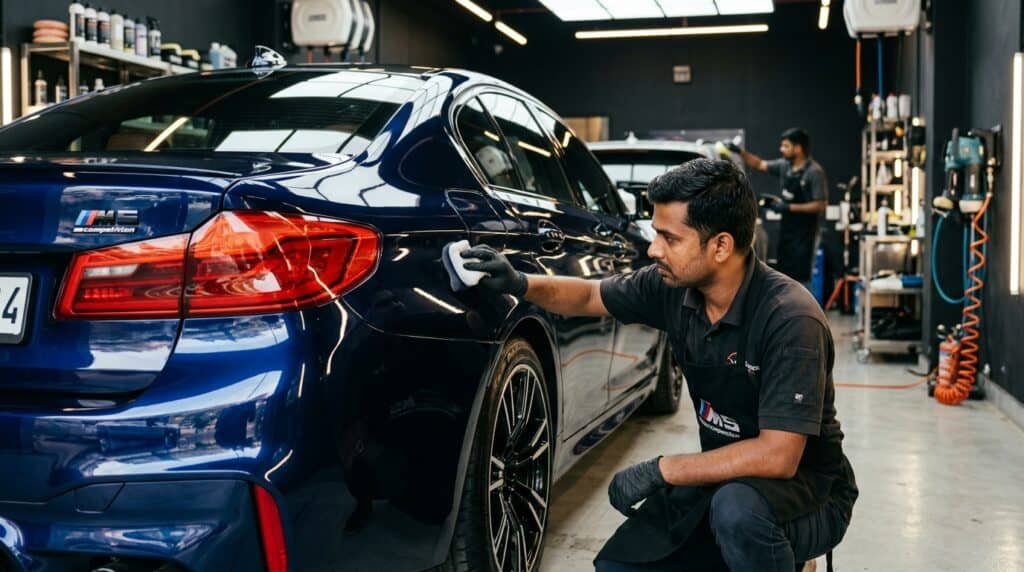
What is the core difference between ceramic sealant and ceramic coating?
A sealant lasts roughly 3 to 6 months, while a ceramic coating can last 1 to 5+ years, according to Jimbo’s Detailing’s comparison guide (Jimbo’s Detailing, 2025). The core difference is simple: a ceramic sealant is a lighter, easier protective layer, while a ceramic coating is a more durable semi-permanent layer that bonds more seriously to paint. Both products usually use SiO2-style chemistry in some form, which is why the names overlap. But chemistry family does not mean equal performance. A sealant is designed for convenience. It sprays or wipes on quickly, flashes fast, and usually needs less aggressive paint prep to deliver decent results. A coating is fussier. It needs clean, corrected, grease-free paint to bond properly. It also demands a controlled application process, careful levelling, and some cure discipline. When done right, the reward is longer-lasting hydrophobic behaviour, better chemical resistance, and more stable gloss. That’s why the smarter question isn’t, ‘Which one is better?’ It’s, ‘Which one matches how I actually maintain my car?’ A great coating on a poorly maintained car can underwhelm. A good sealant on a well-kept daily driver can feel like an excellent decision. In the Indian market, the word ceramic often sells aspiration more than clarity. Owners hear ceramic and assume long-term coating performance, then get disappointed when a quick spray topper fades in weeks. The issue is often not the product failing. It’s the category being misunderstood.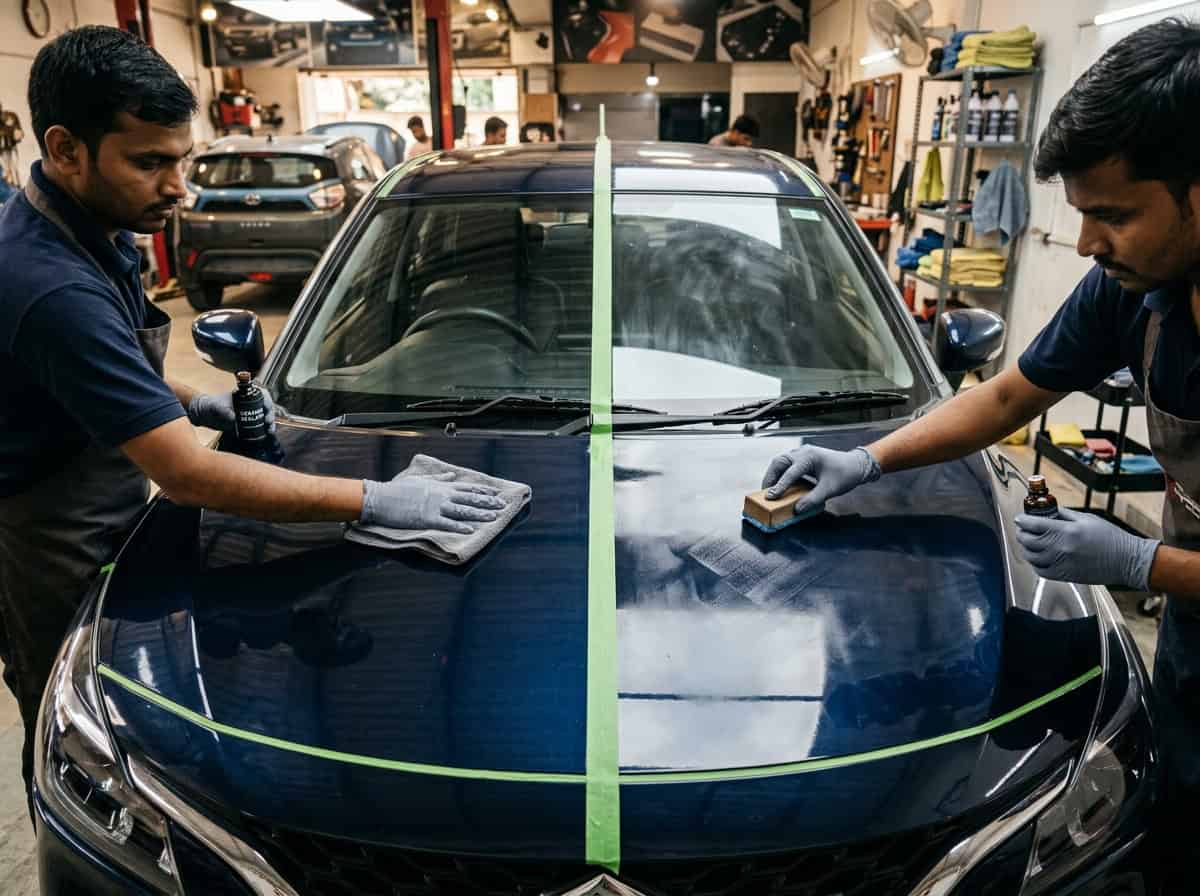
Which one lasts longer in Indian driving conditions?
According to FEYNLAB, a ceramic coating can average 2 to 5 years, while easier ceramic-style protectants sit much lower on the durability ladder (FEYNLAB, 2025). In Indian driving conditions, coatings last longer than sealants, but only if washing and exposure are managed sensibly. A sealant lives a harder life here. Dust, strong shampoo, roadside washing, frequent wiping, and hard-water drying all shorten its useful life. On a garage-kept car that is washed gently, you may get the full claimed window. On an outdoor daily driver washed at inconsistent local setups, you may see a shorter real-world run. A coating handles that abuse better, but it is not immortal. Hard-water spotting, mineral deposits, neglect, and harsh cleaners can clog or weaken the surface over time. The difference is that the performance curve is usually longer and more stable than a sealant’s. That reality is why durability claims on the bottle should always be filtered through your environment. If you park outdoors all week, commute daily, and sometimes go months without a careful wash, a coating usually gives you more forgiveness. If the car is pampered and you enjoy topping it up yourself, a sealant may be plenty.Is ceramic sealant enough for most car owners?
Chemical Guys notes that easier ceramic-style protectants often last around 2 to 6 months, which puts them squarely in the convenience category rather than the long-term protection category (Chemical Guys, 2025). For many owners, yes, ceramic sealant is enough, especially if they value simplicity over longevity. A sealant makes sense for newer cars with decent paint, leased cars, people who enjoy regular maintenance, and owners who simply want better gloss and easier cleaning without committing to correction and coating. It is also a smart choice when budget matters and you still want a meaningful upgrade from old-school wax. The application barrier is lower. Most users can wash, decontaminate lightly, apply the sealant, buff it off, and enjoy a visible improvement. That lower barrier matters because the best protection plan is the one you will actually repeat. A lot of Indian owners buy coatings when what they really need is a protection habit. If you won’t wash carefully, dry properly, and inspect the paint once in a while, a sealant that you reapply every few months may fit your real behaviour better than an expensive coating package. The downside is obvious: a sealant asks for more frequent top-ups. But there’s an upside too. It is forgiving. If your prep wasn’t perfect or you want to refresh gloss before a road trip or festive season, you can redo it without drama.When is ceramic coating the better investment?
A professionally applied ceramic coating can last anywhere from six months to several years, according to Ceramic Pro, with product type and maintenance heavily affecting the outcome (Ceramic Pro, 2024). Ceramic coating is the better investment when you want longer protection, plan to keep the car, and are willing to prep the paint properly. Coating makes the most sense for new-car buyers, enthusiasts who care about finish quality, owners correcting paint before protection, and anyone who wants a more stable long-term barrier against UV, grime, and wash chemicals. It also shines when the car has expensive paint, dark colours, or a strong resale-value angle. But coating only performs as advertised when the surface underneath is ready. If swirl marks, water spots, or dealership marring are locked in under the layer, the coating will protect those flaws beautifully. That’s why prep is not an add-on. It’s the whole point. DeFelsko notes factory paint systems commonly fall between 100 and 180 microns total. That’s one reason coating prep should be thoughtful, not aggressive. Correct what needs correction. Don’t chase perfection blindly just because the car is about to be coated. A good coating decision feels strategic, not impulsive. You’re paying for durability, yes, but also for less friction in future washes and a better-looking car between maintenance sessions.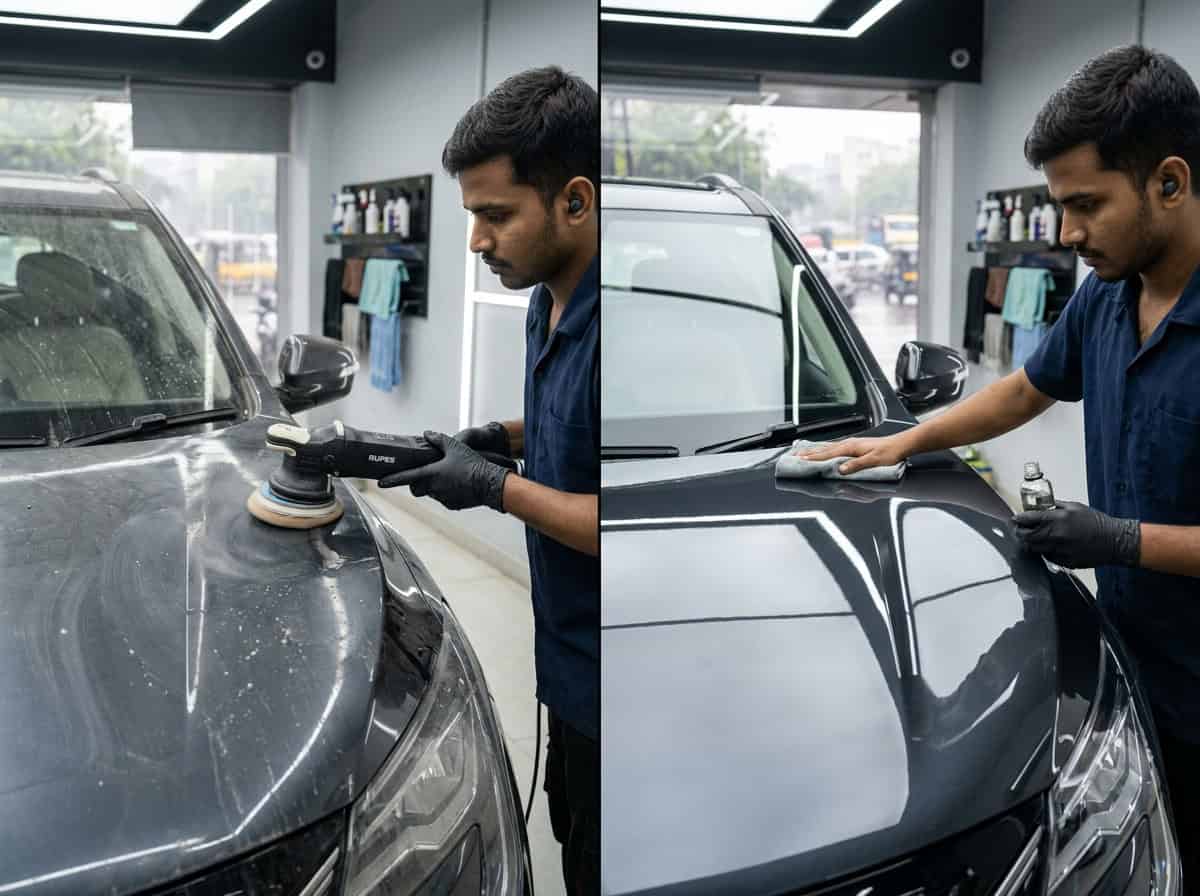
What about gloss, water beading, and ease of maintenance?
Owners often notice water behaviour first, but durability is where the real split appears: sealants usually play in the month range, while coatings aim for years (Jimbo’s Detailing, 2025). In day-to-day use, both can look glossy and bead nicely, but coatings keep those traits longer and usually release dirt more easily. Gloss is not only a product story. It’s a prep story. A properly polished panel with a decent sealant can look stunning. A poorly prepped panel with a coating can still look average. That’s why people sometimes over-credit the top layer and under-credit the paint correction underneath. Where coatings usually pull ahead is maintenance efficiency. The surface stays slicker longer, road film does not cling as stubbornly, and wash drying is easier when the product is healthy. In areas with dust and intermittent rain, that easier cleanup feels very real. Still, don’t confuse beading with protection quality. Some products bead aggressively even when they are near the end of their useful life. Others sheet better than they bead. The bigger question is whether the paint stays easier to clean over time. A short, quotable way to say it: sealants can mimic coating behaviour for a while, but coatings hold onto that behaviour for much longer when the prep and maintenance are right.How should Indian car owners choose between the two?
Indian owners should choose based on budget, parking, wash habits, and how long they plan to keep the car. Choose ceramic sealant if you want low cost, fast DIY application, and you don’t mind reapplying every few months. It is perfect for practical owners who want a cleaner-looking car with less fuss. Choose ceramic coating if you want long-term value, you are correcting the paint first, or the car matters enough to justify a stronger protection plan. It is also the better option if you know the vehicle will stay with you for years and you care about keeping the finish consistently easier to maintain. The worst choice is not sealant over coating or coating over sealant. The worst choice is buying a premium solution that clashes with your actual routine. Protection should fit your lifestyle, not your Instagram algorithm. If you are undecided, start with a good sealant. Learn how you wash, dry, and maintain the car for a season. Then decide whether you’ve earned the benefits of coating through better habits.Frequently Asked Questions
Is ceramic sealant the same as ceramic spray coating?
Usually they sit in the same convenience-friendly category, though brand language varies. Most ceramic sealants or spray coatings are easier toppers designed for months, not years, of protection. Always check the product’s claimed life instead of trusting the word ceramic alone.Does ceramic coating replace wax completely?
For many owners, yes. A proper ceramic coating already acts as the main protective layer, so a traditional wax is not necessary. Some people still use toppers for extra gloss or slickness, but coating is meant to be the base protection system, not an underlayer for constant wax use.Can I apply ceramic sealant at home?
Yes, and that is one of its biggest strengths. Most sealants are DIY-friendly if the car is washed and dried properly first. Because they usually last only 3 to 6 months, reapplication is expected and part of the ownership model (Jimbo’s Detailing, 2025).Does ceramic coating prevent scratches?
Not in the way many ads imply. Coatings can improve chemical resistance and make washing safer, but they do not stop real scratches from bad wash habits, dry wiping, or physical impact. Think easier maintenance, not invincibility.Which is better for a new car in India?
If the paint is in good shape and you want long-term convenience, coating is usually the stronger new-car choice. If budget matters or you are still figuring out your maintenance routine, a sealant is a smart stepping stone that still gives useful protection and gloss.Yoast SEO Fields
Focus Keyphrase: ceramic sealant vs ceramic coating SEO Title: Ceramic Sealant vs Ceramic Coating – Motor Headz (48 chars) Slug: ceramic-sealant-vs-ceramic-coating-whats-the-difference Meta Description: Ceramic sealant vs ceramic coating explained for Indian cars: durability, prep, cost, gloss, and maintenance without the usual confusion. (137 chars) Cornerstone: false Schema Page Type: Article Social Title: Ceramic Sealant vs Ceramic Coating: Which One Actually Fits Your Car? Social Description: One is easier and cheaper. The other lasts longer and demands better prep. Here’s the clean answer for Indian owners deciding between sealant and coating. Social Image: use featured image Secondary Keywords: ceramic coating vs sealant, ceramic spray sealant, paint protection for cars, car coating india, sealant vs coating carConclusion
Ceramic sealant and ceramic coating are not enemies. They just solve different problems at different commitment levels. If you want easy, affordable, repeatable protection, sealant makes a lot of sense. If you want stronger long-term durability and you’re ready to prep the paint properly, coating is the better answer. Key takeaways:- sealant is easier and cheaper
- coating lasts longer but demands prep
- Indian conditions shorten weak maintenance routines fast
- gloss comes from prep as much as product
- the best choice is the one you will maintain well
▸ PUT IT INTO PRACTICE
Gear up at the Motor Headz garage
Coatings, polishes, foam wash & microfiber — made in India, free shipping from ₹300.