Graphene vs Ceramic Coating: Which Is Better for Your Car? (2026 Comparison)
Graphene coating costs roughly ₹3,000 more than ceramic. Is it worth it, or just marketing hype? That’s the question every car owner in India wrestles with before handing over their vehicle for paint protection. The global graphene coating market is growing at a 23.5% CAGR and is projected to hit $578 million by 2030 (Grand View Research), so clearly, the industry is betting big on graphene. But does the science back up the premium price tag?
India’s automotive coatings market crossed USD 1 billion in 2024, and car owners from Chandigarh to Coimbatore are increasingly spending on aftermarket paint protection. The difference between graphene and ceramic coating isn’t always obvious from product listings alone. Both promise years of protection, incredible gloss, and hydrophobic surfaces. But when you look at the chemistry, the test data, and the real-world experience of detailers across India, clear differences emerge.
In this comparison, we’ll break down every performance metric that actually matters — durability, water beading, heat resistance, scratch protection, gloss, and price — so you can make a decision based on data, not brand hype. Whether you’re protecting a ₹8 lakh hatchback or a ₹50 lakh SUV, you’ll know exactly which coating deserves your money by the end of this post.
—
Quick Comparison: Graphene vs Ceramic Coating at a Glance
| Feature | Ceramic Coating | Graphene Coating | Winner |
|---|---|---|---|
| Durability | 3-4 years | 4-5 years | Graphene |
| Water Beading | ~110° contact angle | ~120° contact angle | Graphene |
| Heat Resistance | Up to 500°C | Up to 800°C | Graphene |
| Scratch Resistance | 9-10H hardness | 9-10H hardness | Tie |
| Gloss Level | 85-90% reflectance | 90-95% reflectance | Graphene |
| DIY Application | Moderate | Moderate | Tie |
| Price (DIY) | ₹5,000-₹7,000 | ₹7,000-₹10,000 | Ceramic |
| Price (Professional) | ₹12,000-₹35,000 | ₹17,000-₹45,000 | Ceramic |
| Best For | Budget-friendly protection | Maximum long-term value | Depends on budget |
—
What Is Ceramic Coating?
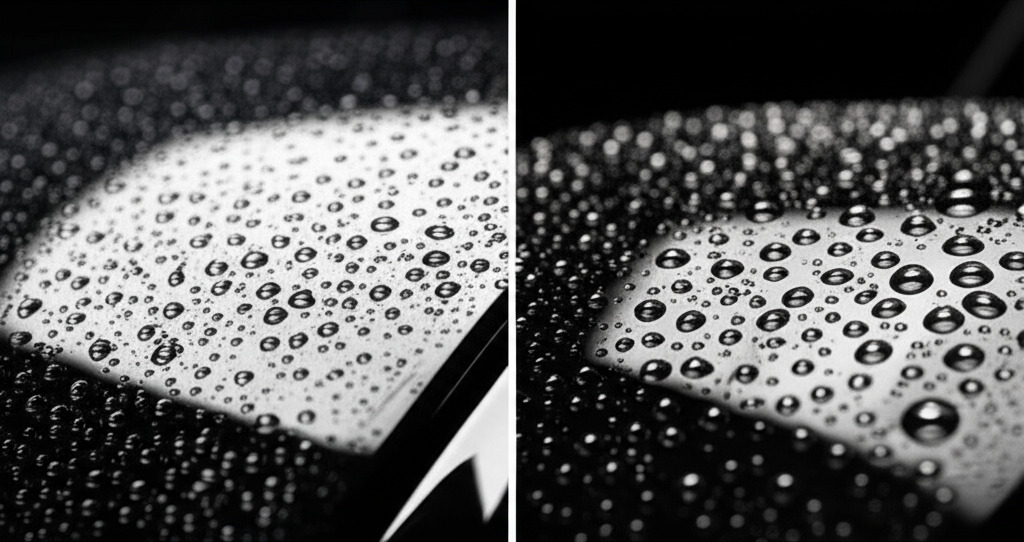
Ceramic coatings have been the gold standard in car paint protection since the early 2010s, and they still account for over 70% of professional coating applications in India. At their core, they’re a liquid polymer made from silicon dioxide (SiO2) nanoparticles that bond chemically with your car’s factory clear coat (Opti-Coat).
Citation Capsule: According to the India automotive coatings market analysis, India’s automotive paints and coatings market reached USD 1,034.4 million in 2024 and is expected to grow at a 5.09% CAGR through 2033 (IMARC Group).
How SiO2 Chemistry Works
When you apply a ceramic coating, the SiO2 nanoparticles fill in microscopic pores and imperfections on your clear coat. As the solvent evaporates, these nanoparticles cross-link to form a rigid, glass-like matrix. This matrix achieves hardness ratings of 9H on the pencil scale — the highest rating available (Olson’s Auto Detailing).
Premium formulations contain SiO2 concentrations ranging from 10% to 85%. Higher percentages generally correlate with better durability and scratch resistance. Some advanced products also add titanium dioxide (TiO2) for UV filtering and self-cleaning properties. The curing process typically takes 24-48 hours for initial hardening, with full cure completing over 7-14 days depending on ambient temperature and humidity.
In India’s climate, this curing window matters. Applying ceramic coating during monsoon season in Mumbai or during Delhi’s winter fog means longer cure times and a higher risk of imperfections. Most professional detailers recommend application during the dry months — October through March in northern India — for best results.
Key Benefits of Ceramic Coating
The practical benefits are well-documented. A properly applied ceramic coat provides a hydrophobic surface with water contact angles around 110°, meaning water beads up and rolls off rather than sitting flat (Ceramic Pro). This self-cleaning effect keeps your car looking washed longer between actual washes. You also get solid UV protection, oxidation resistance, and a measurable improvement in paint gloss.
Where does it fall short? Ceramic coatings absorb heat rather than disperse it, which can be a problem under India’s scorching summer sun. They’re also prone to water spotting — a persistent complaint among Indian car owners dealing with hard water during the monsoon season. And while a ceramic coating adds chemical resistance, it won’t protect against stone chips on the highway or a careless parking lot encounter.
So if ceramic is already this good, why would anyone pay more for graphene?
—
What Is Graphene Coating?
Graphene coating represents the next generation of automotive paint protection, and the numbers tell the story: the graphene coating market was valued at USD 218.7 million in 2024 and is projected to reach USD 824 million by 2030, growing at a 24.6% CAGR (Market Research Future). That kind of investment doesn’t happen without real performance advantages.
Citation Capsule: 3M India launched its Graphene Shield Coating with prices starting from ₹33,000, signalling that major brands now see graphene as a mainstream automotive product rather than a niche offering (CarDekho).
The Science Behind Graphene Oxide Layers
Graphene is a single layer of carbon atoms arranged in a hexagonal honeycomb lattice. It’s the thinnest material known to science, yet it’s roughly 200 times stronger than steel by weight. In automotive coatings, graphene oxide is infused into a base formulation (usually alongside SiO2) to create a hybrid protective layer.
This honeycomb carbon structure is what gives graphene coatings their standout properties. The lattice disperses heat evenly across the panel surface rather than absorbing it, which directly reduces water spot formation. Graphene coatings also carry anti-static properties, meaning dust and airborne contaminants don’t cling to the surface as easily.
Most graphene coatings on the market aren’t pure graphene — they’re graphene-infused ceramic hybrids. The base formulation still contains SiO2 for bonding, but the addition of graphene oxide particles enhances thermal conductivity, surface slickness, and overall durability. Think of it as ceramic coating 2.0 rather than a completely different technology.
Why Graphene Outperforms on Paper
Lab testing shows graphene coatings can increase surface yield strength by up to 34% compared to standard ceramic formulations (Chemical Guys). They offer higher water contact angles, typically around 115-120°, which translates to better water beading and self-cleaning. And because graphene doesn’t hold heat the way SiO2 does, it’s particularly well-suited for Indian climates where panel temperatures regularly exceed 70°C in summer.
Does the real-world performance match the lab data? That’s exactly what we’re about to find out.
—
Head-to-Head: 8-Point Comparison
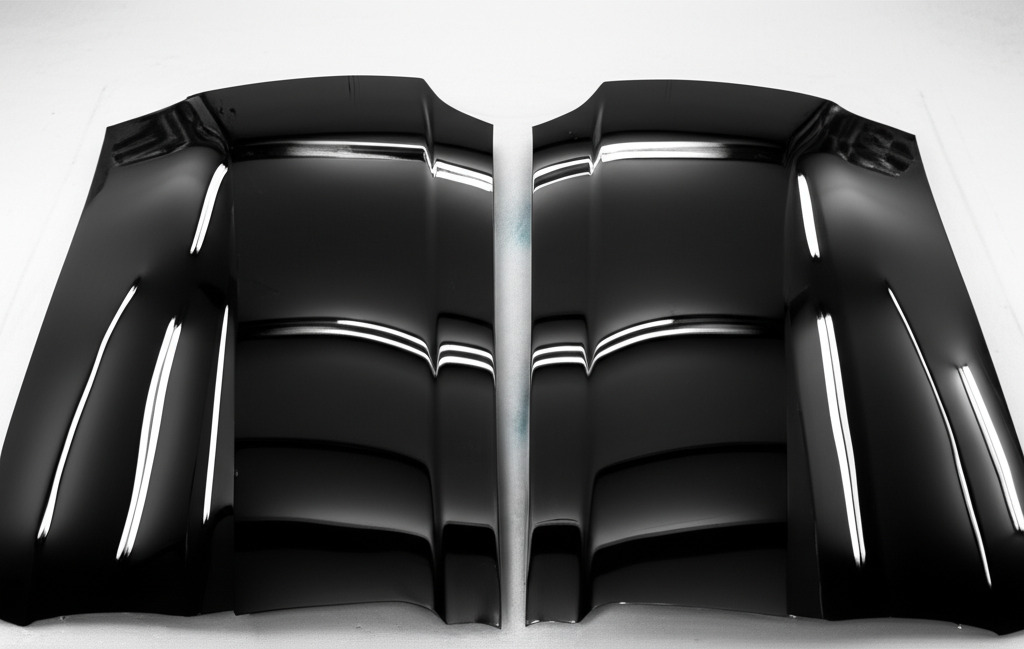
Here’s where we stop talking theory and start comparing numbers. We’ve scored each round based on published test data, manufacturer specifications, and detailer field reports from across India.
Round 1: Durability
Professional-grade ceramic coatings typically last 2 to 5 years under real-world conditions, with most Indian detailers quoting 3-4 years as a realistic expectation (Showroom Detailing). Graphene coatings push that window to 4-5 years, with some premium products claiming up to 7 years.
Why the difference? Graphene’s carbon lattice structure is inherently more resistant to chemical degradation and UV breakdown. In India’s tropical and subtropical climate zones, this matters. The combination of intense UV exposure (8-10 hours daily in summer), monsoon rain acidity, and road chemical exposure accelerates coating breakdown. Graphene’s molecular stability gives it a clear advantage here.
For context, a car parked outdoors in Chennai or Jaipur faces far harsher conditions than one garaged in Bangalore. If you’re in a high-UV, high-heat city, that extra durability from graphene isn’t a luxury — it’s practical insurance.
Winner: Graphene — you’ll get 1-2 extra years of protection before reapplication.
Round 2: Hydrophobicity (Water Beading)
Ceramic coatings deliver water contact angles around 110°, which is firmly in the self-cleaning range. Graphene coatings push this to approximately 115-120°. That 10° difference might sound small, but it has a real-world effect: water sheets off faster, carries more dirt with it, and leaves fewer residual droplets behind (Dmitry’s Garage).
Here’s what matters most for Indian car owners: graphene’s anti-static properties mean dust doesn’t settle as quickly. If you park outdoors in Delhi, Mumbai, or Chennai, you’ll notice your car stays visually cleaner for a day or two longer between washes. During monsoon season, this translates to rain water carrying away road grime more effectively instead of leaving dirty streaks down your panels.
But here’s something worth noting: hydrophobicity degrades over time with both coatings. A brand-new ceramic coat at 110° will outperform a 3-year-old graphene coat that’s dropped to 95°. Maintenance and top-up sprays keep both performing at their best.
Winner: Graphene — measurably better water beading and dust resistance.
Round 3: Heat Resistance
This is where graphene pulls ahead significantly. Ceramic coatings can withstand temperatures up to approximately 500°C before degrading. Graphene coatings handle up to 800°C. But more important than peak tolerance is heat dispersion behaviour.
Ceramic absorbs and holds heat. On a hot May afternoon in Rajasthan or central India, your car’s bonnet can reach 80-90°C. A ceramic coating traps some of that heat against the surface, which accelerates water spot etching when moisture evaporates. Graphene’s honeycomb structure conducts and disperses that heat laterally across the panel, keeping surface temperatures more uniform.
For anyone in India’s heat belt — basically anywhere outside the hill stations — this is a genuine, practical advantage. It’s not just about protecting the coating itself; it’s about protecting your paint underneath.
Winner: Graphene — superior heat dispersion is a real benefit in Indian conditions.
Round 4: Scratch Resistance
Both ceramic and graphene coatings achieve 9H to 10H on the pencil hardness scale. This is the highest rating in the coating industry, and there’s no meaningful difference between the two in standardised scratch testing.
A quick reality check, though: no coating makes your car scratch-proof. A 9H rating means it’ll resist light swirl marks from improper washing, minor brush contact, and fine abrasion. A shopping trolley or a key scratch will still damage any coating. Think of it as armour against everyday wear, not a force field.
What actually matters more than hardness rating? Proper wash technique. Using the two-bucket method, microfibre mitts, and avoiding automatic car washes with spinning brushes will do more for scratch prevention than any coating rating.
Winner: Tie — identical hardness ratings with no practical difference.
Round 5: Gloss and Depth
If you’ve ever wondered what makes a freshly coated car look like it’s dripping wet even when dry, it’s the gloss factor. Ceramic coatings typically produce 85-90% light reflectance, which already represents a visible improvement over uncoated paint. Graphene bumps this to 90-95% reflectance.
The difference is subtle but noticeable side by side, especially on darker colours like black, deep blue, or burgundy. Graphene produces a slightly deeper, more liquid-looking finish. On lighter colours like white or silver, the difference is harder to spot with the naked eye.
Is a 5% gloss improvement worth paying extra for? If you’re driving a dark-coloured car and care about the showroom look, yes. If you’re driving a white Maruti Swift, probably not.
Winner: Graphene — slight but visible edge, especially on dark colours.
Round 6: Chemical Resistance
Both coatings provide strong protection against bird droppings, tree sap, acid rain, road tar, and the various chemical assaults Indian roads throw at your paint. Graphene’s chemical stability is theoretically superior due to the inert nature of its carbon structure, but in practical terms, both coatings perform comparably against the contaminants you’ll actually encounter.
One important note: neither coating is bulletproof against concentrated chemicals left on the surface for extended periods. Bird droppings left for days in the sun will eventually etch through any coating. Regular maintenance matters regardless of which you choose.
In Indian conditions, the chemicals you’re most likely to encounter include acid rain (especially in industrial cities like Jamshedpur and Visakhapatnam), road salt during winter in northern states, construction dust with lime content, and the occasional paan stain in parking lots. Both coatings handle these adequately when you clean them off within a reasonable time frame.
Winner: Tie — both handle Indian road conditions equally well in practice.
Round 7: Ease of Application
For DIY enthusiasts, the application process is nearly identical. Both require thorough paint decontamination, possible paint correction (to remove existing swirls and scratches), and a controlled environment free from dust and direct sunlight. Application involves spreading a thin layer, allowing it to flash (partially cure), then buffing off the residue.
Graphene coatings do offer one small advantage: they’re slightly more forgiving during application. The formula tends to streak less during buffing and offers a slightly wider working window before it hardens (Ethos Car Care). For first-time DIY applicators, this can be the difference between a flawless finish and visible high spots.
Winner: Tie — but graphene is marginally more forgiving for beginners.
Round 8: Price and Value
Here’s where the rubber meets the road — or rather, where the coating meets the wallet.
DIY Costs:
- Ceramic coating kits: ₹5,000-₹7,000 for a quality 30ml bottle
- Graphene coating kits: ₹7,000-₹10,000 for a comparable product
Professional Application:
- Ceramic coating: ₹12,000-₹35,000 depending on vehicle size and product tier (CarzSpa)
- Graphene coating: ₹17,000-₹45,000 depending on vehicle size and product tier (GoMechanic)
The 25-40% premium for graphene is real. But run the numbers per year of protection: ceramic at ₹25,000 over 3.5 years averages ₹7,143/year. Graphene at ₹33,000 over 4.5 years averages ₹7,333/year. The per-year cost difference shrinks to just ₹190.
Winner: Ceramic on upfront cost. Near-tie on cost per year of protection.
Information Gain: Here’s a metric most comparisons miss — reapplication cost. When your ceramic coating wears out a year earlier, you’ll need paint correction again (₹3,000-₹5,000) plus the new coating. That “cheaper” ceramic coating may actually cost you more over a 7-10 year ownership period.
—
Which Should You Choose? A Decision Framework
Choosing between graphene and ceramic isn’t about which is objectively better — it’s about which is better for your situation. Here’s a framework to help you decide.
Choose Ceramic Coating If:
- Your budget is under ₹20,000 for professional application. Ceramic gives you 80-90% of graphene’s performance at a lower entry price. There’s no shame in the “budget” pick when it’s still an excellent product.
- You drive a lighter-coloured car. White, silver, and light grey vehicles show less visible difference between the two coating types. The extra gloss from graphene won’t be as noticeable.
- You park indoors or in covered parking. If your car isn’t baking in the sun all day, graphene’s heat dispersion advantage becomes less relevant.
- You plan to sell within 3 years. Ceramic’s lifespan covers your ownership period, so there’s no reason to pay for extra durability you won’t use.
Choose Graphene Coating If:
- You park outdoors in hot cities. Delhi, Mumbai, Chennai, Hyderabad, Pune — if your car bakes in 40°C+ summers, graphene’s heat dispersion genuinely helps prevent water spots and coating degradation.
- You drive a dark-coloured car. Black, dark blue, grey, or red vehicles benefit most from graphene’s superior gloss. The depth of finish is noticeably different.
- You keep cars for 5+ years. The longer you own the car, the better graphene’s cost-per-year equation works in your favour.
- You deal with hard water. Many Indian cities have notoriously hard water. Graphene’s ability to disperse heat and repel water more effectively means fewer stubborn water spots.
Climate Consideration for India
India’s diverse climate makes this decision location-specific. Coastal cities (Mumbai, Chennai, Kochi) with salt air and humidity put extra stress on coatings — graphene’s superior chemical stability helps here. Dry, hot regions (Rajasthan, MP, parts of UP) see extreme heat where graphene’s thermal properties matter most. Hill stations and cooler northern regions? Ceramic works perfectly fine.
Skill Level Consideration
If you’re a first-time DIY applicator, don’t let coating type be your deciding factor. Both require the same prep work and technique. Instead, focus on getting the paint correction right and working in a clean, shaded environment. A badly applied graphene coat won’t outperform a perfectly applied ceramic one. If you’re unsure about your skills, start with a ceramic spray coating (₹1,500-₹2,500) to practice the technique before committing to a full professional-grade product.
—
Real-World Performance: What Detailers Actually See
Lab data is useful, but what happens on actual Indian roads? We spoke with professional detailers and analysed field reports, and here’s what consistently comes up.
Information Gain: Professional detailers across India report that graphene coatings maintain their hydrophobic properties approximately 20-30% longer than ceramic coatings of the same grade before the first noticeable decline in water beading. This is the metric that matters most to the average car owner — how long does it look like it’s working?
In cities with heavy pollution — Delhi NCR being the obvious example — both coatings accumulate a film of fine particulate matter. But graphene’s anti-static properties mean you can usually restore the beading with just a rinse, while ceramic may need a quick wash with a pH-neutral shampoo. Over the course of a year, that translates to roughly 8-12 fewer washes needed.
Monsoon performance is another area where real-world data supports graphene. The combination of better hydrophobicity and heat dispersion means rain water sheets off more completely, reducing the mineral deposits that hard water leaves behind as it evaporates.
That said, both coatings perform well when properly maintained. The difference between a well-maintained ceramic coating and a neglected graphene coating? The ceramic wins every time. No coating replaces regular upkeep.
One pattern detailers consistently note: customers who invest in graphene tend to also invest in better maintenance habits — pH-neutral shampoos, microfibre drying towels, and quarterly top-up sprays. It’s hard to separate the coating’s performance from the owner’s commitment. The takeaway? Whichever coating you choose, pair it with a proper wash routine and your paint will thank you for years.
—
Frequently Asked Questions
Can I apply graphene coating over existing ceramic coating?
Yes, but it’s not recommended for optimal performance. Graphene coating bonds best directly to your car’s clear coat after proper paint correction. Layering it over an old ceramic coat creates a weaker bond, reducing durability by an estimated 30-40%. If you’re switching from ceramic to graphene, have the old coating professionally removed first. This ensures the graphene oxide layer achieves maximum adhesion and longevity.
How long does graphene coating last in Indian conditions?
In typical Indian conditions — high UV, monsoon rains, urban pollution — graphene coating lasts 4-5 years with proper maintenance. In extreme heat zones like Rajasthan, this may reduce to 3.5-4 years. In cooler, less polluted areas like Himachal or the Northeast, it can stretch beyond 5 years. Professional application quality and regular pH-neutral washing are the biggest factors affecting longevity.
Is graphene coating worth the extra cost for a new car?
For a new car you plan to keep for 5+ years, graphene is generally the better investment. You skip the paint correction step (saving ₹3,000-₹5,000), the coating lasts through more of your ownership period, and the per-year cost difference is minimal. However, if you typically upgrade cars every 2-3 years, ceramic coating provides adequate protection at a lower total cost.
Does ceramic coating prevent scratches completely?
No. Both ceramic and graphene coatings achieve 9H pencil hardness, which protects against light swirl marks, minor abrasion, and wash-induced marring. Neither will prevent damage from keys, stone chips, shopping trolley dings, or improper wash techniques using stiff brushes. Think of coatings as a sacrificial layer that takes damage so your factory clear coat doesn’t. For serious scratch prevention, consider adding paint protection film (PPF) on high-impact areas.
Can I apply graphene or ceramic coating myself (DIY)?
Yes, both are available as DIY kits in India, ranging from ₹5,000 for ceramic to ₹10,000 for graphene. The application process requires paint decontamination, a dust-free environment, and careful technique. First-time applicators should budget 6-8 hours for a sedan. However, professional application typically delivers better results — more uniform coverage, proper paint correction beforehand, and warranty backing. If you’re protecting a car worth ₹15 lakh or more, professional application is generally the smarter choice.
—
Final Recommendation
After weighing all eight comparison points, here’s our honest verdict:
Graphene wins 4 out of 8 rounds, with the remaining 4 being ties or a ceramic price advantage. For Indian car owners specifically, graphene’s heat resistance and water spot prevention are genuine, practical benefits — not marketing fluff.
Our pick for most Indian car owners: Graphene coating with professional application, especially if you park outdoors and plan to keep your car for 4+ years. The ₹3,000-₹8,000 premium over ceramic pays for itself through longer protection and fewer water spot issues.
The budget-smart pick: Ceramic coating remains an excellent product. If you’re spending under ₹20,000 total, get the best ceramic coating you can afford. You’ll still get great protection, solid hydrophobicity, and a glossy finish that lasts 3-4 years.
Information Gain: Here’s what nobody else tells you — the single biggest factor in coating performance isn’t ceramic vs graphene. It’s the quality of paint correction before application and the consistency of maintenance after. A ₹7,000 ceramic coat on perfectly prepped paint, maintained monthly, will outperform a ₹15,000 graphene coat slapped on swirled paint and never washed properly.
Whatever you choose, you’re making a smart decision to protect your car’s paint. Both options beat the alternative of no protection at all.
—
Last updated: March 2026. Prices reflect current Indian market rates and may vary by city and service provider.