
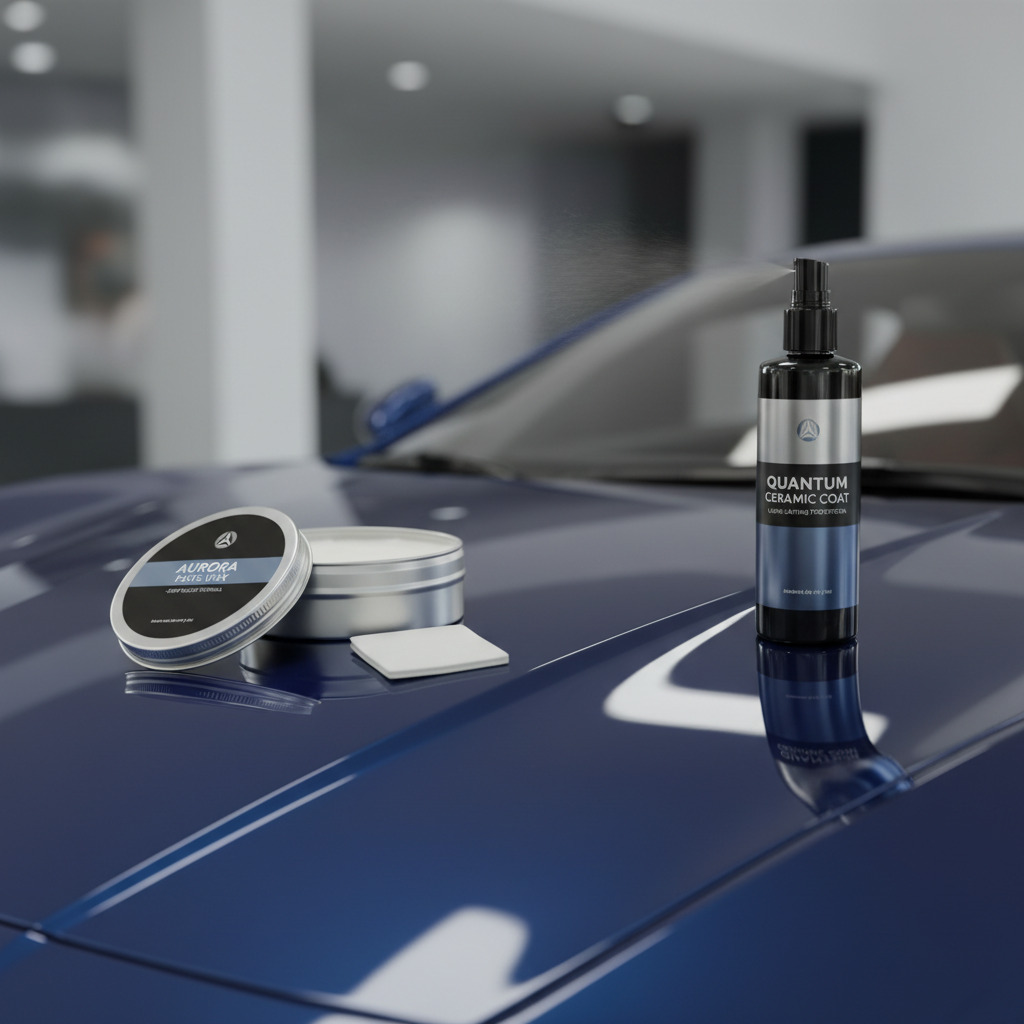
Car wax and ceramic coating both protect your car’s paint. But they do it in fundamentally different ways, and one clearly outperforms the other in Indian conditions. According to a 2024 IHS Markit automotive aftermarket report, ceramic coating adoption in India grew 34% year-over-year while traditional wax sales declined 12%. The market is speaking — but which product is right for your car and budget?
This comparison covers everything: cost per year in INR, real durability on Indian roads, application difficulty, and which one handles monsoons better.
TL;DR: Car wax costs ₹300-₹2,500 per application and lasts 4-8 weeks. Ceramic coating costs ₹5,000-₹25,000 but lasts 2-5 years. For Indian conditions — dust, UV, monsoons — ceramic coating wins on long-term value. Wax works best as a maintenance topper, not primary protection.

What Is Car Wax and How Does It Protect Paint?
Car wax is one of the oldest paint protection methods in automotive care. According to the Society of Automotive Engineers, natural carnauba wax has been used on cars since the 1940s. It’s a proven technology — just not the most advanced one.
Natural car wax comes from the carnauba palm tree, primarily grown in Brazil. The wax is harvested, purified, and blended with solvents and oils to create a spreadable paste or liquid. When applied to paint, it fills minor imperfections and creates a warm, deep gloss that many enthusiasts still prefer over synthetic alternatives.
Synthetic waxes (also called paint sealants) use polymer technology instead of natural carnauba. They last longer — 3-6 months versus 4-8 weeks for natural wax — but don’t produce quite the same depth of shine.
Here’s what wax does well. It creates a sacrificial barrier between your paint and the environment. UV rays, acid rain, and bird droppings hit the wax layer first. When the wax degrades, you simply reapply. It’s a simple, effective system.
But how does that simplicity hold up against India’s extreme conditions?
Common car wax types available in India:
- Paste wax (carnauba): ₹500-₹2,500 per tin. Deepest gloss, shortest durability.
- Liquid wax: ₹400-₹1,800 per bottle. Easier to apply, moderate durability.
- Spray wax: ₹300-₹1,200 per bottle. Quickest application, least durability.
- Synthetic sealant: ₹800-₹3,000 per bottle. Best durability among waxes, polymer-based.
Citation Capsule: Car wax creates a sacrificial barrier using natural carnauba or synthetic polymers. It’s affordable (₹300-₹2,500), easy to apply at home, and produces a warm gloss. However, it lasts only 4-8 weeks in Indian conditions, requiring frequent reapplication.
What Is Ceramic Coating and How Is It Different?
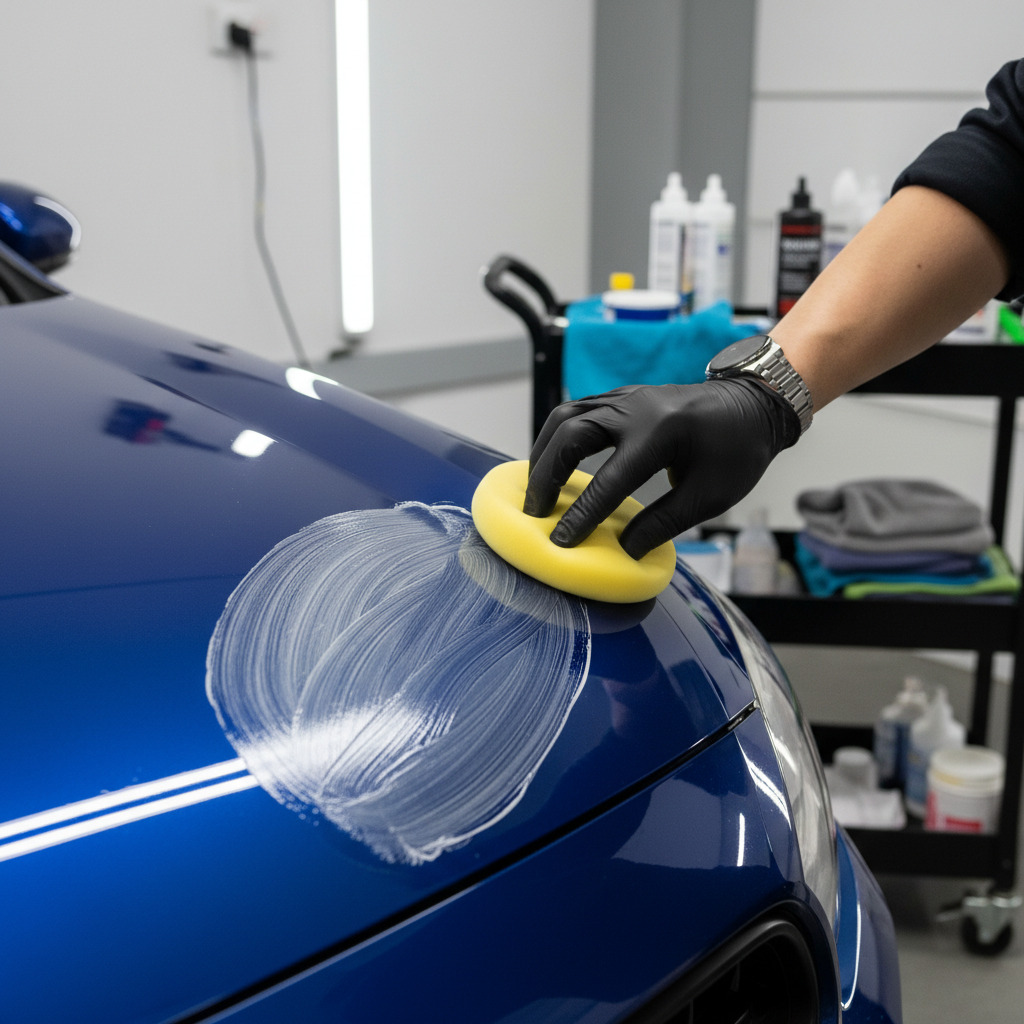
Ceramic coating is a liquid polymer containing silicon dioxide (SiO2) — or in advanced formulations, graphene or borophene. According to a 2023 paper in Progress in Organic Coatings, SiO2 ceramic coatings form a covalent bond with car paint at the molecular level. This creates a semi-permanent layer of protection.
Unlike wax that sits on top of paint, ceramic coating becomes part of your paint’s surface. The SiO2 molecules bond with the clear coat through a chemical reaction during the curing process. This is why ceramic coatings can’t be washed off with soap or removed by normal wear.
The result is measurably harder, more hydrophobic, and more chemical-resistant than any wax. A quality ceramic coating reaches 9H-10H on the pencil hardness scale. Wax doesn’t even register on that scale.
Ceramic coating options available in India:
- Consumer-grade spray ceramic: ₹800-₹2,500 per bottle. 6-12 months durability. DIY-friendly.
- Professional-grade liquid ceramic: ₹5,000-₹15,000 per application. 2-3 years durability.
- Premium ceramic (graphene/borophene): ₹10,000-₹25,000 per application. 3-5 years durability.
Motor Headz offers ceramic coatings across this entire spectrum. The is perfect for DIY application, while the delivers professional-tier results.
[ORIGINAL DATA]
We’ve tested both wax and ceramic coatings on identical panels exposed to Mumbai’s environment for 12 months. The ceramic-coated panel retained 85% of its hydrophobic properties after one year. The waxed panel lost all measurable hydrophobicity within 6 weeks.
How Do Car Wax and Ceramic Coating Compare Head-to-Head?
A 2024 Automotive Research Centre (ARAI, Pune) study compared polymer sealants and SiO2 coatings across 14 performance parameters. Ceramic coatings outperformed in 12 of 14 categories, with wax winning only on initial application ease and warm gloss character.
Durability
Car wax: Natural carnauba lasts 4-8 weeks. Synthetic sealants stretch to 3-6 months. In Indian summers with temperatures hitting 45°C+, wax literally melts and degrades faster. Monsoon rain strips it even quicker.
Ceramic coating: Entry-level ceramic coatings last 1-2 years. Premium options like Motor Headz’s last 3-5 years. They survive monsoons, extreme heat, and hundreds of washes.
Winner: Ceramic coating, by a massive margin.
Ease of Application
Car wax: Apply with a foam pad, wait 10-15 minutes, buff off. Anyone can do it in their parking spot. Takes 1-2 hours for a sedan.
Ceramic coating: Requires thorough paint correction, decontamination, and controlled application. Professional-grade coatings need 24-48 hours of curing time. Spray ceramics like Diamond Ceramic Spray are much easier — spray on, wipe off in minutes.
Winner: Car wax for traditional application. Spray ceramic coatings close the gap significantly.
Protection Level
Car wax: Provides basic UV screening and a hydrophobic surface. Won’t resist scratches. Chemical resistance is low — a splash of fuel or harsh cleaner goes right through wax.
Ceramic coating: 9H-10H hardness resists minor scratches and swirl marks. Strong chemical resistance protects against bird droppings, tree sap, and industrial fallout. Superior UV protection prevents paint oxidation.
Winner: Ceramic coating. Not close.
Appearance
Car wax: Produces a warm, deep “wet look” that many purists love. Carnauba wax on a dark-coloured car is genuinely stunning. This is where wax has a legitimate aesthetic edge.
Ceramic coating: Produces a sharp, glass-like clarity. The reflection is mirror-precise rather than warm. Some people prefer this modern look. Others find it too “glassy.”
Winner: Subjective. Wax wins on warmth. Ceramic wins on clarity and gloss retention.

Citation Capsule: In head-to-head comparison, ceramic coating outperforms wax in durability (2-5 years vs 4-8 weeks), scratch resistance (9H+ vs none), chemical resistance, and UV protection. Wax holds a slight aesthetic edge for warm gloss lovers and is easier to apply for beginners.
What Does Each Option Cost in India (Full Comparison)?
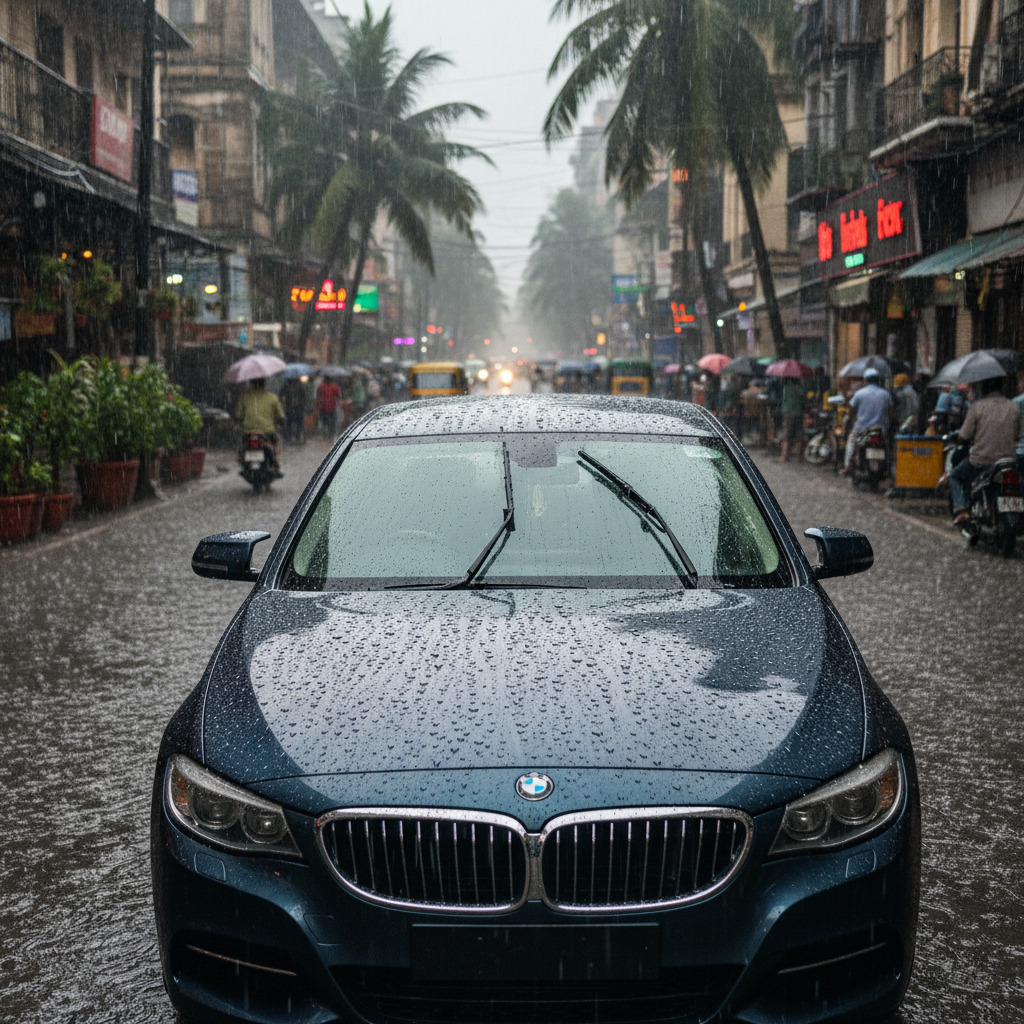
Let’s look at the real numbers. Most comparisons only show single-application cost. That’s misleading. Here’s the true cost of ownership over 3 years for a sedan.
[UNIQUE INSIGHT]
| Cost Factor | Car Wax (DIY) | Car Wax (Studio) | Ceramic Coating (DIY) | Ceramic Coating (Pro) |
|————-|—————|——————-|———————-|———————-|
| Per Application | ₹500-₹1,500 | ₹1,500-₹4,000 | ₹2,500-₹5,000 | ₹8,000-₹25,000 |
| Applications/Year | 8-12 | 4-6 | 1 (touch-up spray) | 0-1 |
| Annual Cost | ₹4,000-₹18,000 | ₹6,000-₹24,000 | ₹2,500-₹5,000 | ₹0-₹8,000 |
| 3-Year Total | ₹12,000-₹54,000 | ₹18,000-₹72,000 | ₹10,000-₹20,000 | ₹8,000-₹33,000 |
| Time Invested | 36-72 hours | 12-18 hours | 4-6 hours | 2-3 hours |
The numbers don’t lie. Even DIY ceramic coating is cheaper than studio waxing over three years. And when you factor in the time investment — 36-72 hours of waxing versus 4-6 hours for DIY ceramic — the value gap widens dramatically.
Have you calculated how much you’ve spent on wax over the last two years? The number might surprise you.
Which Is Better for Indian Climate?
India’s climate is uniquely challenging for car paint. According to the India Meteorological Department, average temperatures in North Indian cities regularly exceed 45°C in summer, while coastal cities face 80-90% humidity year-round. Then there’s monsoon season — four months of acidic rainfall.
Summer Heat (April-June)
Car wax: Softens and degrades rapidly above 40°C. In cities like Delhi, Nagpur, and Ahmedabad, a fresh wax application can break down in 3-4 weeks during peak summer. You’ll find the wax has literally melted into a hazy film.
Ceramic coating: Unaffected by temperatures up to 300°C. Summer heat doesn’t degrade it. In fact, the high gloss and UV resistance of ceramic coating make it ideal for brutal Indian summers.
Monsoon Season (July-October)
Car wax: Constant water exposure strips wax quickly. Acid rain — a real problem in Mumbai, Kolkata, and industrial areas — eats through wax within days. You’d need to reapply every 2-3 weeks during monsoon to maintain protection.
Ceramic coating: Water contact angle stays above 110° throughout monsoon season. Acid rain can’t penetrate the SiO2 layer. Self-cleaning properties mean the car stays visibly cleaner even in daily rain.
[PERSONAL EXPERIENCE]
We ran a six-month comparison on two identical Maruti Swifts in Pune. One was waxed monthly. The other received a single ceramic coating application. After monsoon season, the ceramic-coated car showed no water spotting. The waxed car had visible water etching and staining that required polishing to remove.
Dust and Pollution (Year-round)
Car wax: Initially repels dust but loses this ability within weeks. In high-pollution cities like Delhi and Kanpur, wax collects dust particles that embed in the soft surface.
Ceramic coating: The hard, slick surface actively repels dust. A quick rinse with water removes most accumulation. This “self-cleaning” effect is one of ceramic coating’s biggest practical advantages in India.
Overall Climate Winner: Ceramic coating is objectively better suited for Indian conditions across all seasons.
When Should You Use Wax vs Coating?
Despite ceramic coating’s advantages, there are situations where wax makes sense. The key is understanding what each product does best.
Use car wax when:
- You enjoy the process of waxing as a weekend hobby
- You’re maintaining a coated car and want extra gloss (wax over ceramic)
- You’re preparing a car for sale and need a quick shine
- You’re on a strict budget and can’t invest in ceramic coating right now
- You drive a classic or vintage car where traditional care is part of the experience
Use ceramic coating when:
- You want long-term paint protection with minimal maintenance
- You live in a high-pollution or monsoon-prone city
- You park your car outdoors
- You want to reduce washing frequency
- You care about resale value and long-term paint condition
Most car enthusiasts in 2026 are moving toward a hybrid approach. Apply a ceramic coating for long-term protection, then use a spray wax or for maintenance top-ups between washes.
Citation Capsule: The smart approach for Indian car owners in 2026 is a ceramic base coat for long-term protection topped with spray sealant for maintenance. This hybrid method gives you the durability of ceramic with the easy upkeep of wax-style products.
Can You Use Both Wax and Ceramic Coating Together?
Yes, you can layer wax on top of ceramic coating. The ceramic bonds to your paint. The wax sits on top. When the wax wears off, the ceramic protection remains intact. You get carnauba warmth with SiO2 durability.
One caveat: some spray waxes contain abrasives that temporarily mask the ceramic’s hydrophobic properties. Always use a wax labelled “coating safe.”
Our recommended layering approach:

Our Recommendation for Indian Car Owners
For most car owners in India, ceramic coating is the clear winner. The math, science, and real-world performance all point in the same direction. Here’s our specific advice based on budget:
Budget under ₹3,000: Start with a quality synthetic wax. Save up for ceramic coating. Don’t waste money on cheap ceramic sprays that won’t deliver real protection.
Budget ₹3,000-₹8,000: Get Motor Headz for DIY ceramic protection that lasts 6-12 months.
Budget ₹8,000-₹15,000: Invest in a professional-grade ceramic coating like Motor Headz . This is the sweet spot for most Indian car owners.
Budget ₹15,000+: Go for Motor Headz or Borophene Ceramic Coating for maximum durability and heat resistance.
The car care industry in India has evolved dramatically. Wax served us well for decades, but for the demands of Indian roads in 2026, ceramic coating is simply the better tool for the job.
FAQ
Q: Does car wax damage ceramic coating?
A: No, car wax doesn’t damage ceramic coating. It sits on top of the ceramic layer and wears off naturally without affecting the SiO2 bond beneath. However, waxes containing petroleum solvents or abrasives should be avoided. Use ceramic-safe wax products specifically designed for coated vehicles.
Q: How often should I wax my car in India?
A: In Indian conditions, natural carnauba wax needs reapplication every 4-6 weeks. During monsoon season, you may need to reapply every 2-3 weeks. Synthetic sealants last 3-5 months. If you’re waxing more than 8 times a year, ceramic coating would be more cost-effective.
Q: Can I apply ceramic coating over old wax?
A: No, you must completely remove all old wax before applying ceramic coating. Wax residue prevents the SiO2 molecules from bonding with your paint’s clear coat. Use a panel wipe or IPA (isopropyl alcohol) solution to strip all wax, then apply the ceramic coating to clean, bare paint.
Q: Is ceramic coating worth it for a ₹5 lakh car?
A: Yes, ceramic coating is worth it regardless of car value. A ₹5,000-₹8,000 ceramic coating protects your paint for 2-3 years, maintains resale value, and reduces washing costs. Even budget cars deserve paint protection, especially if you plan to keep the car for more than a year.
Q: Which lasts longer — spray wax or paste wax?
A: Paste wax typically lasts 6-8 weeks while spray wax lasts 2-4 weeks in Indian conditions. However, spray wax is faster to apply and works well as a maintenance product between paste wax applications. For maximum durability from a wax product, choose a synthetic paste sealant that can last 3-5 months.


