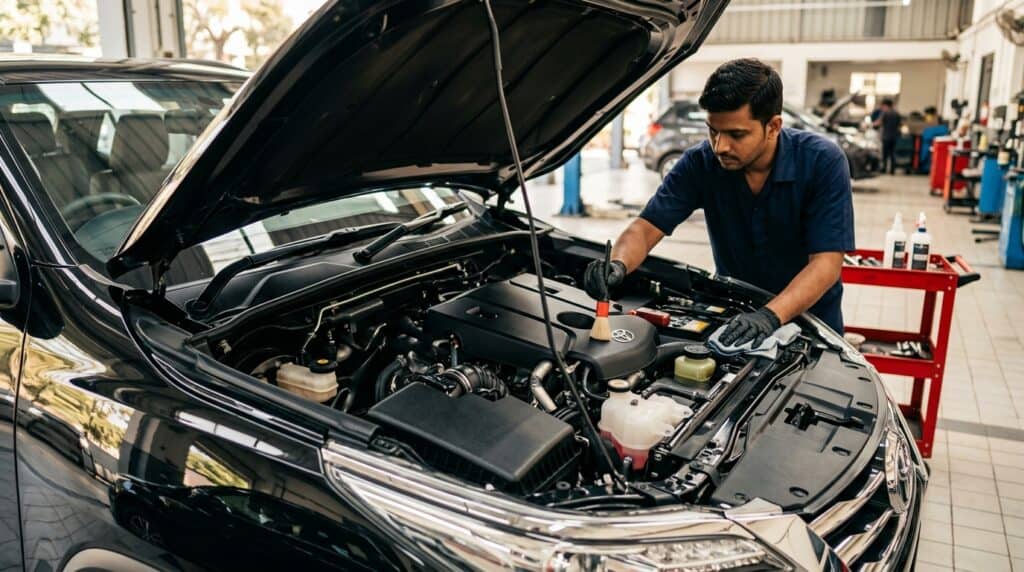
That means more first-time owners are now trying basic detailing jobs at home instead of outsourcing every little thing. Engine bay cleaning sits right in that danger zone: it looks simple on YouTube, but one careless spray can create a very annoying electrical problem.
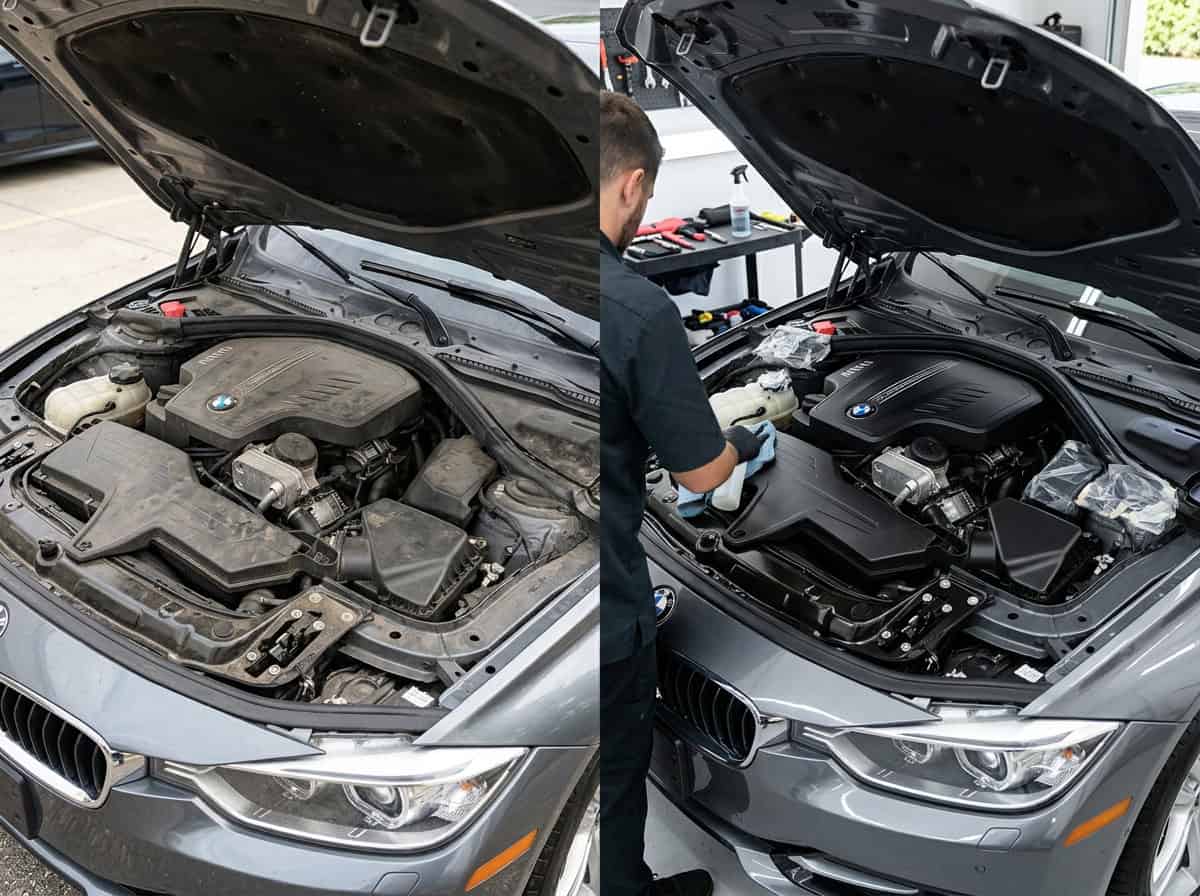
Still, a dirty engine bay is not harmless either. Dust traps moisture. Oil mist attracts grime. Plastic covers fade. Rubber hoses look older than they are. And if you’re ever selling the car, a filthy bay quietly tells the buyer the rest of the maintenance may have been casual too.
The good news? You do not need a pressure washer and a prayer.
If you work on a cool engine, protect the sensitive bits, use controlled moisture instead of flooding, and dry properly, engine bay cleaning at home is very manageable for most Indian cars.
Is it safe to clean a car engine bay at home?
India’s car detailing services market generated USD 3,633.4 million in 2024 and is projected to grow at 6.4% CAGR, according to Grand View Research. That growth tells you something important: more owners care about presentation and maintenance. The direct answer is yes, it is safe to clean a car engine bay at home, but only when you control water, heat, and chemical exposure carefully.
What makes engine bay cleaning risky is not water alone. Modern cars are designed to survive rain, puddles, and humid Indian monsoons. The real problem comes when people clean a hot engine, force water into connectors, or spray harsh chemicals onto plastics, insulation, or alternators and then leave everything wet.
A home engine bay clean should feel closer to interior detailing with extra caution than to washing a muddy tractor. You’re not trying to power-wash the engine into submission. You’re trying to loosen grime, lift oily residue, and restore a neat, dry, satin look.
If your car starts fine, has no exposed damaged wiring, and the engine bay contains only normal dirt and light grease, you can usually clean it yourself. If there’s heavy oil leakage, loose insulation, rodent damage, or visible broken connectors, stop. That’s no longer a detailing job. That’s a mechanical inspection job.
So here’s the practical takeaway for everyday owners: engine bay cleaning is safe when the goal is maintenance and presentation, not deep restoration with aggressive water and harsh solvents.
At Motor Headz, the easiest way to explain the risk is this: the engine bay is not “waterproof,” but it is also not made of sugar. It can handle sensible cleaning. It cannot handle panic-cleaning.
Safe engine bay cleaning starts with protection, not spraying.
What should you cover before cleaning the engine bay?
A controlled engine bay wash is safer than most people imagine, but only if sensitive parts are protected first. Grand View Research says India’s detailing market is already worth USD 3,633.4 million, which is one reason more DIY owners are trying professional-looking jobs at home. The answer here is clear: cover exposed electrical components, open intakes, aftermarket wiring points, and anything already cracked or vulnerable.
On many modern cars, you may not need to cover every visible component. Manufacturers do design these spaces to handle moisture. But “can tolerate some moisture” is not the same as “please flood this with a hose.”
At minimum, inspect and protect:
battery terminals if they are exposed
alternator area if it sits open and low
exposed fuse box covers that don’t seal tightly
aftermarket horns, lights, or accessory wiring
exposed cone intake filters or open intake mouths
damaged connector boots or taped joints
alarm sirens and non-factory electronics
A simple plastic bag and masking tape is usually enough for light protection. You are not waterproofing a submarine. You are just preventing direct spray and chemical pooling.
Do not wrap the entire engine like a crime scene. That often creates more trouble because people forget to remove covers or trap moisture underneath. Be targeted. Be neat.
A good citation-ready summary is this: the safest home engine bay clean begins by shielding exposed electrical and intake areas from direct liquid contact, because the biggest DIY failures come from forcing water into already vulnerable components rather than from normal surface moisture itself.
Parts you usually do not need to panic about
If the engine bay is in decent condition, these can often be cleaned gently without elaborate wrapping:
plastic engine covers
painted strut towers
underside of bonnet insulation surface, if not damaged
coolant reservoir exterior
airbox exterior
rubber hoses and capped reservoirs
Still, “gently” matters. Use misting, not flooding.
Parts that deserve extra caution
alternator
exposed ignition coil packs on older cars
cracked fuse box lids
ECU housings with questionable seals
exposed aftermarket relay boxes
open pod filters
In Indian cars that have seen accessory work, the non-factory wiring is often the weak point. The stock wiring usually survives sensible cleaning just fine. It’s the extra fog lamps, horn kits, audio cables, and taped joints that create surprises.
Which products and tools are safest for engine bay cleaning?
More owners are now shopping for DIY detailing products online, and that creates a new problem: too many choices and too much nonsense marketing. The direct answer is simple: use a mild degreaser, detailing brushes, microfiber towels, a spray bottle with water, and a plastic-safe dressing. Avoid harsh APC dilution guesswork, acidic cleaners, and pressure washers.
You do not need a huge kit. In fact, engine bay cleaning gets riskier when people bring too much aggression to the party.
A safe home kit looks like this:
pump sprayer or misting bottle with clean water
mild degreaser or diluted APC that is safe on plastics and rubber
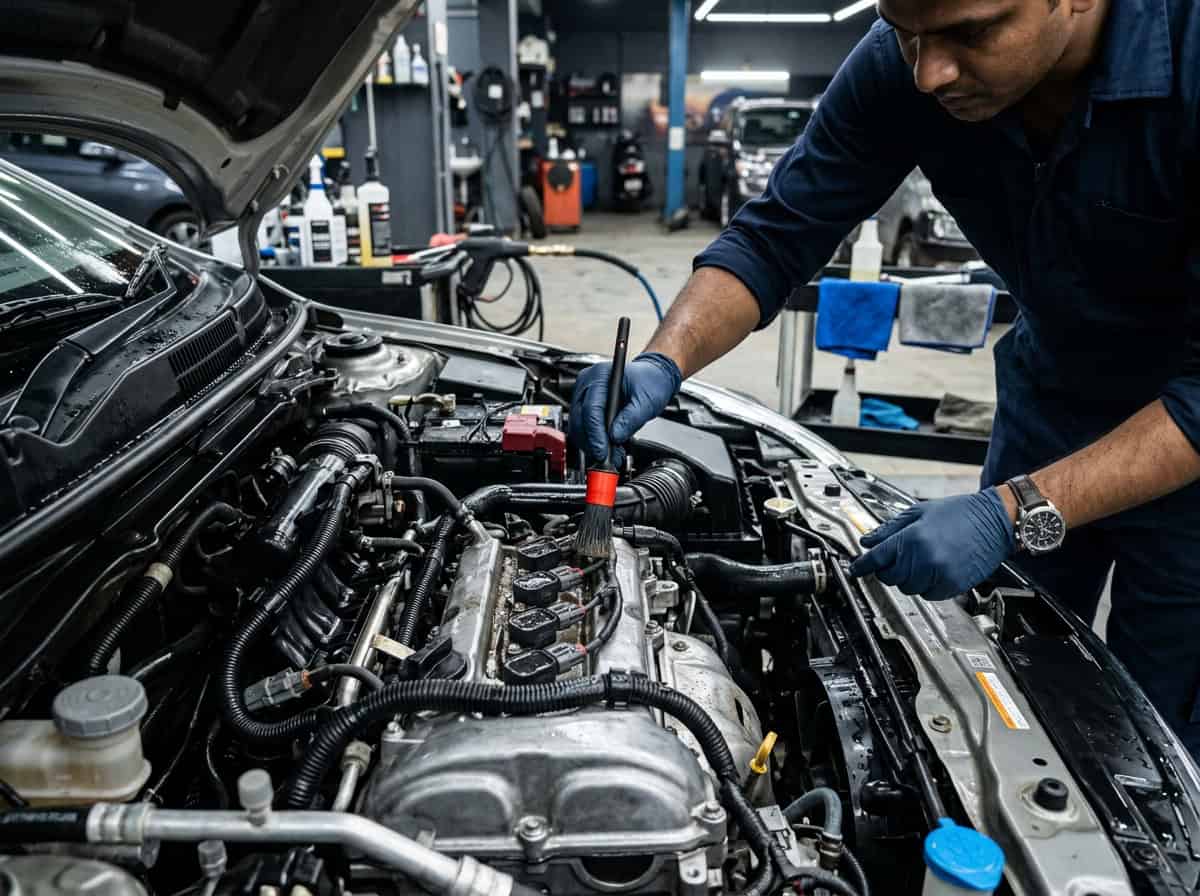
soft detailing brushes of different sizes
old microfiber towels for grime removal
one clean microfiber towel for final wipe
plastic bags and tape for sensitive areas
blower, leaf blower on low, or compressed air for drying
water-based engine dressing for plastic and rubber trim
If there is only light dust, even a damp microfiber and brush work may be enough. Don’t escalate just because the internet told you to.
Avoid diesel, kerosene, strong solvent cleaners, kitchen degreasers, or highly concentrated alkaline products unless you really know what you are doing. They can stain plastics, dry out rubber, and make the engine bay look worse after one “successful” clean.
Here’s the useful rule: if a cleaner feels like it belongs in a factory floor spill kit, it probably doesn’t belong in your Sunday engine bay routine.
Best tool mindset for beginners
use more towels, less water
use brushes for corners, not brute force
spray cleaner on the brush or towel for delicate zones
keep a separate towel for greasy spots
finish with drying before dressing
A quotable capsule: the safest engine bay toolset is not the most powerful one; it is the one that lets you control where moisture and chemicals go, because precision matters more than force in a modern engine bay.
A mild cleaner, soft brushes, and towels beat aggressive washing nearly every time.
How do you clean a car engine bay step by step without damage?
India’s detailing market is expanding quickly, but safe process still beats flashy tools. With the market at USD 3,633.4 million in 2024, more owners want professional results at home. The direct answer is this: clean on a cool engine, dry-remove loose dust, protect sensitive parts, mist cleaner where needed, agitate with brushes, wipe away grime, use minimal rinse or damp towel follow-up, then dry fully before dressing.
Here is the practical method.
1. Let the engine cool completely
Never start with a hot engine. Heat bakes chemicals, flashes water into awkward places, and can even crack already tired plastics. If you just drove the car, wait. Seriously. This is not the step to rush.
2. Open the bonnet and inspect first
Look for loose battery clamps, exposed wiring, cracked caps, aftermarket joints, rodent damage, or obvious oil leaks. If something already looks sketchy, do not introduce moisture yet.
3. Remove loose dust and leaves
Use a soft brush, blower, or dry microfiber. You want to remove the easy dirt before adding any liquid. This one step makes the rest far safer.
4. Cover sensitive spots
Use plastic covers on exposed electrical points, open filters, and questionable wiring areas. Keep it selective.
5. Apply cleaner to dirty zones
Spray the degreaser onto the surface, brush, or towel depending on the area. For greasy build-up near caps or edges, let it dwell briefly. Do not let it dry in place.
6. Agitate gently
Use brushes for tight areas and microfiber for flatter surfaces. Work from cleaner sections toward dirtier ones so you are not smearing grease everywhere.
7. Remove residue with damp towels or light mist
This is the key difference between safe and sloppy. You do not need to hose down the whole bay. Wipe away loosened grime with damp microfiber towels. If you do use water, use a very light mist, never a direct jet.
8. Dry thoroughly
Use fresh towels and a blower. Pay attention to gaps near connectors, around caps, and in plastic channels. Moisture left behind causes most “I cleaned it and now something feels weird” stories.
9. Apply dressing sparingly
Use a water-based dressing on plastic and rubber only. Avoid belts, pulleys, hot metal parts, and anything that should remain dry. You want a clean satin finish, not an oily, shiny mess.
10. Start the car and check
After removing every cover, start the engine. Let it idle. Watch for warning lights or rough running. If everything feels normal, close the bonnet and enjoy the glow.
A home detail almost always looks better when you stop at “clean and tidy” instead of chasing a wet-showroom shine. Overdressing is the engine-bay version of over-editing. It rarely improves the result.
What mistakes damage engine bays during DIY cleaning?
The size of India’s car care market shows how quickly DIY maintenance culture is growing, but growth also means more bad advice gets repeated. Grand View Research pegs the India detailing market at USD 3,633.4 million in 2024. The biggest DIY mistakes are cleaning a hot engine, using too much water, blasting connectors with pressure, leaving chemical residue behind, and skipping the drying step.
Let’s make those mistakes painfully obvious.
Mistake 1: Cleaning right after a drive
This is how cleaner stains plastics and steam drives moisture deeper than you intended.
Mistake 2: Using a pressure washer up close
A pressure washer turns a manageable cleaning job into an electrical gamble. The problem is not water. It’s water under force.
Mistake 3: Flooding greasy areas
People think more liquid equals more cleaning. Usually, it just moves grime into connectors, brackets, and trapped corners.
Mistake 4: Spraying harsh chemicals on everything
Rubber seals, stickers, plastics, and painted brackets do not all enjoy the same chemistry. Use the mildest product that works.
Mistake 5: Forgetting to dry hidden areas
This is the classic one. The engine starts. Everything seems fine. Next morning, one connector complains. That’s why drying is not optional.
Mistake 6: Dressing everything until it shines
Belts should not be glossy. Pulleys should not be glossy. Dust sticks to greasy dressing faster than you can say “why does this look worse now?”
A concise citation capsule: DIY engine bay damage usually comes from force and residue, not from careful cleaning itself; high-pressure water, harsh chemicals, and poor drying create far more risk than a mild cleaner, brushes, towels, and controlled moisture ever do.
How often should you clean your car engine bay in India?
India’s hot summers, dust, traffic grime, and monsoon humidity create harsher under-bonnet conditions than many owners realise. The direct answer is: for most Indian cars, a light engine bay cleaning every 3 to 6 months is enough, with spot cleaning in between when dust or oil mist builds up.
If you drive in city traffic and park in a basement or covered space, the bay may only need attention a few times a year. If you travel through dusty highways, construction zones, village roads, or monsoon mud, you may want more frequent wipe-downs.
The goal is not to make the engine bay look freshly detailed every weekend. The goal is to prevent build-up from becoming sticky, ugly, and harder to clean later.
A good maintenance rhythm looks like this:
monthly visual inspection
quick dust wipe every few weeks if needed
deeper safe clean every 3 to 6 months
check immediately after oil spills or rodent issues
If the car is going up for sale, one careful engine bay clean can improve presentation dramatically. Just don’t do it five minutes before a buyer arrives and then hand over a damp engine bay. That’s how suspicion starts.
The best-looking engine bays are rarely the ones cleaned aggressively. They are the ones that were never allowed to become disgusting in the first place.
Frequently Asked Questions
Can I use water to clean my car engine bay?
Yes, but use minimal and controlled water, not a direct high-pressure blast. Modern engine bays can tolerate sensible moisture, yet DIY problems usually happen when water is forced into connectors or vulnerable wiring. With India’s detailing market at USD 3,633.4 million in 2024, controlled cleaning is the smarter home method than flooding the bay.
Should I clean the engine bay when the engine is warm?
No. Always work on a cool engine. Heat can bake cleaners onto plastics, flash water into sensitive areas, and increase the chance of staining or residue.
Is pressure washing a car engine bay safe?
It is usually unnecessary and riskier than it looks. The danger is not water alone but water under force, especially around old connectors, alternators, and aftermarket wiring. For most home users, a spray bottle, brushes, and microfiber towels are safer than a pressure washer and still give cleaner results on lightly dirty engine bays.
What is the best cleaner for an engine bay?
A mild degreaser or plastic-safe APC is usually the safest choice for home users. Strong solvents may cut grime faster, but they can stain trim, dry rubber, and make the bay look patchy. The best product is the mildest one that removes the dirt you actually have, not the strongest label on the shelf.
How long should I wait before starting the car after cleaning?
If you cleaned with controlled moisture and dried properly, you can usually start the car right after checking that all covers are removed and key areas are dry. Still, spending a few extra minutes with towels and a blower is smart. Most post-cleaning issues come from trapped moisture, not from the cleaning itself.
Yoast SEO Fields
Focus Keyphrase: clean car engine bay at home
SEO Title: Clean Car Engine Bay at Home Safely – Motor Headz (50 chars)
Slug: how-to-clean-car-engine-bay-safely-at-home
Meta Description: Learn how to clean your car engine bay safely at home with low-risk steps, smart drying, and no pressure-washer mistakes. (124 chars)
Cornerstone: false
Schema Page Type: Article
Social Title: Cleaning Your Car Engine Bay at Home? Read This First
Social Description: Want a clean engine bay without frying a connector or soaking your alternator? Here’s the safe, practical method for Indian car owners doing it at home.
Social Image: use featured image
Secondary Keywords: engine bay cleaning, engine degreasing at home, safe engine bay wash, car engine cleaning india, diy car detailing india
Conclusion
Cleaning your engine bay at home is not reckless. Doing it carelessly is.
If you keep the engine cool, protect obvious electrical weak points, use controlled moisture, and dry properly, the job is completely manageable for most Indian car owners. You do not need dramatic tools. You need calm hands and a sensible process.
Key takeaways:
work only on a cool engine
cover exposed electrical and intake areas
use mild cleaner, brushes, and towels
avoid pressure washing up close
dry everything before dressing or driving
A tidy engine bay looks better, feels better, and makes maintenance easier. Just remember: the safest detail is the one that respects the machine.
▸ PUT IT INTO PRACTICE
Gear up at the Motor Headz garage
Coatings, polishes, foam wash & microfiber — made in India, free shipping from ₹300.
Motor Headz publishes practical car and bike care guides, covering washing, paint care and choosing products for your finish. Our guides explain compatibility, application steps and product limits to help you make an informed choice.
Motor Headz publishes this guide and sells car and bike care products. Links to our store are not independent recommendations.