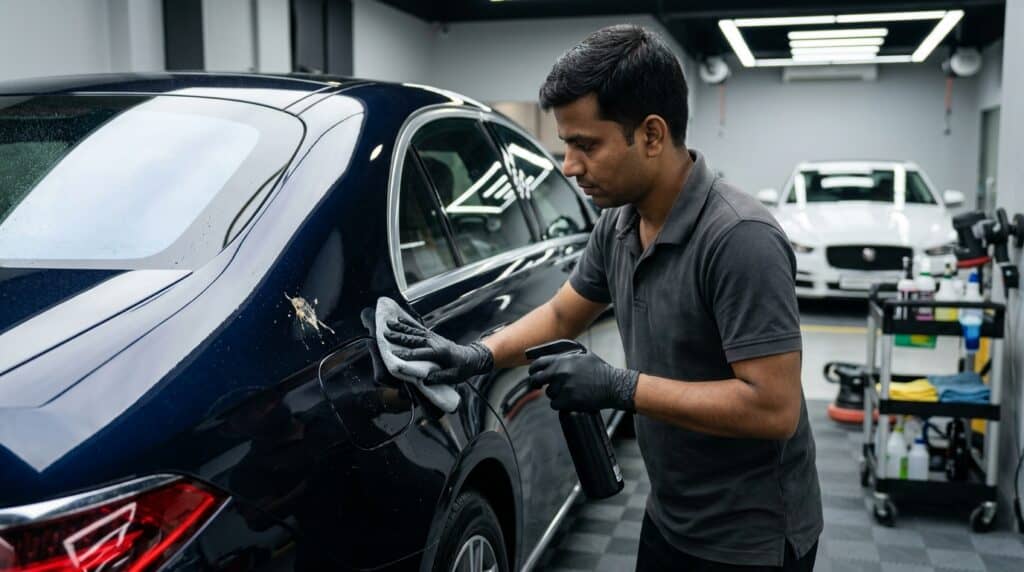
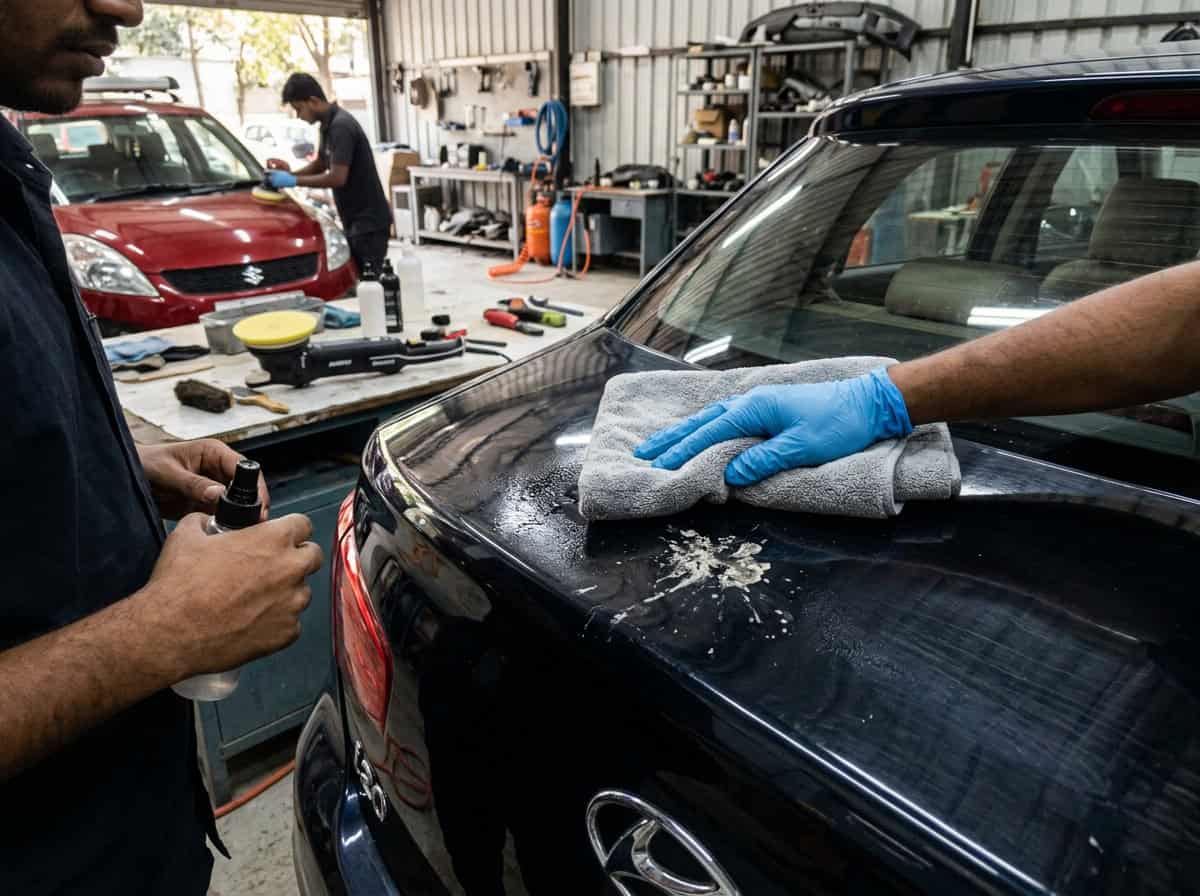
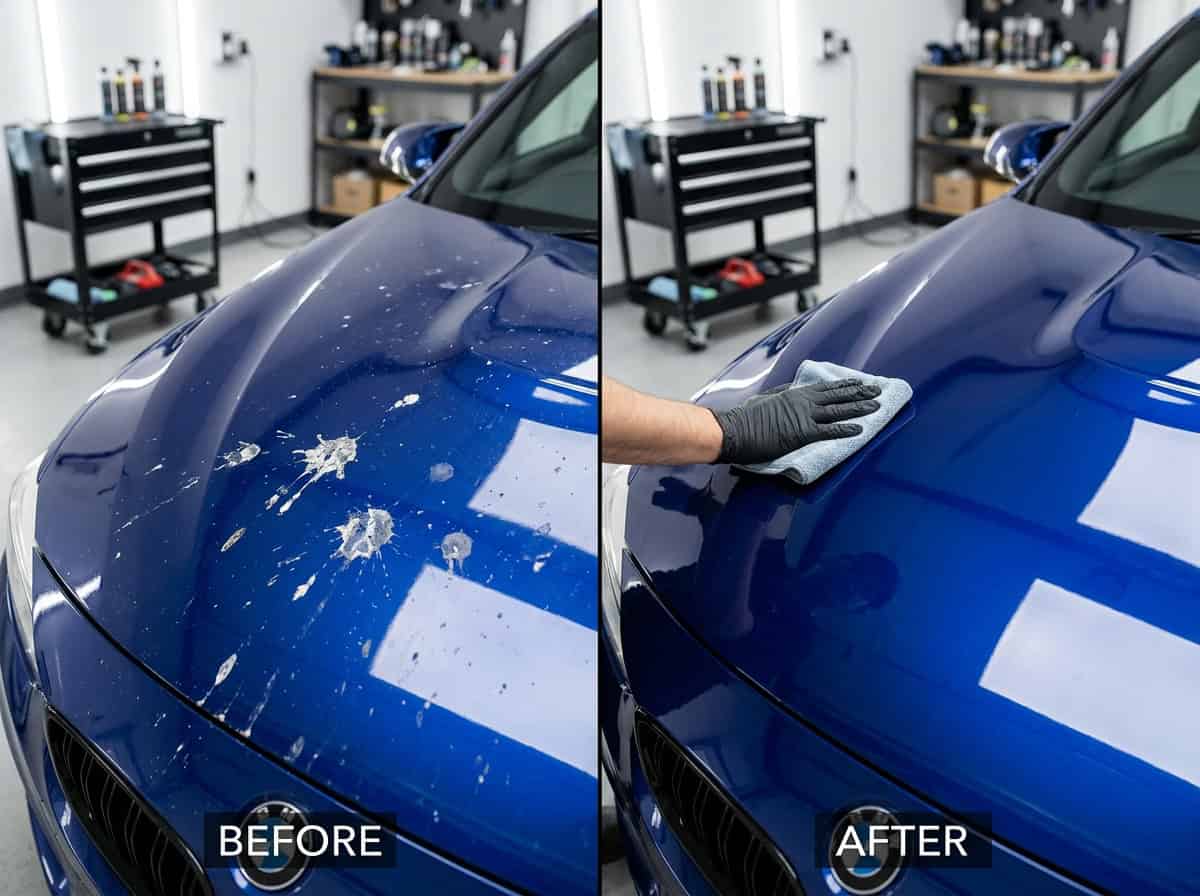
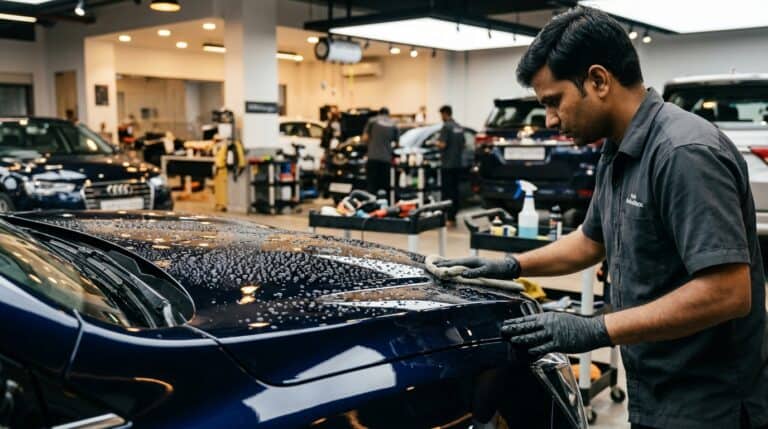
Bird droppings look harmless until you see the mark they leave behind a day later. In India, that risk gets worse because panels heat up fast under direct sun, especially on darker colours. What starts as a soft splatter can harden, bake, and etch into the clear coat before your next wash even happens.
That’s why the right removal method matters. If you wipe dry droppings with pressure, you’re not cleaning the paint. You’re rubbing acidic residue and gritty debris across a delicate top layer. The safer move is to soften first, lift second, and inspect before deciding if you need polishing.
This guide walks through the exact process, what to avoid, and how Indian car owners can handle the problem on the road, at home, or in apartment parking without making the damage worse.
Why is bird poop so dangerous for car paint?
Bird droppings can sit in the pH 3 to 4.5 range, according to Jalopnik’s detailing explainer, which makes them acidic enough to attack automotive clear coat when they are left in place on a warm panel (Jalopnik, 2026). The direct answer is that bird poop damages paint because it combines acidity, organic residue, and heat.
The acid is only part of the problem. Bird droppings also dry into a crust that can trap sand, dust, and bits of grit. When you wipe that crust away without softening it first, those particles behave like fine abrasives. That’s where people accidentally turn a removable mess into a visible scratch pattern.
Heat makes the situation uglier. On an exposed bonnet or roof in Chennai, Kochi, or Delhi summer sun, the residue bakes onto the panel and bonds faster. The paint expands under heat, the residue contracts as it dries, and the combination can leave behind an etched crater or dull patch that regular washing won’t fix.
That matters because every mistake during cleanup increases the chance that you’ll later need corrective polishing on a layer that is already thin.
For Indian owners, the real danger is not just the dropping itself. It’s the common instinct to wipe it off with whatever is nearby: a tissue, a dusty duster, or the corner of an old T-shirt. That rushed move does more damage than the bird sometimes does.
Step one matters most: use the least aggressive method that safely solves the problem.
What should you do the moment you notice bird poop on your car?
The best immediate response is to remove bird droppings as soon as you can, but never by dry wiping.
If you spot fresh droppings, the safest first step is to flood the area with a detailing spray, rinseless wash mix, or even clean water if that’s all you have. The goal is not speed for its own sake. The goal is to rehydrate the residue until it loosens from the paint.
Let the liquid dwell for a minute or two. If the dropping is thick, place a soaked microfiber or tissue over the spot and leave it there briefly. That softens the top layer so you can lift instead of scrub. Once it loosens, use a plush microfiber and blot or wipe with almost no pressure.
If you are outside and don’t have products with you, a small emergency kit in the boot helps more than people expect. A spray bottle of distilled water, a travel-size quick detailer, and two clean microfiber cloths can save a panel from etching. It’s such a tiny setup, yet it changes the outcome completely.
After the residue is gone, check the surface in angled light. If the paint still looks glossy and smooth, you’ve likely escaped without lasting damage. If you see a dull halo, rainbow outline, or rough patch, the clear coat has probably been affected and may need decontamination or polishing later.
How do you remove dried bird poop from car paint without scratching it?
DeFelsko notes that factory paint systems commonly measure 100 to 180 microns overall, which is not much margin when you factor in the thin clear layer on top. So when droppings have dried, the safe answer is to soften, lift, rinse, and repeat rather than force them off.
Start by spraying the area generously. If it is badly crusted, lay a damp microfiber over it for three to five minutes. Some owners use warm water, which is fine, but don’t use hot water on a sun-heated panel. You want the residue to loosen, not the surface to flash-dry again.
Next, fold a clean microfiber into quarters and use one soft pass to lift the loosened residue. If anything resists, stop. Spray again. Waiting another minute is cheaper than correcting new scratches with a machine later. This is one of those moments where patience is the whole technique.
If a stain remains after the solids are gone, wash the area with a pH-balanced shampoo or rinseless wash. Sometimes what looks like etching is only a residue film left from the droppings. If the mark stays after washing and drying, try a paint-safe cleaner or a very mild hand polish only on the affected spot.
Never attack dried droppings with your fingernail, a kitchen sponge, or a dry microfiber. Those shortcuts feel efficient. They aren’t. They create sharp-pressure points that cut right into the clear coat.
That’s why dried bird poop removal is really about avoiding the need for correction in the first place.
What products are safest to use on bird-dropping stains?
Bird-dropping damage escalates because the residue is acidic and often dries with gritty contamination mixed in, making lubrication the key safety factor during removal (Jalopnik, 2026). The safest products are those that soften residue, add slickness, and leave no harsh solvents behind.
A quick detailer is the easiest choice because it sprays evenly and gives the towel more glide. A rinseless wash solution mixed in a spray bottle is also excellent, especially for people who want one product that works for bird droppings, dust, and light contamination. Clean water is acceptable in a pinch, though it offers less lubrication.
A pH-balanced car shampoo works well when you can wash the panel immediately after softening the mess. Distilled water is a smart choice if you live in a hard-water area, because it reduces the risk of leaving new mineral marks while trying to solve the old problem. Apartment owners in places with very hard borewell water should pay extra attention here.
Avoid glass cleaner, household degreasers, petrol, thinner, and dish soap. Those products are either too harsh, too drying, or simply unnecessary. They may remove the visible mess, but they can also strip protection or stain trim around the area.
If you keep only one item in your car for this job, make it a small sprayer of rinseless wash mix and one sealed microfiber. It’s low drama, low cost, and works in real Indian parking conditions where a full wash isn’t available.
Good prep and the right product choice usually matter more than brute force.
Can bird poop leave permanent marks even after you clean it?
So yes, bird droppings can leave permanent-looking marks even after the residue is removed.
Sometimes the mark is only a surface deposit and comes off with proper washing. Other times, the acid and heat combination leaves a dull outline or crater in the clear coat. The car looks clean, but the mark stays because the top layer has changed shape. That is etching, not leftover dirt.
Mild etching can often be improved with a finishing polish by hand or machine. Deeper marks may need a compound-and-polish process. Very severe damage, especially on older or repainted panels, can exceed safe correction limits and may need touch-up or repainting to disappear fully.
This is where expectations matter. If you catch the dropping quickly, you usually prevent the worst-case outcome. If the panel has baked in summer heat for hours, the safest goal may be improvement rather than perfection.
A quotable way to frame it is this: cleaning removes the mess, but only polishing can remove the scar, and polishing itself must be used carefully because paint thickness is limited.
How do you stop bird poop from damaging your car again?
The best prevention is to reduce dwell time, add paint protection, and avoid high-risk parking habits.
First, don’t park under bird-heavy trees, electric lines, or ledges whenever you have another option. Shade is nice, but shade from the wrong tree can be expensive. Second, keep a topper on the paint. Wax, sealant, or ceramic protection won’t make droppings harmless, but they do buy you a little more resistance and easier cleanup.
Third, wash smarter. A protected, clean panel releases contamination more easily than a rough, neglected one. Fourth, keep that emergency spray-and-microfiber kit in the car. Prevention is often less about chemistry and more about being prepared at the exact moment the mess happens.
The owners who suffer the least paint damage are rarely the obsessive ones. They’re the consistent ones. They notice the problem early, use the same safe routine every time, and don’t improvise with random cloths and dry wiping.
If your car lives outside every day, consider a maintenance rhythm: weekly wash, quick inspection after parking under trees, and a fresh protection layer every few months. That boring discipline is what keeps the paint looking expensive.
Frequently Asked Questions
Can I use wet wipes to clean bird poop off my car?
You can in an emergency, but only if the wipes are soft, fragrance-free, and used after soaking the dropping first. Bird droppings can sit around pH 3 to 4.5, so the bigger risk is not the wipe itself but dragging dried residue across the paint (Jalopnik, 2026).
How long can bird poop stay on car paint before damage starts?
There is no safe universal time because heat changes everything. On hot panels, acidic residue can begin etching much faster than on a cool surface.
Will washing the car remove bird-poop stains completely?
A proper wash can remove leftover residue, but it may not remove etching if the clear coat has already been marked. DeFelsko notes total factory paint commonly ranges 100 to 180 microns, so defect removal later must be measured and conservative.
Is ceramic coating enough to stop bird-poop damage?
Ceramic coating helps because the surface is slicker and easier to clean, but it does not make acidic droppings harmless. You still need quick removal, especially in Indian summer heat. Think of coating as extra resistance, not permission to ignore the mess.
Should I polish the spot after every bird-poop incident?
No. Clean safely first, inspect the finish, and polish only if a real etched defect remains.
Yoast SEO Fields
Focus Keyphrase: remove bird poop from car paint safely
SEO Title: Remove Bird Poop from Car Paint Safely – Motor Headz (52 chars)
Slug: how-to-remove-bird-poop-from-car-paint-safely
Meta Description: Remove bird poop from car paint safely with the right spray, wipe technique, and timing. Bird droppings can reach pH 3-4.5 and etch fast. (137 chars)
Cornerstone: false
Schema Page Type: Article
Social Title: Bird Poop on Your Car? Remove It Safely Before It Etches
Social Description: Indian sun makes bird-dropping damage worse. Here’s the calm, safe way to lift it off your paint without grinding grit into the clear coat.
Social Image: use featured image
Secondary Keywords: bird droppings on car, how to clean bird poop from car, bird poop stain removal car, car paint etching, safe car detailing tips
Conclusion
Bird droppings are annoying, but the fix doesn’t need to be dramatic. The safest process is boring on purpose: soften, lift gently, wash, inspect, and protect.
If you remember one rule, let it be this: never wipe dried bird poop off a hot panel with pressure. That one habit saves more paint than fancy products ever will.
Key takeaways:
soak first and wipe later
use lubrication and a clean microfiber
inspect for etching before reaching for polish
keep an emergency cleanup kit in the car
protect the paint so future cleanup is easier
▸ PUT IT INTO PRACTICE
Gear up at the Motor Headz garage
Coatings, polishes, foam wash & microfiber — made in India, free shipping from ₹300.
Motor Headz publishes practical car and bike care guides, covering washing, paint care and choosing products for your finish. Our guides explain compatibility, application steps and product limits to help you make an informed choice.
Motor Headz publishes this guide and sells car and bike care products. Links to our store are not independent recommendations.