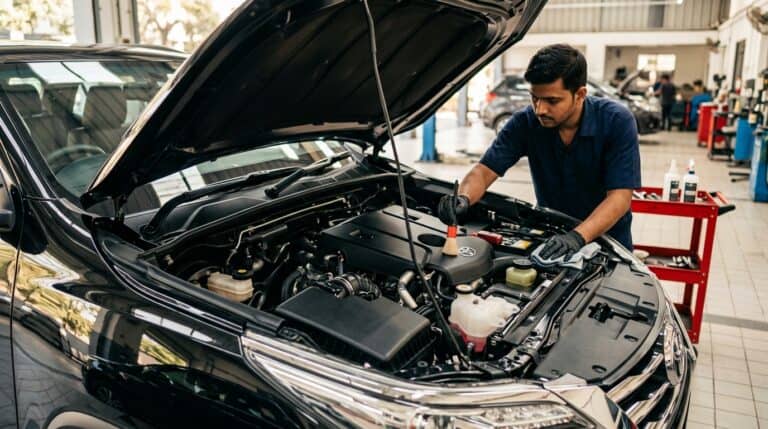
Hard water stains are one of those problems that make a clean car look instantly neglected. You wash the car, step back expecting shine, and instead find chalky rings, patchy spotting, or dull mineral marks on the bonnet and glass. In many Indian towns, borewell or mineral-heavy water makes this a repeating headache.
The tricky part is that not all water spots are equal. Some are just mineral deposits sitting on top of the paint. Others have already etched into the clear coat because the minerals and heat were left there too long. If you don’t know which type you’re dealing with, it’s easy to use the wrong fix.
This guide breaks the process down in plain language: what causes hard water stains, what removes them safely, when polishing becomes necessary, and how to stop them returning after every wash.
What causes hard water stains on car paint?
The USGS classifies water hardness above 180 mg/L as calcium carbonate as very hard, while 121 to 180 mg/L is already considered hard (USGS, n.d.). Hard water stains happen because minerals are left behind when wash water or rainwater evaporates from the paint.
Those minerals are usually calcium and magnesium. When the water dries, the minerals stay. At first they appear as chalky rings or faint spotting. Leave them on a hot panel long enough, though, and they can bond harder or even etch the surface.
That’s why the same wash routine can produce different results in different cities. A car washed with soft filtered water may dry cleanly. The same car washed with hard borewell water in strong sun may spot badly even if you used a decent shampoo.
The problem is not limited to washing. Sprinklers, overnight dew mixed with minerals, construction water splash, and post-rain drying can all leave deposits. In apartment parking, cars near garden irrigation systems often suffer more than owners realise.
Many owners blame their shampoo first. More often, the real villain is the water plus the habit of letting it air-dry on a warm panel. The chemistry is boring, but the fix starts with accepting that the water itself is part of your detailing setup.
Step one matters most: use the least aggressive method that safely solves the problem.
Are hard water stains and etched water spots the same thing?
The short answer is no: hard water stains are deposits, while etched water spots are physical defects in the clear coat.
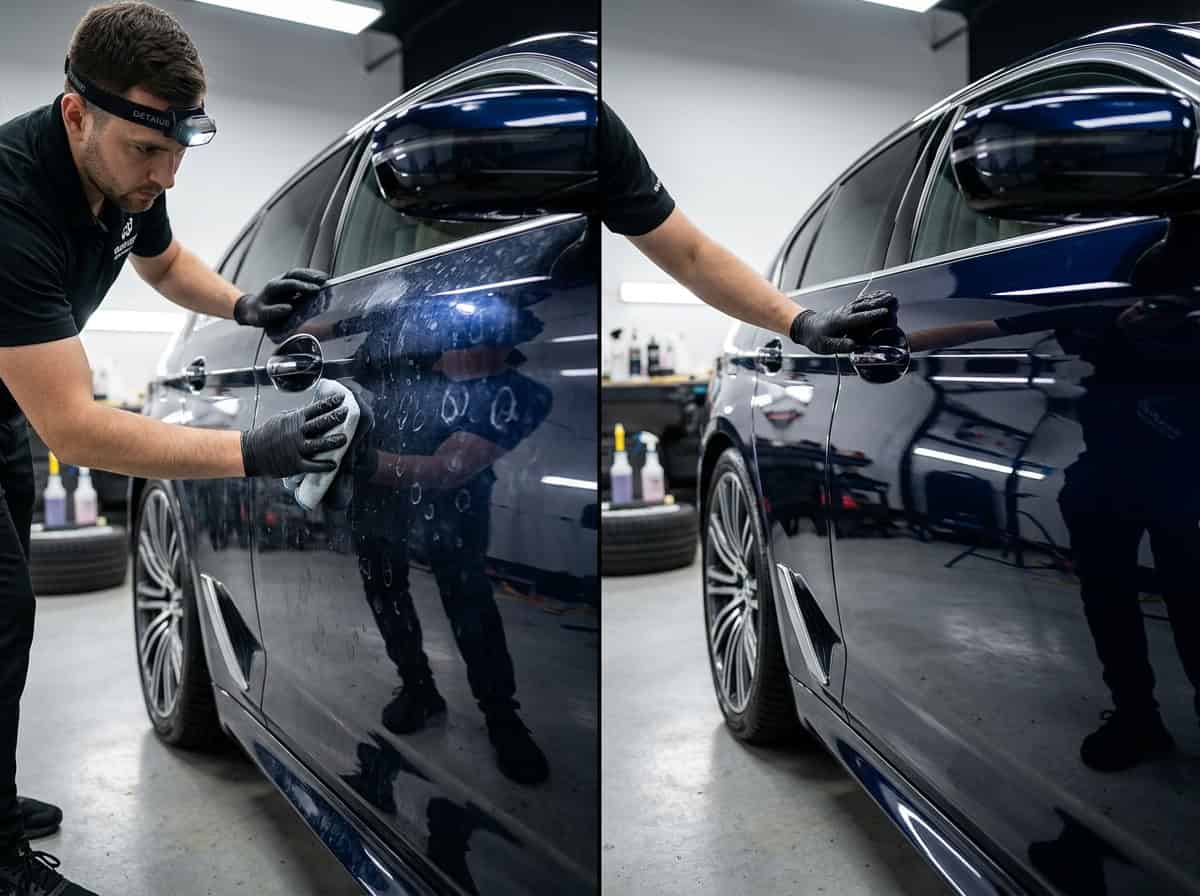
A deposit sits on top of the paint. It can often be dissolved or loosened with the right cleaner. Etching means the minerals and heat have altered the surface below. Once that happens, chemical cleaning alone may improve the appearance but not fully erase the mark.
This distinction matters because people often keep spraying stronger chemicals on an etched spot and wonder why nothing changes. If the ring is still visible after a proper wash and a dedicated remover, it may be time to think about polishing rather than more aggressive chemicals.
DeFelsko notes total factory paint thickness commonly falls between 100 and 180 microns. That means correction later should be measured and selective. You don’t want to chase every old stain across the whole car with unnecessary compounding.
The simplest test is visual and tactile. If the panel feels rough or chalky, you may still be dealing with deposits. If it feels smooth but the mark remains visible in good light, etching is more likely.
How do you remove fresh hard water stains safely?
Hard water above 180 mg/L falls into the very hard category by USGS standards, so fresh spotting can pile up quickly if the car is left to air-dry repeatedly (USGS, n.d.). Fresh hard water stains are best removed by washing the panel first, then using a dedicated water-spot remover or mild acidic cleaner with lubrication and control.
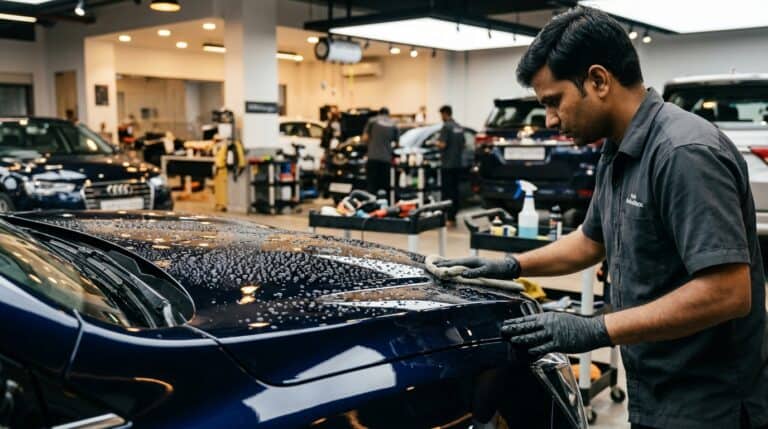
Start with a normal wash. This removes dust and loose grit so you are not rubbing contamination into the paint while working on the spots. Dry the panel partially, then inspect the affected areas under angled light.
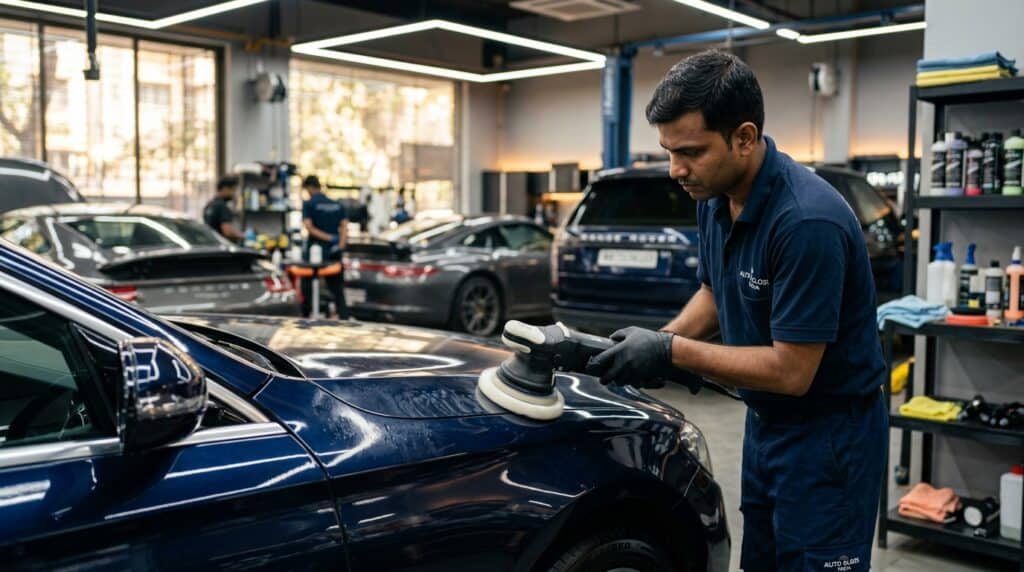
Next, apply a paint-safe water-spot remover to a microfiber applicator or towel. Work one section at a time. Let the product dwell briefly if the instructions allow, then wipe gently. Most removers work by dissolving mineral buildup rather than abrading it away, which is exactly what you want at this stage.
Rinse or wipe the area clean and inspect again. If the spots are lighter or gone, follow with a gentle wash or damp microfiber to neutralise any leftover cleaner. If there is still a ring but the chalky feel has disappeared, the deposit may be gone and only etching remains.
Avoid kitchen vinegar experiments on the whole car without dilution discipline and a spot test. Mild acids can help with minerals, yes, but trim, coatings, and sensitive paint systems deserve more respect than internet shortcuts usually give them.
What should you do when the stains will not come off?
If stains won’t come off, the likely answer is clay, polish, or both, depending on whether contamination remains on the surface.
First try claying after chemical removal if the surface still feels rough. That can help when minerals or environmental fallout are still bonded to the paint.
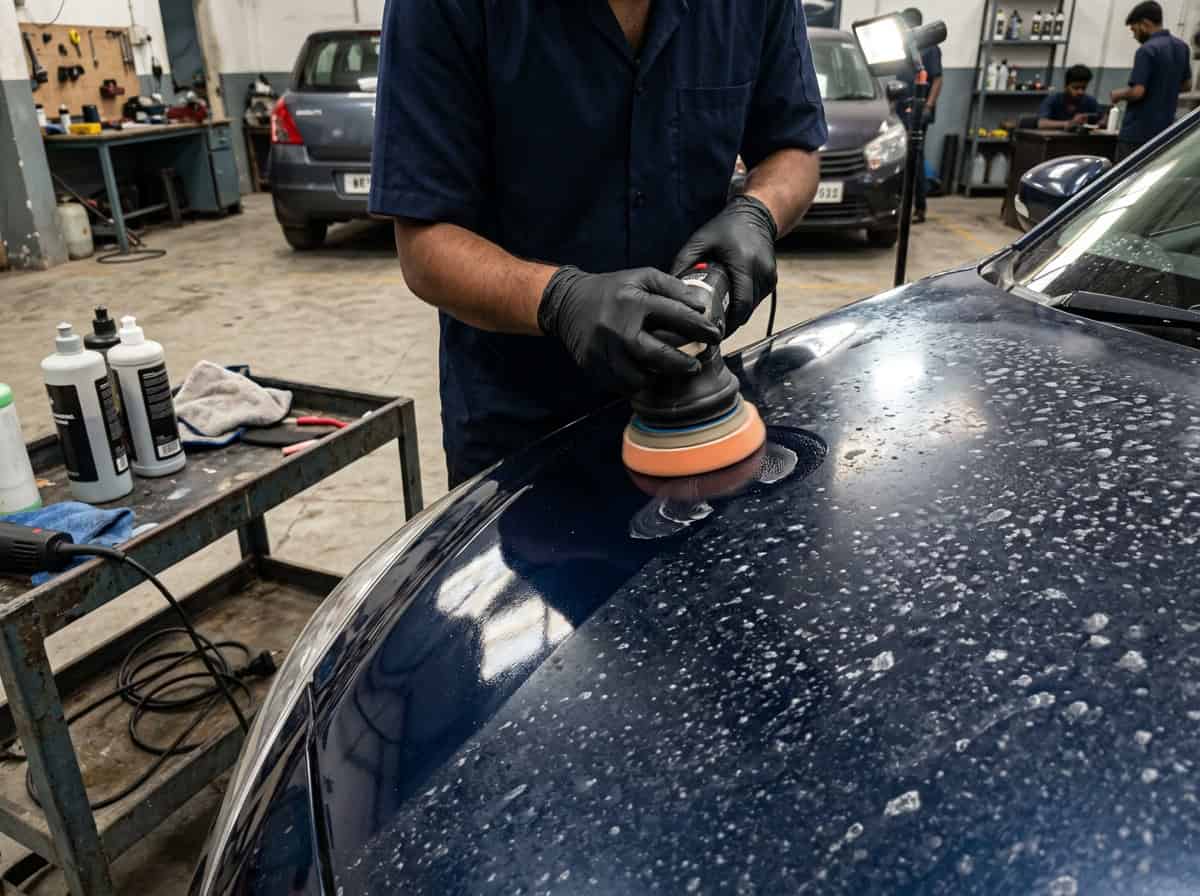
If the surface feels smooth but the mark remains, a finishing polish is usually the next logical step. Start with the least aggressive polish and pad combination that can produce improvement. Many water spots, especially on newer paint, respond well to a mild machine polish or even a careful hand-polish test spot.
Severe etching may need a compound-and-polish process. But don’t jump there first. The goal is not maximum aggression. The goal is just enough correction to restore the finish safely.
In real-world Indian conditions, many so-called impossible water spots turn out to be layered problems: mineral deposits, dust film, and poor drying marks stacked together. Once you wash, chemically treat, and lightly polish in the right order, the panel often looks dramatically better without heroics.
Good prep and the right product choice usually matter more than brute force.
How can you stop hard water stains after every wash?
When the water itself is hard or very hard by USGS classification, prevention becomes just as important as removal (USGS, n.d.). The best prevention is to change your wash and drying routine so minerals do not get the chance to dry on the panel.
Wash in shade or in the coolest part of the day. Rinse smaller sections instead of flooding the whole car and letting it sit. Dry immediately with a quality towel or blower. Those three habits alone solve a shocking percentage of repeat spotting problems.
If your tap or borewell water is very hard, use filtered or softened water for the final rinse when possible. Distilled water in a spray bottle is useful for spot-prone areas like mirrors, bonnets, and boot lids. A rinseless wash can also help because it reduces how much mineral-heavy water remains on the surface.
Protection matters too. Sealants and coatings do not stop minerals existing, but they do make deposits easier to remove before they bite harder. A slick surface buys time. That extra margin is gold when the weather is hot and you’re washing outdoors.
The unglamorous truth? Water spot prevention is mostly about drying discipline. Fancy products help, but towels and timing do the heavy lifting.
Should you use home remedies or buy a proper water-spot remover?
Because hard-water spotting is a mineral problem first and a paint-correction problem second, matching the solution to the stain stage is critical. With paint thickness limited to roughly 100 to 180 microns overall, avoid trial-and-error aggression. In most cases, a proper water-spot remover is the safer and more predictable option.
Home remedies like diluted vinegar can work on mild mineral deposits, but they come with inconsistency. Concentration varies, dwell times get guessed, and many users apply too much too broadly. That’s not ideal on coated surfaces, sensitive trims, or sun-warmed paint.
Dedicated removers are designed for the job and usually come with clearer instructions. They are not magic, but they reduce the chance of user error. If you detail only occasionally, that predictability is worth the price.
Still, the smartest approach is not product-first. It’s diagnosis-first. Fresh deposits? Use a remover. Rough contamination? Add clay. Smooth etched defect? Polish. Once you see the stain correctly, the solution becomes much less mysterious.
Most frustration around water spots comes from trying to use one step for every version of the problem. But deposits, bonded minerals, and etched marks are three different fights. Treat them like one and you waste time.
Frequently Asked Questions
Can hard water stains damage ceramic coating too?
Yes. Minerals can sit on top of coating and eventually reduce slickness or leave etched-looking marks if ignored. Coating helps with cleanup, but it does not make very hard water harmless. Regular washing and quick drying still matter.
Will vinegar remove water spots from car paint?
It can help on light mineral deposits, but it is not always the safest or most predictable choice for every surface. A proper water-spot remover is usually easier to control, especially on coated cars or delicate trim.
Why do water spots come back after every wash?
Usually because the water source is hard and the car is being left to air-dry. USGS classifies water above 180 mg/L as very hard, so if that matches your supply, better drying and final-rinse strategy matter as much as shampoo choice (USGS, n.d.).
Can I polish away all old water spots?
Not always. Mild to moderate etched spots may improve with polishing, but very deep marks can exceed safe correction limits.
Is claying enough to remove water spots?
Only when bonded contamination is still sitting on the surface. Clay helps with roughness, but if the mark is a true etched defect, polishing is usually the step that creates visible improvement.
Yoast SEO Fields
Focus Keyphrase: remove hard water stains from car paint
SEO Title: Remove Hard Water Stains from Car Paint – Motor Headz (53 chars)
Slug: how-to-remove-hard-water-stains-from-car-paint
Meta Description: Learn how to remove hard water stains from car paint safely. USGS classifies water above 180 mg/L as very hard, making spotting and etching more likely. (152 chars)
Cornerstone: false
Schema Page Type: Article
Social Title: Hard Water Stains on Car Paint? Here’s How to Remove Them Safely
Social Description: If your car dries with chalky spots after every wash, this guide is for you. Fix mineral stains safely before they become etched paint defects.
Social Image: use featured image
Secondary Keywords: water spot removal car, hard water marks on car, remove mineral deposits from car paint, car paint water stains, detailing hard water stains
Conclusion
Hard water stains are annoying because they pretend to be a simple cleaning problem when they’re often a timing problem, a water-quality problem, and sometimes a paint-defect problem too.
The safe route is clear: wash first, remove deposits chemically, clay only if needed, and polish only when the mark has become an etched defect.
Key takeaways:
hard water leaves mineral deposits behind
fresh deposits need chemical removal, not heavy rubbing
etched spots may need polishing
filtered rinses and fast drying prevent repeat problems
a slick, protected car is easier to keep spot-free
▸ PUT IT INTO PRACTICE
Gear up at the Motor Headz garage
Coatings, polishes, foam wash & microfiber — made in India, free shipping from ₹300.
Motor Headz publishes practical car and bike care guides, covering washing, paint care and choosing products for your finish. Our guides explain compatibility, application steps and product limits to help you make an informed choice.
Motor Headz publishes this guide and sells car and bike care products. Links to our store are not independent recommendations.