PPF cost in India depends mainly on coverage, vehicle size, film series, paint preparation and installer.
Commercial disclosure: Motor Headz sells ceramic-care products, including Diamond Ceramic Spray. We may benefit when readers buy our products. This guide is intended to explain the trade-offs between PPF, professional ceramic coating and DIY ceramic sprays. It does not present Motor Headz products as substitutes for the impact protection of PPF.
Short answer: Current installer-published examples put partial-front zone protection at about ₹15,000–₹55,000, full-front coverage at about ₹30,000–₹1,20,000, and full-body PPF at about ₹75,000–₹4,00,000+, depending mainly on vehicle size, film and installer. A 3M India overview gives a wider ₹20,000–₹2,50,000 average installation range and also says coverage, vehicle size and film type change the quote.
The earlier ₹25,000 and ₹30,000 “starting” figures are not like-for-like. In a current Indian installer’s coverage guide, ₹25,000 falls within partial-front zone pricing for several vehicle classes, while ₹30,000 is the low end of a full-front package for a hatchback. The panel list, not the rounded starting number, resolves the apparent conflict.
A “partial PPF” quote is not one standard product. Confirm exactly which panels, edges, headlights and mirrors are included, and whether paint correction, taxes, removal of old film, warranty registration and aftercare are extra.
PPF vs ceramic coating: the important difference
PPF and ceramic coating are often compared because both aim to keep paint looking better, but they do different jobs.
| Option | What it is | Best for | What it does not replace |
|---|---|---|---|
| PPF | A transparent urethane film installed over painted panels | Helping reduce damage from stone chips, abrasion and minor road debris on covered areas | Regular washing, careful driving, or repair after a major impact |
| Professional ceramic coating | A liquid coating applied to prepared paint | Easier cleaning, water behaviour, gloss and resistance to some surface contamination | Physical impact protection from stones or deep scratches |
| DIY ceramic spray | A consumer-applied spray protectant | Shorter-term water beading and easier maintenance | Professional coating durability or PPF’s physical barrier |
A ceramic product can complement PPF on uncovered paint, but it is not a stone-chip solution. Conversely, PPF does not eliminate the need for washing and maintenance. If your priority is highway chip protection, start by pricing PPF for the panels exposed to that risk. If your priority is gloss and easier routine cleaning on a budget, compare ceramic options instead.
What is PPF, and why is it expensive?
Paint protection film is a clear thermoplastic urethane film applied over paint. Many current films are marketed with self-healing top coats that can reduce the appearance of some light wash marks when warmed, but performance varies by product, damage type and installation quality.
The price is not just the roll of film. A proper quote may include washing and decontamination, paint inspection and correction where needed, pattern cutting or hand trimming, installation, edge finishing, curing time and warranty administration. Complex curves, large panels, existing paint defects and difficult-to-access edges can add labour.
A clean, controlled working area and an experienced installer can help reduce visible contamination, lifting edges and alignment problems. Rather than relying on a nationwide installer-count claim, assess the individual shop: ask to inspect recent work in daylight, see how edges are finished, and understand its rework and warranty process.
PPF cost by coverage and car type in India
These published ranges define the coverage instead of mixing “partial” and “full front”. They come from a current Indian installer’s coverage-zone guide, so use them as indicative shopping ranges rather than a national tariff.
| Vehicle type | Partial-front zone | Full front | Full body |
|---|---|---|---|
| Hatchback | ₹15,000–₹25,000 | ₹30,000–₹50,000 | ₹75,000–₹1,10,000 |
| Sedan | ₹18,000–₹28,000 | ₹35,000–₹55,000 | ₹85,000–₹1,30,000 |
| Compact SUV | ₹20,000–₹32,000 | ₹40,000–₹65,000 | ₹1,00,000–₹1,50,000 |
| Full SUV | ₹25,000–₹40,000 | ₹55,000–₹85,000 | ₹1,30,000–₹2,00,000 |
| Premium SUV / MUV | ₹35,000–₹55,000 | ₹75,000–₹1,20,000 | ₹1,80,000–₹2,80,000 |
| Luxury car | Quote-specific | Quote-specific | ₹2,50,000–₹4,00,000+ |
Coverage definitions used by that guide: partial-front zone means the bonnet leading edge, front bumper, headlights and mirrors; full front means the complete bonnet, bumper, front wings/fenders, headlights and mirrors; full body means every external painted panel. Get the exact panel list in writing because installer labels vary.
Why a luxury car or a curved SUV may cost more
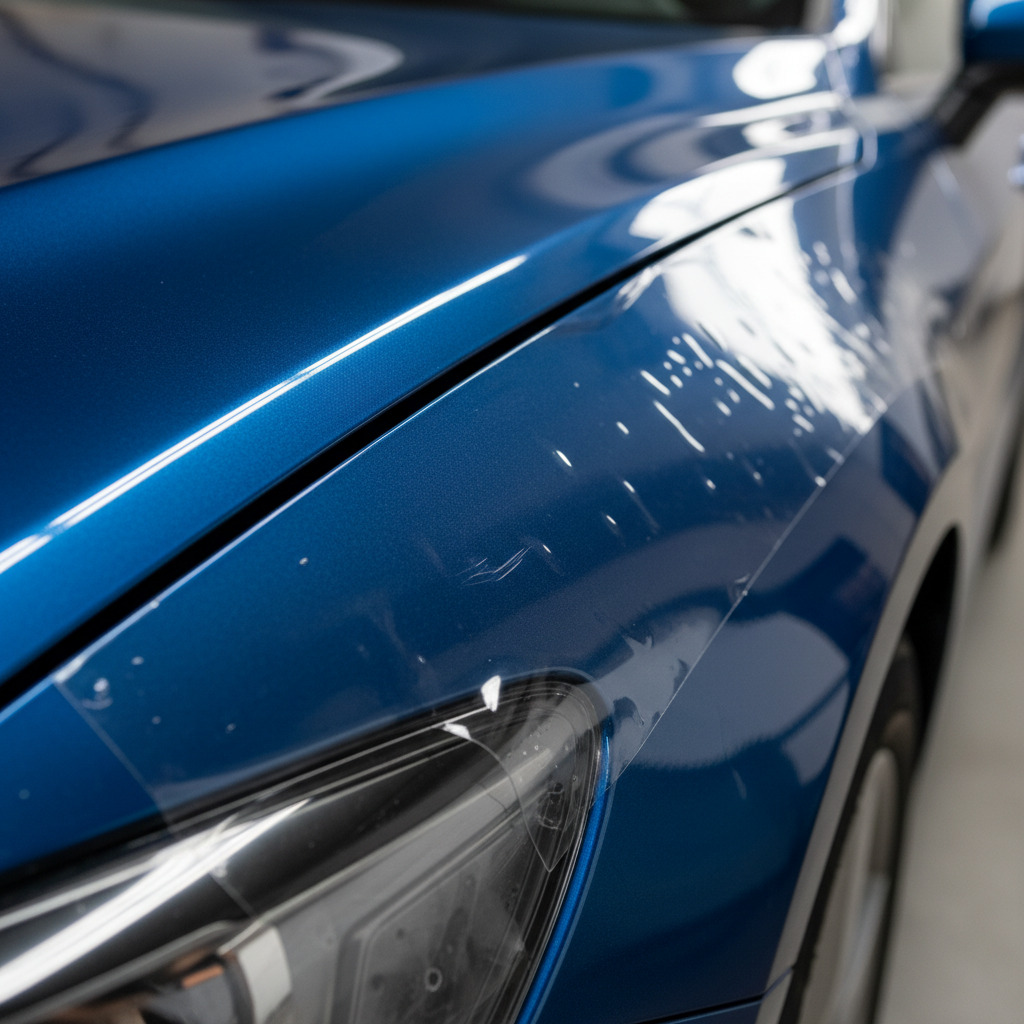
Large surface area is only one variable. Deep curves, complex bumpers, wide panels, sensors, trim removal, difficult edge wrapping, matte paint and the cost of correcting a mistake can all affect an installer’s quote. Compare like with like: a full-body gloss installation without paint correction is not directly comparable with a quote for a matte film, wrapped edges and multi-stage correction.
Full-body vs partial PPF: choose the scope before the brand
For many owners, partial PPF is the more practical starting point. It can focus the budget on panels that see the most highway debris and daily-use contact. The names below are not standardised across installers, so request a marked-up vehicle diagram.
| Common package | Often includes | When to consider it |
|---|---|---|
| Limited front area | Usually bumper and part of the bonnet or other selected front panels | Tight budgets; confirm the exact cut lines |
| Front-end package | Often bonnet, bumper, front fenders, headlights and mirrors; roof leading edge may be optional | Regular highway driving or a new car you plan to keep |
| High-impact package | Front-end package plus selected door edges, door cups, rocker panels or rear loading area | Frequent parking, family use or rougher roads |
| Full body | All painted exterior panels, subject to exclusions | Owners prioritising comprehensive coverage and appearance retention |
Do not assume partial coverage is a fixed percentage of a full-body quote. A prior, unverified Motor Headz in-house account said it analysed 200 PPF installation invoices from three studios in Delhi, Mumbai and Bangalore. It reported that 58% of customers selected partial coverage, that front-end packages made up 72% of those partial installs, and that the average saving versus full-body work was ₹45,000. The underlying invoices, selection method and calculations were not supplied for review, so these are reported in-house figures, not independently verified market statistics or a prediction for your quote. Actual savings change with the package, film and vehicle. A written quote is more useful than a rule of thumb.
For predominantly city use, a smaller front-focused package may be enough for some owners. Those who use gravel roads or spend long periods on highways may value broader coverage. This is a use-case decision, not a universal recommendation.
PPF brands and price: compare documentation, not just a name
The earlier article named XPEL, 3M, SunTek, LLumar, Garware and unbranded films, and reported a ₹30,000 to ₹1,50,000 mid-size-sedan full-body band. That is a historical, unverified brand-comparison reference from the source, not a current price floor or verified live market range. Brand availability, product lines, warranty terms and local pricing can change, so this revision does not present a current brand-price table as fact.
When comparing a branded film with another quote, ask the installer for:
- The exact film range and finish, not only the brand name.
- The invoice or roll/box identification that matches the film to be installed.
- A panel list and a note of any visible seams or exclusions.
- The written warranty, who honours it in India, and what it excludes.
- Whether paint correction, trim work, tax, aftercare and old-film removal are included.
Lower prices are not automatically a problem, but vague film identity, unclear warranty support or no written scope makes comparison difficult. Inspect a completed car in natural light and review the installer’s aftercare guidance before deciding.
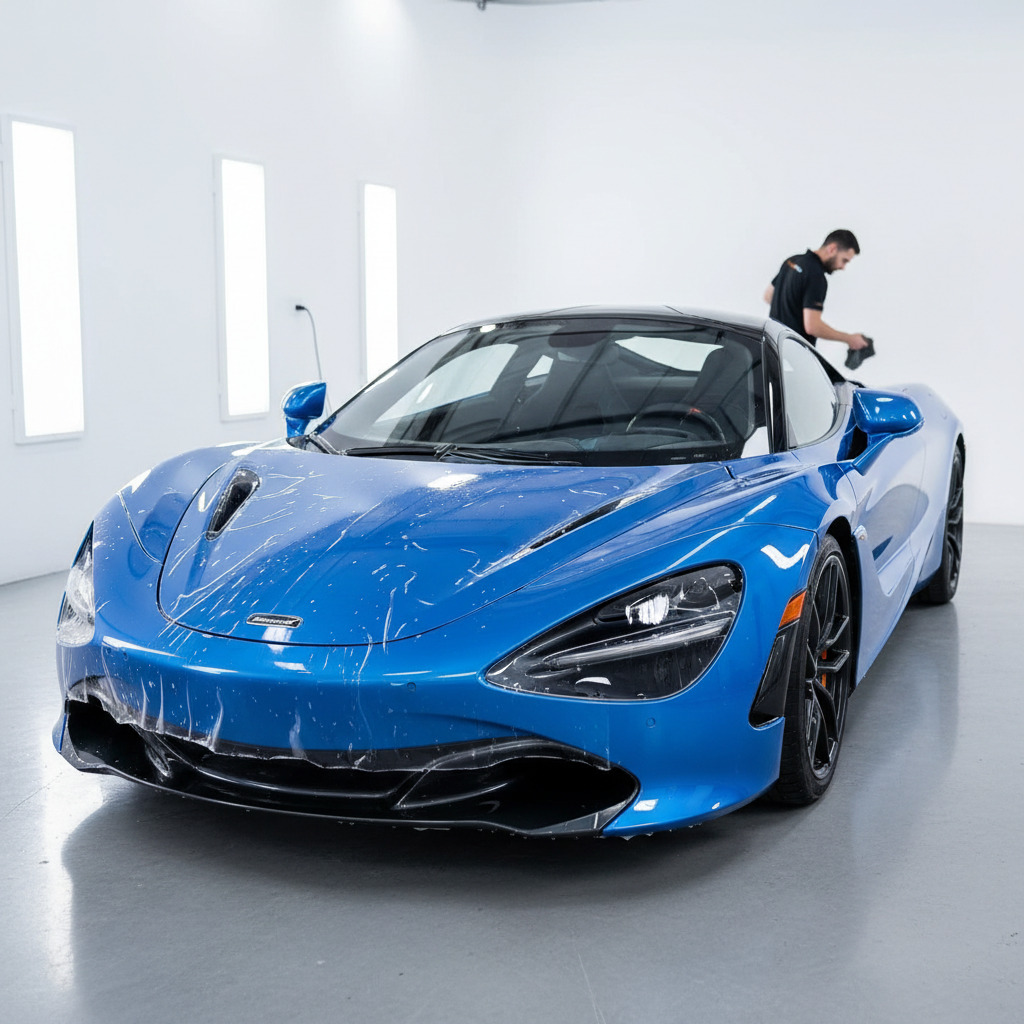
Where PPF quotes change
Use this checklist to understand a quote rather than treating any one range as a promise:
- Vehicle size and panel shape: more film and more complicated templates can mean more labour.
- Film type and finish: gloss, matte, satin and coloured films are quoted differently.
- Paint condition: correction may be recommended before installation if the paint has swirls, stains or chips.
- Existing film: old-film removal and adhesive clean-up may be charged separately.
- Coverage definition: bumper-only, full front, rocker panels, door cups and wrapped edges all change the price.
- Installer process: facility, template system, trim removal, curing time and warranty support affect the service being offered.
- Location: local operating costs and film availability can influence quotes.
Avoid treating published percentage mark-ups, city-to-city savings or material-versus-labour splits as guaranteed. They vary too much by car and workshop to be reliable budgeting rules without a specific written estimate.
A sensible PPF budget framework
Start with the package, then add likely extras only after an inspection.
| Budget item | What to confirm |
|---|---|
| PPF installation | Film range, finish, panels, edges, seams and taxes |
| Paint preparation | Whether correction is necessary, what level is included and its separate price |
| Existing-film removal | Whether removal is required and how adhesive residue is handled |
| Aftercare | Washing restrictions, inspection process and how lifting edges or damage are handled |
| Optional ceramic protection | Which paint surfaces, if any, will be coated after PPF and what the product is designed to do |
The existing draft’s broad first-year illustration was ₹40,000–₹2,77,000 once PPF, preparation and optional coating were included. Treat that only as a broad planning envelope, not as a total you should expect for every car. A front-area install at the low end can be far below a premium full-body, matte or luxury-car job with correction.
For ongoing ownership, ask what maintenance is actually required by the film manufacturer and installer. Do not assume a fixed annual repair, decontamination or coating spend. Damage, washing habits, parking, road use and film condition determine the real cost.
DIY ceramic spray vs PPF
Motor Headz Diamond Ceramic Spray is a DIY maintenance product. It can be considered by owners seeking shorter-term water beading, gloss and easier cleaning, but it should not be positioned as an alternative to PPF for chip resistance.
The earlier article reported Diamond Ceramic Spray at ₹1,500–₹2,500 per bottle, with a reported 3–6 months per application. These are historical product references from that article, not confirmed current price, pack, coverage or durability claims. Results can vary with paint preparation, weather, washing and use.
A prior Motor Headz in-house account reported an informal comparison between a Diamond Ceramic Spray-treated area and a ₹1,20,000 XPEL PPF installation over about six months of Mumbai-area driving. It reported similar gloss and water beading on the observed areas; the PPF side reportedly had zero stone chips, while the spray-treated side reportedly had three small chips after highway driving. No underlying records, controls, vehicle details or measurement method were supplied. This was not an independent or controlled test, cannot establish causation or equivalence, and does not predict another car’s result.
A mixed approach can make sense for some budgets: protect the highest-risk panels with PPF, then use a compatible paint-care product on exposed paint if you value its maintenance benefits. Price the two elements separately and avoid adding them together on the assumption of a guaranteed saving.
For a deeper comparison, see PPF vs ceramic coating in India and ceramic coating cost in India. Ceramic Spray Coating: Quick Protection or Marketing Gimmick? is a Motor Headz guide, not a product page. These guides do not replace a film installer’s preparation assessment.
Is PPF worth it?
PPF may be worth considering if stone-chip resistance on specific panels is your main concern, especially for a new car that sees frequent highway use or for an owner who values preserving original paint. It is a higher-cost, installation-dependent decision.
Ceramic coating or a DIY ceramic spray may be a better fit if you mainly want easier cleaning, water behaviour and a cosmetic finish at a lower upfront cost. Neither should be described as providing the same physical protection as PPF.
Before committing, obtain two or three itemised quotes for the same marked-up coverage map. The best decision is usually the one where the film identity, preparation, installer workmanship, warranty and final price are all clear.
Frequently asked questions
How long does PPF last in Indian conditions?
Lifespan depends on the particular film, climate, parking, washing methods, installation and maintenance. Manufacturers may offer multi-year warranties, but terms vary by product and market. Read the exact warranty supplied with your chosen film rather than relying on a generic 7–10-year claim.
Can I install PPF myself?
DIY kits exist, but fitting large panels without contamination, stretching or visible alignment issues is difficult. A small pre-cut piece may be manageable for an experienced hobbyist; full-body work is typically best handled by a specialist. A DIY ceramic spray is a different, simpler product category, but it does not offer PPF-style impact protection.
Is partial PPF better value than full-body PPF?
It can be, depending on where and how you drive. Partial PPF directs spend toward selected high-exposure panels; full-body coverage offers broader protection at a much higher cost. Compare packages by exact panels and cut lines, not by a package label.
Does PPF increase resale value?
Well-kept original paint can be attractive to a buyer, but resale outcomes depend on the vehicle, film condition, documentation and the buyer. Do not treat PPF as a guaranteed percentage increase in resale value. If the film is deteriorating, get professional advice before sale or removal.
Can PPF be installed over ceramic coating?
Installers generally prefer paint that is properly cleaned and prepared for adhesion. Tell the installer about any existing coating and follow their preparation advice. If you want both forms of protection, discuss the installation sequence with the shop and use products compatible with the film manufacturer’s guidance.
Team Motor Headz
Behind this guide
Motor Headz publishes practical car and bike care guides, covering washing, paint care and choosing products for your finish. Our guides explain compatibility, application steps and product limits to help you make an informed choice.
Motor Headz publishes this guide and sells car and bike care products. Links to our store are not independent recommendations.