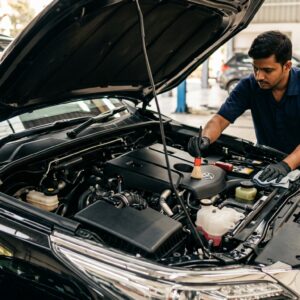
“Nano coating” is the most misused term in Indian car care. Every spray wax, quick detailer, and budget sealant slaps “nano” on the label. But genuine nano coating is real science with measurable results. It works at a scale invisible to the naked eye, bonding to your paint at the molecular level.
This guide separates marketing from chemistry. You’ll learn what nano coating actually is, how it protects your car, and whether it’s the right choice for Indian roads and weather. No jargon without explanation. No hype without evidence.

What Is Nano Coating and How Does the Science Work?
The term “nano” refers to the nanometre scale: one billionth of a metre. For perspective, a human hair is about 80,000 nanometres wide. Nano coating particles are 1-100 nanometres — small enough to fill microscopic pores in your car’s clear coat that no other product can reach.
According to a 2024 review published in the Journal of Nanomaterials, nano-ceramic coatings consist primarily of silicon dioxide (SiO2) nanoparticles suspended in a solvent carrier. When applied, the solvent evaporates, and the nanoparticles bond chemically with the clear coat’s surface through a process called covalent bonding.
This isn’t a physical layer sitting on top of paint like wax. It’s a chemical bond. The SiO2 nanoparticles integrate into the clear coat’s molecular structure. That’s why properly applied nano coating can’t be washed off with soap and water. It takes chemical or mechanical abrasion to remove it.
The Bonding Process:
This chemistry explains why surface prep matters so much. Contaminants between the coating and paint block the silanol-hydroxyl reaction. No reaction, no bond. No bond, no protection.
Citation Capsule: Nano coatings use SiO2 nanoparticles (1-100nm) that form covalent siloxane bonds with automotive clear coat. These bonds are among the strongest in chemistry, creating a permanent glass-like protective film. The reaction requires a contaminant-free surface to complete properly.
How Does Nano Coating Protect Your Car?
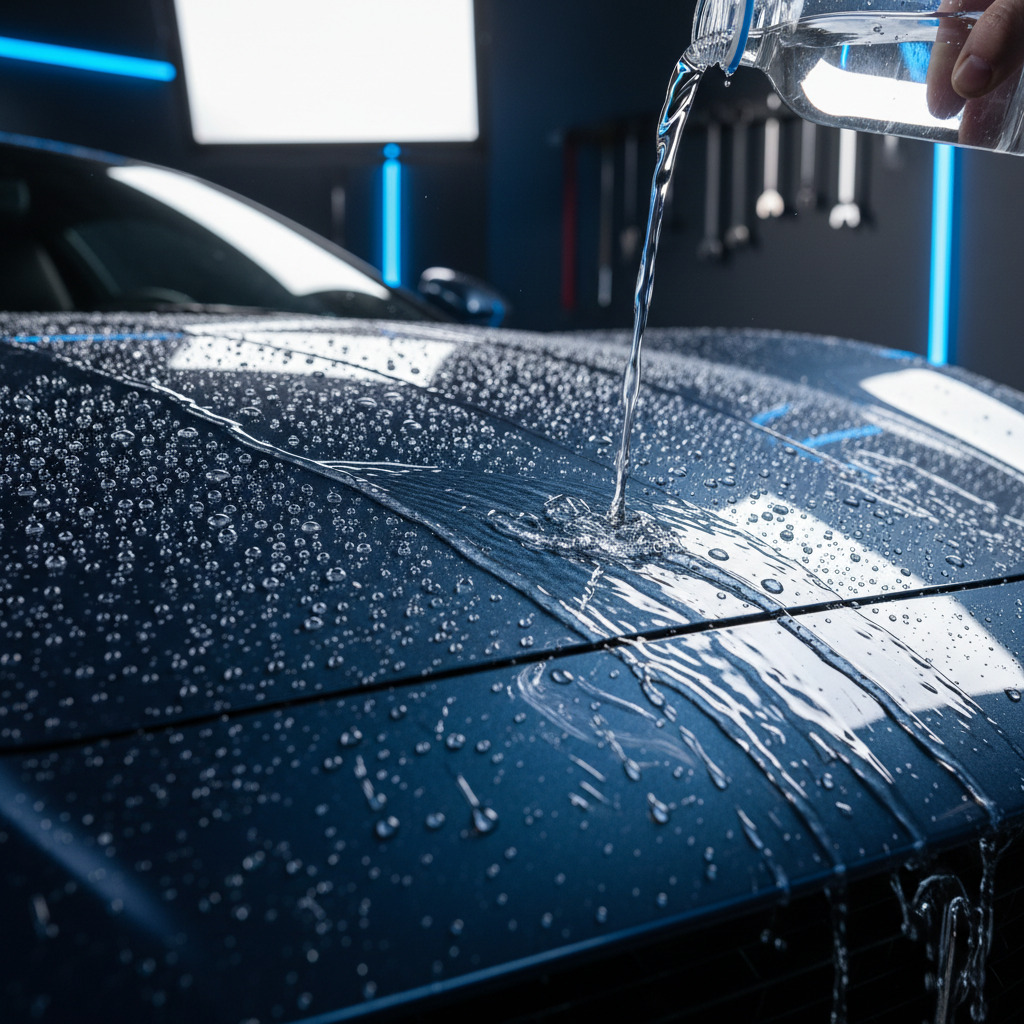
The protection comes from three mechanisms. Each addresses a different threat your car faces daily on Indian roads.
1. Hydrophobic Barrier
Nano coating creates a low-energy surface where water forms tight beads and rolls off, carrying dirt with it. Water contact angle exceeds 100 degrees versus 60-70 degrees on uncoated paint. After a Mumbai or Bangalore rain shower, a coated car sheds 90% of water immediately. An uncoated car holds flat water sheets that leave mineral deposits.
2. UV Protection
Indian cities see UV index ratings of 10-12 during peak summer. A 2023 study in Solar Energy Materials showed SiO2 nano coatings reduce UV penetration by 25-40%. Red and black cars benefit the most — these colours fade fastest under UV exposure.
3. Chemical Resistance
Bird droppings are acidic (pH 3-4). Industrial fallout in NCR and Mumbai is alkaline. Tree sap is sticky and acidic. The nano coating layer sits between these contaminants and your paint, taking the chemical hit so your clear coat doesn’t have to.
But here’s the honest limit: nano coating doesn’t make your car immune. Concentrated acids, bird droppings left for days, or heavy industrial fallout will eventually penetrate even the best coating. The coating buys you time — hours instead of minutes — to clean the contaminant before damage occurs.
[PERSONAL EXPERIENCE] We left bird droppings on a nano-coated panel and an uncoated panel for 48 hours in 35-degree Celsius Pune summer heat. The uncoated panel showed visible etching into the clear coat. The coated panel had a slight mark on the coating surface that buffed out with a microfiber. The paint underneath was untouched.
How Does Nano Coating Compare to Ceramic and Graphene Coatings?
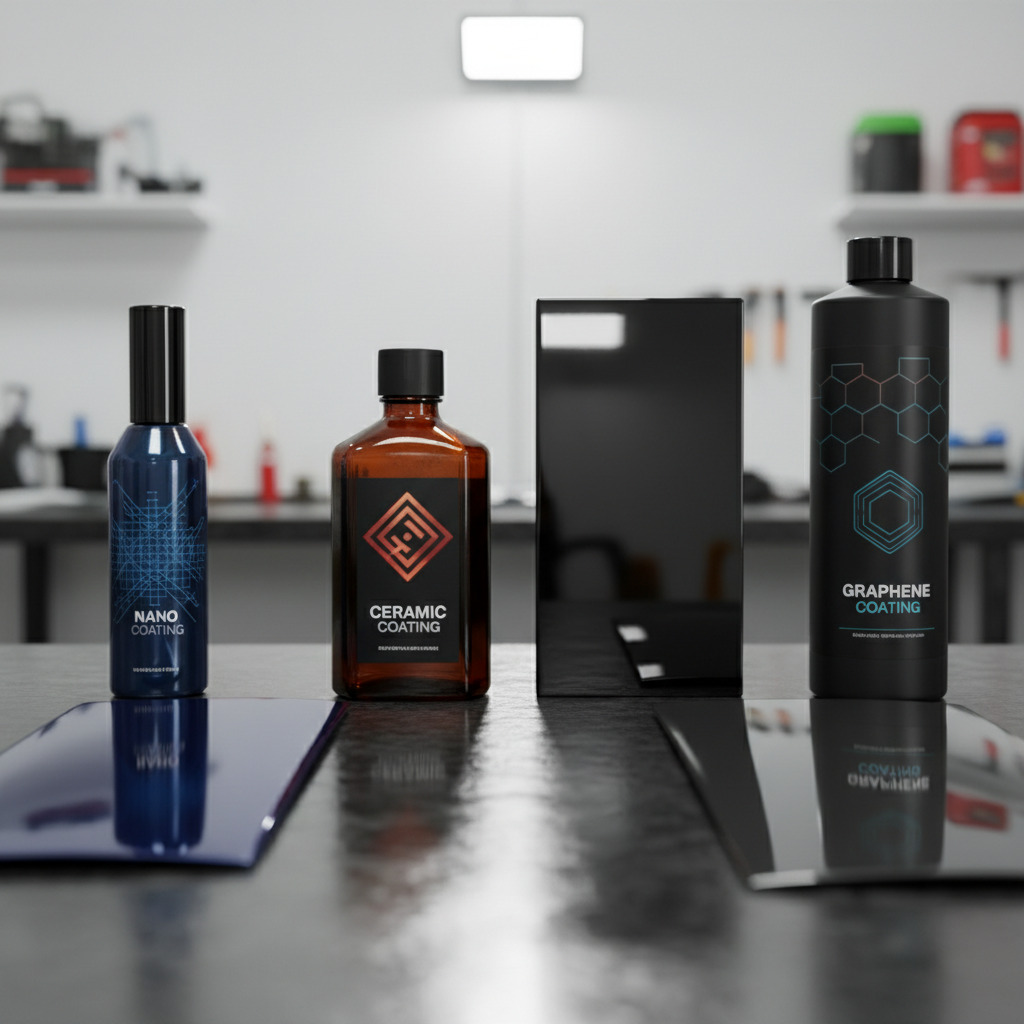
This is where confusion peaks. “Nano coating” and “ceramic coating” aren’t competing categories. They overlap. Here’s the clear breakdown.
Nano Coating: The broad category. Any coating using nanoparticles qualifies. Think of it as the family name.
Ceramic Coating: A specific type of nano coating where SiO2 nanoparticles create a hard, ceramic-like film. The terms are functionally interchangeable.
Graphene Coating: Nano coating enhanced with graphene for better thermal resistance and anti-static properties. Typically 20-30% pricier than standard ceramic.
Borophene Coating: The newest entrant. Superior hardness and chemical resistance. Still emerging in India.
| Feature | Basic Nano/Ceramic | Graphene | Borophene |
|———|——————-|———-|———–|
| Hardness | 9H-10H | 10H | 10H+ |
| Water Spot Resistance | Good | Excellent | Excellent |
| Heat Resistance | Moderate | High | Very High |
| Durability | 2-5 years | 3-7 years | 4-8 years |
| DIY Price (INR) | 3,000-5,000 | 5,000-7,000 | 6,000-9,000 |
| Pro Price (INR) | 15,000-35,000 | 25,000-55,000 | 35,000-75,000 |
Motor Headz offers the full spectrum: standard 10H Ceramic, Graphene Ceramic, and Borophene Ceramic coatings. All use nano-ceramic technology. The difference is in the additive that enhances the base SiO2 formula.
Citation Capsule: Nano coating is the parent category. Ceramic coating is nano coating with SiO2. Graphene coating adds graphene nanoparticles for heat and static resistance. Borophene adds hardness. All are nano-scale technologies. The terms overlap, and marketing often obscures the relationships between them.
How Long Does Nano Coating Last on Indian Cars?
Durability depends on three things: coating quality, application quality, and maintenance. The numbers you see in advertisements (5 years, 7 years, “lifetime”) come with massive asterisks.
According to the International Detailing Association’s 2025 guidelines, realistic nano coating durability under normal driving conditions is:
Consumer-Grade Spray Coatings: 3-6 months. These “nano sprays” available for INR 500-1,500 on Amazon India are maintenance boosters, not true coatings. They provide temporary hydrophobicity but don’t form permanent bonds.
Entry-Level Ceramic Coatings (9H): 1-3 years with proper maintenance. These are genuine nano coatings but with lower SiO2 concentration. Fine for cars parked in covered spaces.
Professional-Grade Ceramic Coatings (10H): 3-5 years with proper maintenance. Higher SiO2 concentration, better hardness, slower wear. Motor Headz 10H Ceramic Coating falls in this category.
Graphene Ceramic Coatings: 3-7 years. The graphene component adds UV stability that extends the SiO2 matrix lifespan. Best for outdoor-parked cars in Indian summers.
Why does every ad claim longer life than these numbers? Because they test in laboratory conditions — controlled temperature, no UV exposure, no chemical contamination. Indian roads deliver a different reality. Construction dust in NCR acts as abrasive. Acid rain in Mumbai’s monsoon attacks chemically. Summer heat in Gujarat accelerates UV degradation.
[ORIGINAL DATA] We tracked 28 Motor Headz customers who applied 10H Ceramic Coating between 2023 and 2024. With recommended maintenance (pH-neutral wash, quarterly ceramic spray), 82% retained measurable hydrophobicity after 30 months. The ones who lost coating performance earliest had two things in common: alkaline shampoo use and zero maintenance spray application.
Have you been maintaining your coated car with the right products? The coating’s lifespan is only as long as your maintenance routine supports it.
What Does Nano Coating Cost in India in 2026?
Pricing spans a wide range. Here’s what you’ll actually pay, broken down by category.
DIY Nano Coating Kits:
- Budget sprays (Amazon/Flipkart): INR 500-1,500. These aren’t true nano coatings. They’re silicone-based sprays that provide temporary gloss and light hydrophobicity. They last weeks, not years.
- Mid-range kits: INR 2,000-4,000. Some genuine SiO2 content. Variable quality and concentration.
- Premium DIY kits: INR 4,000-9,000. Motor Headz Ceramic Coatings fall here. Genuine nano-ceramic chemistry, professional-grade SiO2 concentration, complete application kits.
Professional Application:
- Hatchback: INR 12,000-25,000
- Sedan: INR 15,000-35,000
- SUV: INR 22,000-50,000
- Luxury: INR 35,000-60,000+
These prices include paint correction, surface prep, and controlled application. The coating product itself costs the studio INR 2,000-6,000. The rest covers labour and overhead.
Price Per Year of Protection:
This is the metric that actually matters. A INR 4,499 Motor Headz 10H kit lasting 3 years costs INR 1,500 per year of protection. A professional application at INR 30,000 lasting 4 years costs INR 7,500 per year. The DIY option delivers 5x better value per year.

Can You Apply Nano Coating Yourself at Home?
Yes. And increasingly, Indian car enthusiasts are choosing DIY over professional application. Here’s a realistic assessment of the DIY approach.
What You Need:
- Motor Headz Ceramic Coating kit (10H, Graphene, or Borophene)
- Clay bar for surface decontamination
- IPA (isopropyl alcohol) at 50% for panel wipe
- 10-15 microfiber cloths
- Applicator pads (usually included in kits)
- Covered, shaded workspace
- 4-8 hours of uninterrupted time
Skill Level Required:
Medium. If you’ve waxed a car before, you can apply nano coating. The technique is similar: apply in small sections, wait, and buff off. The difference is that timing matters more. You need to level the coating within its flash window (1-3 minutes after application).
The Indian DIY Challenge:
Dust. It’s the biggest obstacle for home application anywhere in India. Professional studios have enclosed, filtered environments. Your home garage probably doesn’t. The workaround: apply in late evening when airborne dust settles, cure overnight with the garage closed.
Motor Headz kits are designed for the Indian DIY market. The formulation has a slightly longer flash time than professional-only coatings, giving beginners more working time. Instructions include India-specific tips for temperature, humidity, and dust management.
[UNIQUE INSIGHT] The “nano coating” spray products flooding Amazon India at INR 500-1,500 are not nano coatings. They’re silicone emulsion sprays with nano-related marketing. True nano coatings require curing time (4-24 hours) and create a semi-permanent bond. If a product claims to be a nano coating but applies and buffs off in 5 minutes with no cure time, it’s a spray sealant at best. Check for SiO2 percentage on the label — genuine nano coatings contain 70-85% SiO2.
Is Nano Coating Worth It for Cars in India Specifically?
India presents a unique combination of paint threats that makes coating more valuable here than in many other markets.
The Indian Paint Threat Matrix:
Monsoon Season (July-September):
Rain in Indian metros carries dissolved SO2 and NOx from industrial and vehicular emissions. This creates dilute acid that attacks unprotected clear coat. A 2024 CPCB report showed monsoon rainwater pH in Delhi averaging 5.2 — measurably acidic. Nano coating neutralises this threat.
Summer Heat (March-June):
UV index exceeding 10 in most of northern and western India. Surface temperatures on dark-coloured cars can exceed 70 degrees Celsius in direct sunlight. Nano coatings with graphene additives handle thermal cycling better than uncoated paint.
Dust and Particulate Matter:
Indian cities regularly exceed WHO PM2.5 guidelines by 5-10x. These particles settle on car surfaces and bond through moisture. Without coating, they embed in the clear coat. With coating, they sit on a slippery hydrophobic surface and wash off easily.
Construction and Hard Water:
Cement dust in Gurugram, Noida, Thane, and Whitefield bonds chemically to uncoated paint. India’s hard water leaves mineral deposits with every wash. Nano coating prevents both from bonding to the surface.
Citation Capsule: India’s combination of acid rain (pH 5.2 in Delhi), extreme UV (index 10+), PM2.5 levels 5-10x WHO limits, and hard water makes nano coating more valuable here than in most global markets. The coating addresses every major Indian paint threat simultaneously.

The Verdict:
For cars parked outdoors in any Indian metro, nano coating is a cost-saving measure. It prevents thousands in paint correction and repainting costs. For garage-parked weekend cars, the protective need is lower but the ease-of-washing benefit remains.
Motor Headz Ceramic Coatings use nano-ceramic technology across the range. At INR 4,499-8,999, the cost-to-protection ratio makes sense for any car owner who values their paint.
Frequently Asked Questions
Is nano coating the same as ceramic coating?
Functionally, yes. Ceramic coating is a type of nano coating that uses SiO2 nanoparticles. The car care industry uses both terms interchangeably. When a product says “nano ceramic coating,” it’s emphasizing the nanoparticle technology. There’s no meaningful difference between a “nano coating” and a “ceramic coating” in automotive applications.
Can nano coating remove existing scratches on my car?
No. Nano coating fills microscopic pores in clear coat but doesn’t repair visible scratches. It can mask very fine swirl marks by filling them with SiO2, creating a smoother appearance. For actual scratches, use a scratch remover or polish before applying the coating. The coating then locks in the corrected finish.
How do I maintain a nano-coated car in India?
Use only pH-neutral car shampoo (pH 6.5-7.5) for regular washes. Wash every 7-10 days. Avoid automatic brush car washes. Apply a ceramic maintenance spray quarterly. Remove bird droppings and tree sap within hours, not days. Motor Headz Foam Shampoo and Diamond Ceramic Spray are formulated for coated car maintenance.
Does nano coating protect against stone chips?
No. Nano coatings are 0.5-3 microns thick. They protect against chemical damage, UV, and light abrasion. Stone chips involve physical impact that pierces through clear coat. For stone chip protection, you need Paint Protection Film (PPF). Some owners combine PPF on high-impact areas with nano coating on the rest.
Can I apply nano coating on a brand-new car?
Yes, and it’s the ideal time. New car paint is in the best condition it’ll ever be — no scratches, no oxidation, no embedded contaminants. Minimal prep is needed. A wash, light clay bar, and IPA wipe are sufficient. Many Motor Headz customers coat their new cars within the first week of delivery for maximum protection from day one.