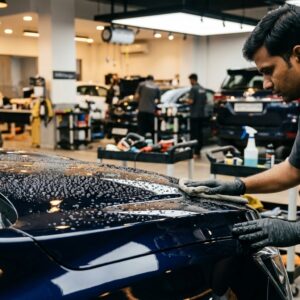
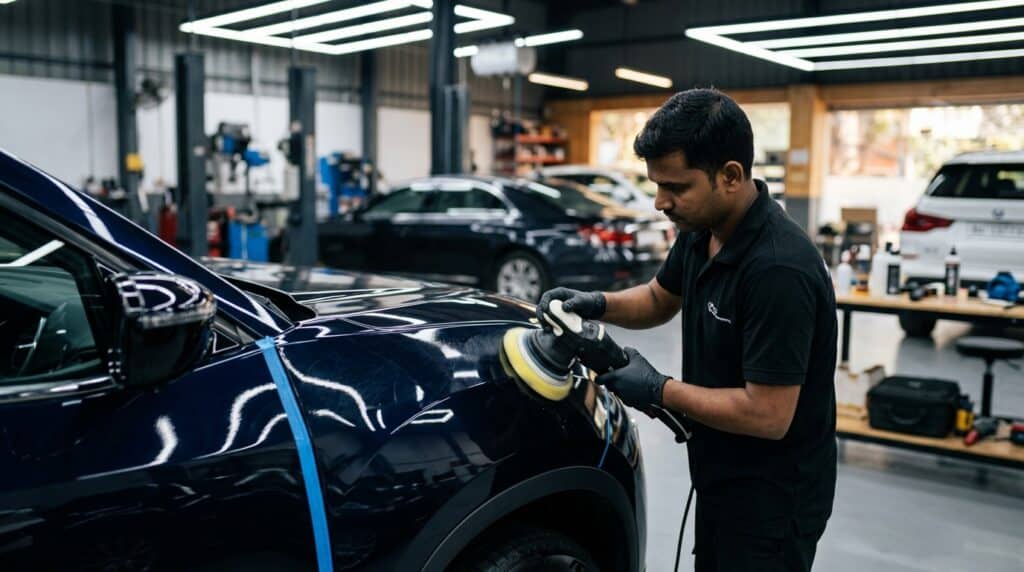
What is paint correction on a car?
Automotive paint systems often measure roughly 100–180 microns in total thickness, according to DeFelsko, with the clear coat sitting on top as the sacrificial, polishable layer. The plain-English answer is this: paint correction is the process of removing a tiny amount of clear coat to level out surface defects and restore clarity, gloss, and reflection. That’s why the term confuses people. Paint correction does not “fill” defects. It does not rebuild paint. Instead, it reshapes the surface so shallow defects become less visible or disappear. Think of a scratch or swirl as a tiny valley in the top layer. Correction gently levels the surrounding area until the valley becomes shallow enough that light reflects evenly again. When the surface reflects light evenly, the paint looks darker, sharper, and glossier. This is also why not every defect can be corrected. If paint is missing, polish cannot replace it. It can only improve the edges and the surrounding finish. A self-contained explanation worth quoting is this: paint correction is cosmetic improvement through controlled paint leveling, not paint replacement. That distinction matters because it helps owners understand both the power and the limit of detailing. In India, paint correction is often marketed as a dramatic before-after service, but the real value is quieter than that. Good correction makes the whole car look tighter, cleaner, and more premium. It improves how light behaves across the body. That’s why even moderate correction can make an old car feel “new” again.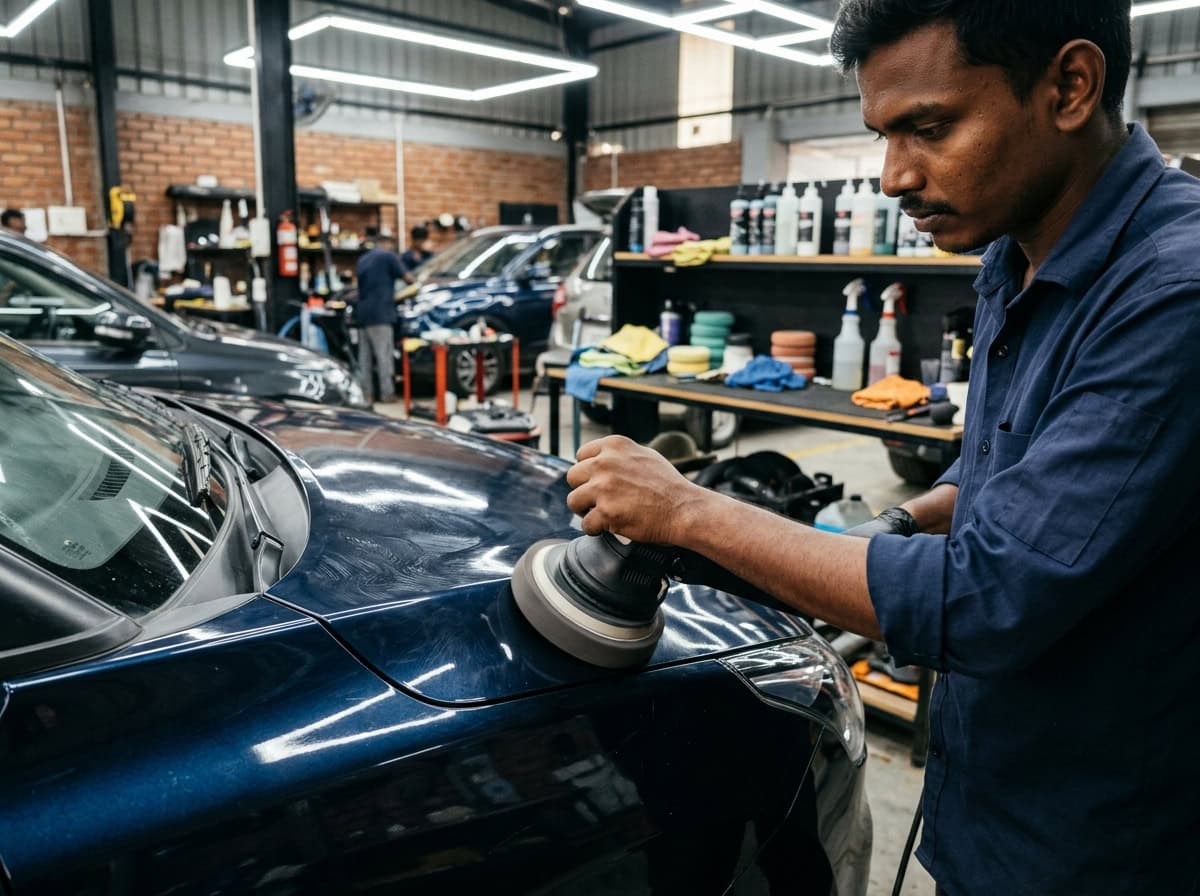
When does a car actually need paint correction?
Correction should solve a real defect problem, not satisfy a temporary urge to “do something” to the paint. So the answer is: your car needs paint correction when visible defects affect gloss, clarity, or protection prep, and gentler cleaning methods cannot fix them. You may need correction if your car shows:- swirl marks visible in sunlight
- wash marring from poor cleaning habits
- dullness or haze on dark paint
- oxidation on older vehicles
- hard-water etching that survives chemical cleaning
- light scratches that don’t go beyond the clear coat
- a tired finish before wax, sealant, or ceramic coating
- the paint still looks healthy in direct light
- the issue is mostly dirt or contamination
- the car already has thin or fragile paint
- the defects are too deep for polishing to solve
- you only want protection, not cosmetic refinement
What defects can paint correction fix, and what can’t it fix?
Most correctable paint defects sit in the upper part of the finish and scatter light rather than exposing missing paint. Because correction works by refining the surface, it can remove many shallow issues but not structural damage. In practical terms, paint correction can fix swirls, oxidation, haze, and some scratches, but it cannot fix deep gouges, stone chips, or missing paint.Paint correction usually can fix or improve:
- wash swirls
- light towel marks
- dealer-installed haze from bad machine polishing
- dullness from oxidation
- mild water-spot etching
- light scratches that barely catch a fingernail
- sanding marks, if enough paint remains and the process is skilled
Paint correction usually cannot fully fix:
- deep scratches exposing primer or metal
- stone chips
- peeling clear coat
- severe bird-dropping etching left too long
- repainted panels with poor adhesion problems
- cracks, chips, or paint failure
How is paint correction done step by step?
Professional correction follows a process because random polishing wastes time and paint. Since factory paint systems often sit within 100–180 microns, every step is designed to remove only what is necessary and no more. The short answer is that paint correction is done by washing, decontaminating, inspecting, testing, compounding if needed, polishing to refine, and then protecting the finish.1. Thorough wash
The car is pre-rinsed, shampooed, and dried carefully. No one should polish on top of dust or grime.2. Chemical and mechanical decontamination
Iron fallout removers, tar removers, and clay bars are used if needed. Bonded contamination prevents pads from working cleanly and can create fresh defects.3. Inspection under proper lighting
Sunlight, LED lights, and spot lights reveal swirl marks, haze, deeper scratches, and repainted areas.4. Paint thickness measurement
On professional jobs, a paint thickness gauge helps identify thin areas, repaired panels, and safe correction margins.5. Test spot
This is the most important step. A small section is corrected with the mildest likely combination of pad and product. If it gives enough improvement, the detailer uses that recipe across the car.6. Correction stage
A compound may be used for heavier defects. A polish may be enough for lighter issues. On some cars, a one-step correction works. On others, a two-step process is needed.7. Refining stage
A finishing polish improves gloss, clarity, and depth. This is what makes the paint look jewel-like instead of merely defect-reduced.8. Panel wipe and inspection
Residue and polishing oils are removed to reveal the true finish.9. Protection
Wax, sealant, or ceramic coating is applied to protect the corrected surface. That’s why process discipline matters so much.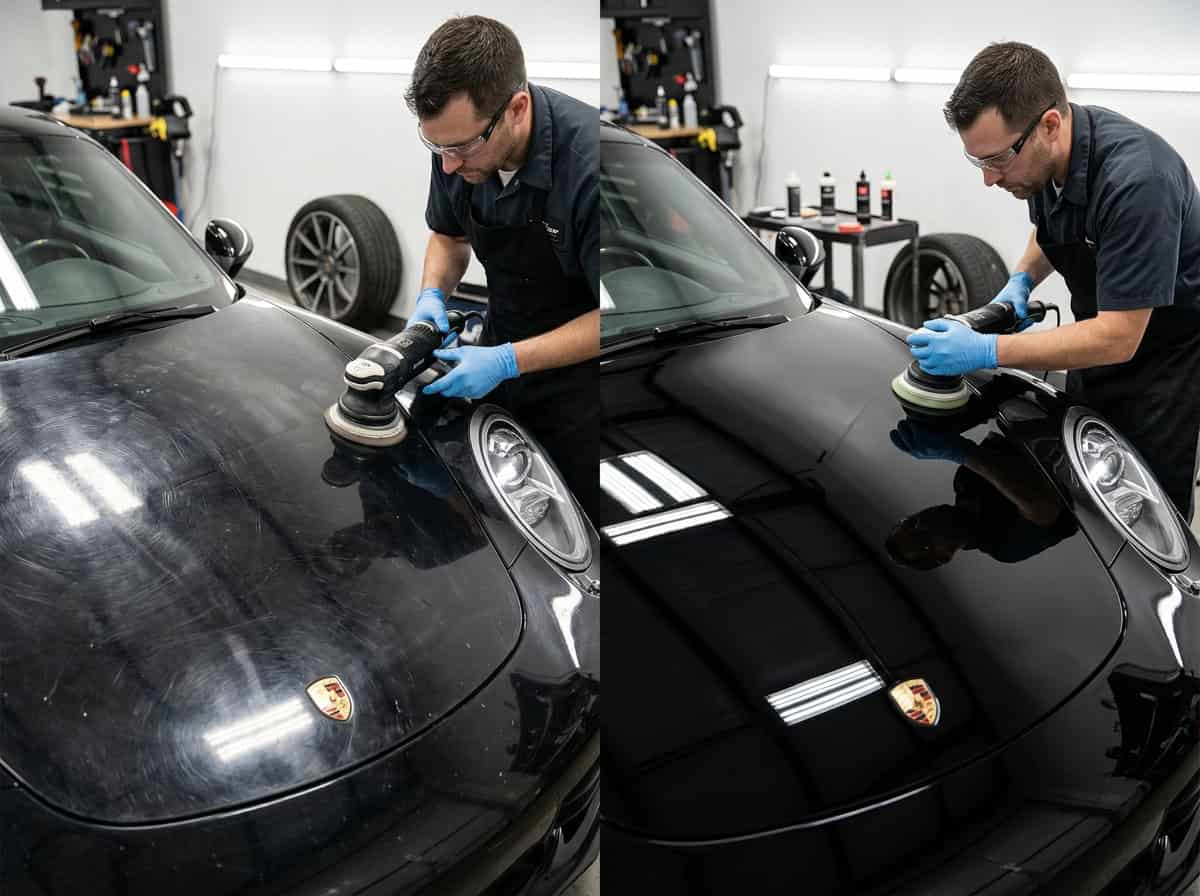
What is the difference between one-step and two-step paint correction?
The difference comes down to how much defect removal you want versus how much time, cost, and paint removal you can justify. Because polishing removes real material, one-step correction aims for balanced improvement in a single pass, while two-step correction uses a stronger correction stage and a separate refinement stage for better final results. A one-step correction usually uses a medium-cut polish or compound with a pad that can both correct and finish reasonably well. This works well for newer cars, well-kept paint, or owners who want 60–80% defect removal without chasing perfection. A two-step correction uses a stronger compound first, then a finer polish second. The first step removes more visible damage. The second step restores depth, clarity, and gloss. It usually delivers a much better finish on heavily swirled or neglected paint. So which one do you need? That depends on:- the paint condition
- paint hardness
- your expectations
- the colour of the car
- budget and time
- whether ceramic coating will be applied after
Is paint correction safe, and how often should it be done?
Paint correction is safe when it is necessary, measured, and done with the right method. It becomes risky when it is overused or performed blindly. In other words, paint correction is safe in moderation and foolish in repetition. Most daily-driven cars do not need frequent full correction. What they need is better washing, better drying, and better protection. If you reduce the creation of new defects, you reduce the need for future correction. Cars that are corrected once and then maintained properly can stay looking very good for a long time. Cars that are corrected and then washed badly return to swirl-city almost immediately. You’ve seen it. Maybe on your own car. The smartest owners don’t ask, “How often can I polish?” They ask, “How can I avoid needing to polish again soon?” That shift in thinking is what separates a maintained car from a repeatedly rescued one. A practical rule for most Indian owners is to reserve major correction for when the paint actually looks tired under sunlight, before a coating, or before selling the car. Between those moments, focus on safe maintenance.Is paint correction worth it for Indian car owners?
The answer is yes: paint correction is worth it when your paint has visible defects, when you want to restore gloss, or when you are preparing the car for wax, sealant, ceramic coating, or sale. It is especially worthwhile if:- the car looks dull despite being clean
- swirl marks are obvious in sunlight
- water spots and haze hurt the finish
- you want better clarity before protection
- the car is premium, dark-coloured, or recently bought used
- the car lives a rough daily life and you do not care much about appearance
- the paint is already too thin
- the defects are deeper than correction can solve
- your maintenance habits will immediately undo the result
Frequently Asked Questions
Does paint correction remove scratches permanently?
Paint correction permanently removes or reduces defects only if enough paint remains above them to level the surface safely. It does not hide damage temporarily in the same way fillers do. However, deeper scratches that exceed the polishable layer cannot be fully removed and may still need touch-up paint or bodywork.How long does paint correction last?
The result can last a long time if the car is washed and dried properly afterward. The finish does not “wear off” like wax, but new swirls can return quickly if the car is washed badly. In practical terms, maintenance quality matters more than the correction itself once the polishing is done.Can paint correction remove swirl marks completely?
Yes, many swirl marks can be fully removed because they usually sit in the clear coat. Since correction levels the upper paint surface, shallow swirls often disappear very well with the right compound or polish. The final result depends on paint condition, paint thickness, and whether the detailer stops at one-step or two-step correction.Should paint correction be done before ceramic coating?
Usually, yes. Ceramic coating locks in the finish underneath, so applying it over swirls, haze, or light scratches simply preserves those defects. That’s why correction is often done first. Even a lighter one-step correction can make a big visual difference before coating is applied.Is paint correction the same as polishing?
Polishing is part of paint correction, but the full correction process also includes inspection, decontamination, test spots, defect removal strategy, and refinement. In casual conversation people use the terms interchangeably, but technically paint correction is the larger workflow, while polishing is one of the core actions inside that workflow.Yoast SEO Fields
Focus Keyphrase: paint correction SEO Title: Paint Correction Guide – Motor Headz (36 chars) Slug: paint-correction-guide Meta Description: Paint correction removes swirls, haze, and oxidation, but clear coat is often only 30–50 microns thick. Learn when it’s worth doing. (142 chars) Cornerstone: false Schema Page Type: Article Social Title: Paint Correction Explained: What It Fixes and When You Need It Social Description: Wondering if your car really needs paint correction? Here’s the honest, practical guide for Indian owners who want gloss without unnecessary polishing. Social Image: use featured image Secondary Keywords: car paint correction, swirl mark removal, paint correction process, one-step paint correction, two-step paint correctionConclusion
Paint correction is one of the most satisfying things you can do for tired paint, but only when you understand what it actually is. It is not magic. It is measured abrasion. It removes many shallow defects brilliantly, but it cannot replace missing paint or undo every scar your car has collected. That’s fine. The goal is better paint, not fantasy paint. Key takeaways:- paint correction levels clear-coat defects to restore gloss
- it works best for swirls, haze, oxidation, and light scratches
- not every car needs it, and not every defect can be corrected
- one-step is value-focused, two-step is finish-focused
- the result lasts only if your washing habits improve afterward
▸ PUT IT INTO PRACTICE
Gear up at the Motor Headz garage
Coatings, polishes, foam wash & microfiber — made in India, free shipping from ₹300.